

Advertising disclosure: Cupindy is reader-supported. Some links on this page are affiliate links, so if you buy through one we earn a commission at no extra cost to you. As an Amazon Associate we earn from qualifying purchases. We don't test products in a lab; this guide is built from FDA rules, manufacturer disclosures and published research, all listed at the end. It is general information, not medical or legal advice.
You flip a container over, find a small number inside a triangle, and suddenly last night's leftovers feel like a question. Good news first: most of the plastic in a normal kitchen is fine for what it's used for. The number tells you which plastic you're holding. The label and the way you use it, mostly heat, tell you the rest.
This guide walks you through it in the order you'd actually need it: what each number means, what the labels really promise, which containers are worth keeping, and what to replace if you decide to replace anything at all.
Which Plastic Numbers Are Safe for Food Storage?
For everyday food storage, #2 HDPE, #4 LDPE and #5 PP are the better choices when the item is sold for food use. #1 PET is fine for the bottle or tray it came in, but it isn't built for reuse or heat. Be more careful with #3 PVC, #6 PS and #7, especially with hot, oily or long-stored food.
One rule covers most of it: store in plastic if you like, but reheat in glass or ceramic. If a container is scratched, cloudy or warped, retire it from anything hot.
Ready to move leftovers into glass? These are the two we'd start with:
Best overall: Rubbermaid Brilliance Glass Best budget: Pyrex Simply StoreStart where you are
Plastic Grades Chart: Numbers 1–7, Uses, and Food Storage Safety
The number in the triangle is a resin identification code. It tells you the type of plastic, and that's all it was designed to do: it isn't a recycling promise or a safety rating. Still, once you know the plastic, most of the practical answers follow.

| Number | Plastic | Where you'll see it | For food storage | Microwave |
|---|---|---|---|---|
| #1 PET | Polyethylene terephthalate | Water and soda bottles, deli trays, some jars | Single use | No |
| #2 HDPE | High-density polyethylene | Milk jugs, juice bottles, food-safe buckets | Good choice | Rarely labeled for it |
| #3 PVC | Polyvinyl chloride | Some commercial food wrap, pipes, non-food items | Avoid | No |
| #4 LDPE | Low-density polyethylene | Freezer bags, bread bags, household cling wrap, squeeze bottles | Good choice | Only if the box says so |
| #5 PP | Polypropylene | Reusable containers, lids, yogurt tubs, takeout tubs | Best reusable plastic | Only with the microwave-safe mark |
| #6 PS | Polystyrene | Foam cups and clamshells, clear disposable cutlery | Avoid with heat | No |
| #7 Other | Everything else: polycarbonate, Tritan, PLA | Clear hard containers, large water jugs, specialty items | Check the material | Polycarbonate: no. Tritan: follow the brand |
Is #5 PP Plastic Safe for Food?
Yes, for storage, and it's the plastic most reusable containers are made from. Polypropylene is tough, handles fridge and freezer well, and is the only common plastic regularly sold with a microwave-safe mark. That mark matters: a #5 on the base tells you the plastic, not that this particular container was made to be heated.
Once a #5 container turns cloudy, scratched or slightly warped, keep it for cold snacks or dry goods and stop reheating in it.
Is #2 HDPE Plastic Safe for Food?
Yes. HDPE is the opaque, slightly waxy plastic of milk jugs and food-grade buckets, and it's a solid choice for cold or room-temperature food. You'll rarely see it sold as microwave-safe, so don't assume it is.
For bulk rice, flour or pet food, look for buckets sold as food-grade. A paint bucket from the hardware store looks the same and is not the same thing.
Is #4 LDPE Plastic Safe for Food Storage?
Yes, and you use more of it than you think. LDPE is the soft, flexible plastic of freezer bags, bread bags and squeeze bottles. The big US household wraps are polyethylene too: Glad, Saran and Reynolds all describe their consumer wraps that way, not as PVC.
If you microwave with wrap, keep it from touching the food and leave a gap for steam. Ziploc's own guidance for its bags is to leave the zipper open at least an inch.
Is #1 PET Plastic Safe to Reuse?
PET is safe for the job it was made for: holding a drink or a salad on its way to you. It was never meant to be washed and refilled for months. Hot water, dishwashers and scratches wear it down quickly, and a worn bottle is hard to get properly clean.
If you like refilling water bottles, a stainless steel or glass bottle will outlast dozens of PET ones.
Which Plastic Numbers Should You Avoid for Hot Food?
Heat is where plastic choice starts to matter, so these three deserve care:
- #3 PVC is uncommon in home kitchens now, but it still turns up in some commercial food film. Keep it away from hot and fatty food.
- #6 PS is foam takeout boxes and cups. Fine for the trip home, not for reheating or keeping.
- #7 is a catch-all. The one to retire is polycarbonate, often marked “PC”: it's the plastic made with BPA, and NIEHS advises against microwaving it. Tritan, a newer #7 used by Rubbermaid Brilliance and Tupperware Ultra Clear, is made without BPA.

If you reheat food most days, glass is simply the easier habit. This is the set we'd use for meals that go from freezer to oven:
What Does Food-Grade Plastic Mean?
Here's something most guides skip: “food grade” isn't a term the FDA defines. What US law requires is narrower. Every substance in a plastic that touches food has to be authorized for that use, through a federal regulation (21 CFR Parts 174–179), a Food Contact Notification, or a few other routes. The FDA authorizes the substance and leaves compliance to the maker. In its own words, “It is the responsibility of the manufacturer of an FCS to ensure that food contact materials comply with the specifications and limitations in all applicable authorizations.”
Those authorizations come with temperatures attached. The FDA's scale runs from “high temperature heat-sterilized (e.g., over 212°F)” down to room temperature, fridge and freezer, with a separate category for food “intended to be reheated in container.” Some polypropylene and polyethylene authorizations (21 CFR 177.1520) cover only some of those conditions. So a plastic can be perfectly legal for the fridge and never have been cleared for boiling-hot food. That's why the microwave-safe mark tells you more than the words “food grade.”
What “BPA-free” tells you, and what it doesn't
We couldn't find a US federal definition of “BPA-free”; it's the maker's own claim. The FDA's position, last updated in April 2023, is that “BPA is safe at the current levels occurring in foods.” When it removed polycarbonate baby bottles and sippy cups from its rules in 2012, it said the change was because industry had stopped using them, “not based on safety.”
Europe went the other way. In 2023 the European Food Safety Authority cut its tolerable daily intake for BPA to 0.2 nanograms per kilogram of body weight, about 20,000 times lower than before, and Regulation (EU) 2024/3190 now bans BPA in food-contact materials, with the main transition for new products ending on 20 July 2026.
The more useful point for your kitchen: “BPA-free” tells you one chemical is missing, not which plastic you're holding. A 2015 review in Environmental Health Perspectives found the common replacements BPS and BPF “as hormonally active as BPA” in mostly lab and animal studies. A container that says BPA-free and shows a #5 tells you far more than one that only says BPA-free.
The one disclosure with legal weight
California's AB 1200 treats items used to “prepare, dispense, or store” food as cookware, and since January 2023 makers have had to publish certain intentionally added chemicals online. In practice, none of the brand disclosure pages we could read cover plastic storage containers: Tupperware's lists its pans, and OXO's lists steel POP containers and some Prep & Go items. Our non-toxic food storage containers guide shows how to read one when you find it.
Brand Check: Are Sistema, Tupperware, Rubbermaid and Pyrex Containers BPA-Free?
People search by brand, so we read what each one says on its own website (September 2026). Most say BPA-free. Far fewer name the plastic, and that's the part that tells you how to use the container.
| Brand | Plastic it names | What it says about BPA | Its microwave rule |
|---|---|---|---|
| Sistema (standard lines) | None on the pages we read, just “Plastic” | “Phthalate & BPA Free” | “Remove lid when in microwave” |
| Sistema Ultra | “Ultra Clear Plastic” | Not stated on the product pages we read | “NOT recommended for microwave and freezer use” |
| Tupperware (US) | Per product, e.g. “PP, PE” or “Tritan” | “Our products in the US and Canada are made of BPA-free materials” | Varies by line; some are “Not safe for use in microwave” |
| Rubbermaid Brilliance | “BPA-free Tritan plastic” | “BPA-Free” | Lid on, latches open |
| Rubbermaid TakeAlongs | None, just “Plastic” | “BPA Free” | Remove the lid or rest it loosely |
| Pyrex and Snapware lids | Storage-lid plastic not named | Plastic items “DO NOT contain BPA, BPS, … Polycarbonate, … PFAS, or PVC” | Vent or remove lids at least ¼ inch |
| Glasslock | Tempered glass, polypropylene lid | “BPA free” | Not stated beyond “microwave-safe” |
| Ziploc | Bags: low-density polyethylene | “bags and Containers are BPA free” (Canadian FAQ) | Bags: zipper open at least an inch |
| Glad | “Made from polyethylene”, no PVC | No intentionally added phthalates or polycarbonate; BPA not used as a raw material | Not stated. No rigid containers listed on its US site when we checked |
We couldn't confirm the plastic in OXO's POP containers from OXO's own pages, so we've left OXO out rather than guess.
Is Tritan (#7) plastic safe?
Tritan is a copolyester made by Eastman, which says it is “made without bisphenols or phthalates.” A 2014 study reported estrogenic activity from several BPA-free plastics, Tritan included. Its authors were linked to companies selling chemical testing and competing plastics, and in a lawsuit brought by Eastman a federal jury found those companies' advertising claims about Tritan false or misleading, a verdict upheld on appeal. That settles the advertising, not the science. For cold storage it's a reasonable plastic; for heat, follow the brand's rule.
Is old Tupperware toxic?
Tupperware says it replaced polycarbonate with BPA-free materials, and news reports citing its older website date the US switch to 2010. Older clear, hard pieces may be polycarbonate. Check the base for a 7 or “PC”. If you find one, it can still hold dry pasta or crayons; just keep it out of the microwave.
Best Plastic Choice by Situation
You don't need to clear out every cupboard. Match the container to the job, and most of your plastic can stay.
| Situation | Better choice | Skip | Why |
|---|---|---|---|
| Cold leftovers | #5 PP, #2 HDPE or glass | Cracked or badly scratched plastic | Cold storage is low risk; damaged plastic is just hard to clean. |
| Hot soup or stew | Glass or stainless steel | Unlabeled plastic, foam, polycarbonate | Heat is where plastic matters most. |
| Microwave reheating | Glass or ceramic; plastic only if marked | Takeout tubs, deli trays, sealed lids | The number alone doesn't prove microwave safety. |
| Freezer meals | Freezer-safe #5, freezer bags, borosilicate glass | Thin one-trip packaging | Cold makes some plastics brittle. |
| Kids' lunches | #5 PP, stainless steel, silicone | Cloudy or cracked old boxes | Daily washing wears containers out fast. |
| Pantry staples | Food-grade #2 or #5, or glass jars | Storage bins not sold for food | A bin that looks food-safe may not be. |
A simple keep, watch, replace check
Keep
- #2, #4 and #5 containers in good shape
- Anything used only for cold or dry food
- Plastic with a clear microwave-safe mark, lid vented
Watch
- Containers turning cloudy or holding smells
- Lids that no longer seal
- Anything that goes through the dishwasher daily
Replace first
- Clear hard containers marked 7 or PC that you microwave
- Foam or takeout tubs reused for reheating
- Scratched or warped plastic you heat food in
What About Microplastics From Containers?
The number most people have seen comes from a 2023 University of Nebraska-Lincoln study in Environmental Science & Technology. Some polypropylene and polyethylene containers released “as many as 4.22 million microplastic and 2.11 billion nanoplastic particles from only one square centimeter of plastic area within 3 min of microwave heating,” using water and a mild acid in place of food. Months of fridge or room-temperature storage released particles too. The kidney cells that died in the same study were exposed to a level the authors describe as “significantly higher than the concentration released.”
What hasn't been shown is harm at real-world doses. The FDA's position (July 2024) is that “current scientific evidence does not demonstrate that the levels of microplastics or nanoplastics detected in foods pose a risk to human health.” A 2024 New England Journal of Medicine study found that people with microplastics in their artery plaque had a higher rate of heart attack, stroke or death over about three years, which is an association, not proof of cause. A 2025 study reporting high levels in brain tissue has been questioned by other scientists over contamination controls. And the viral 2024 study on black plastic utensils has been corrected twice, starting with a tenfold math error.
Whatever the final science says, the evidence is strongest for heat. Reheating in glass or ceramic and retiring scratched plastic are cheap habits that cover most of it.
How to Use Plastic Food Containers More Safely

Reheating
Move food to a plate or glass dish before microwaving. If you do heat in plastic, use a container marked microwave-safe and leave the lid vented or off.
Hot food
Let soups and sauces cool for a few minutes before they go into plastic. It's easier on the container and cuts the time hot food spends touching it.
Dishwasher
“Dishwasher-safe” often means top rack. Daily high-heat cycles age lids fastest, so check them for warping every few months.
Cleaning
Skip abrasive pads and don't cut food inside plastic tubs. Every scratch holds residue and wears the surface.
Can you freeze food in plastic containers?
Yes, and freezing is gentler than heating. Use containers or bags sold as freezer-safe, leave room for liquids to expand, and replace anything that turns brittle or cracks after a few freeze-thaw cycles.
What about plastic wrap and food storage bags?
Use them for what the box says. Keep wrap from touching very hot or fatty food, and don't microwave in a bag unless the maker says you can. If you want less single-use plastic, silicone bags and beeswax wraps both do the job, with trade-offs covered in the comparison below.
When should you replace plastic food containers?
Replace a container when it's deeply scratched, cracked, warped, cloudy, sticky, or holds smells after washing, or when you no longer know what it's rated for. None of these is an emergency. They're signs it's time for the container to move from hot jobs to cold ones, or out.
Plastic cutting boards wear the same way; our non-toxic cutting boards guide covers when to replace those.
Step 4 · Replace smartlyAlternatives to Plastic for Long-Term Food Storage
If you're replacing a few things, glass is the easiest place to start: it doesn't stain, doesn't hold smells, and goes into the microwave without a second thought. Almost every glass container still has a plastic lid, which is fine, as long as the lid stays off in the oven and vented in the microwave.
Glass
Best for leftovers and reheating. Heavier, and it can break. Borosilicate handles temperature swings better than tempered soda-lime.
Stainless steel
Light, unbreakable, great for lunches and snacks. No microwave, and you can't see what's inside.
Silicone
Flexible bags and lids, good in the freezer. Can hold on to oily smells.
Ceramic
Good for serving and reheating. Check the glaze is sold for food use and the lid fits.
Which one fits your kitchen?
How we chose: each maker's own product information, plus each listing's review record (checked September 2026). We haven't tested these ourselves, and every pick comes with its drawback.
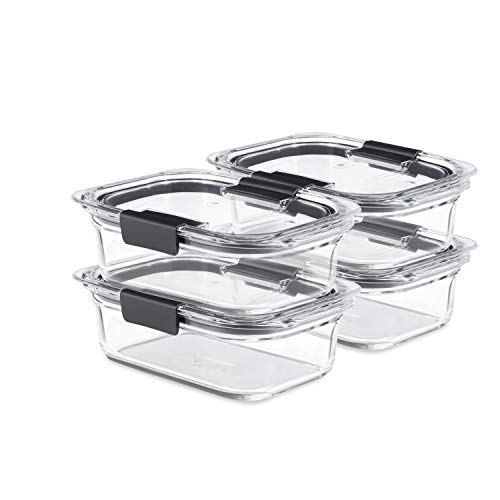
Rubbermaid Brilliance Glass, 3.2-Cup, Set of 4
Why we picked it: The glass base is rated oven-safe to 450°F, and the lid is vented so you can microwave with the latches open, which is exactly the habit this guide recommends. Rubbermaid names Tritan as the plastic in its Brilliance containers and says the lids fit across the range, though this glass set's own listing describes the lid only as plastic. It's one of the most-reviewed glass sets in its category.
Keep in mind: 3.2 cups is one lunch portion, not a family dinner. The lid still needs to come off in the oven.

Pyrex Simply Store Glass Storage Set (12-Pack)
Why we picked it: It's the least expensive way to move a whole fridge of leftovers into glass. The tempered glass doesn't stain or hold smells, you get round and rectangle sizes, and it has one of the deepest review records of any glass storage line on Amazon. Pyrex also publishes a clear lid rule: vent or remove before microwaving.
Keep in mind: American Pyrex is tempered soda-lime glass, not borosilicate, so it handles sudden temperature changes less well. Never go straight from freezer to a hot oven. The listing describes the lids as a snug fit rather than leak-proof, and calls them BPA-free plastic without naming it.

Vtopmart 8-Pack Borosilicate Glass Containers
Why we picked it: The listing states borosilicate glass rated from -4°F to 752°F (the glass, not the lid), with four-side locking lids and removable silicone seals. That makes it the direct replacement for reused takeout tubs: cook on Sunday, freeze, then reheat in the oven in the same dish.
Keep in mind: Its customer rating is the lowest of our four. The lid plastic isn't named, and the silicone seals need to come out when you wash them or they trap moisture.

ComSaf 78 oz Square Glass Jars, 3-Pack
Why we picked it: Glass jar, glass lid, silicone gasket and a metal clamp, so nothing plastic touches what's inside. Each jar takes a 4 lb bag of sugar or a 5 lb bag of rice, which is where most kitchens keep their biggest plastic bins.
Keep in mind: These are heavy and large, made for bulk dry goods rather than leftovers, and you only get three. Take the gasket off to clean it properly.
All eight side by side
The four picks above, plus four options for specific jobs.
| Product | Best for | What touches food | Microwave | Drawback | Link |
|---|---|---|---|---|---|
| Rubbermaid Brilliance Glass | Single-portion reheating | Glass; plastic lid | Yes, latches open | Small portions | See pick 1 |
| Pyrex Simply Store | Budget leftovers | Soda-lime glass; plastic lid | Lid vented or off | Weaker against sudden temperature changes | See pick 2 |
| Vtopmart 8-Pack | Meal prep | Borosilicate glass; silicone seal | Glass yes, lid off | Seals come out to clean | See pick 3 |
| ComSaf 78 oz Jars | Bulk dry goods | Glass; silicone gasket | Not intended | Heavy, only three | See pick 4 |
| JoyJolt 24-Piece Borosilicate Set | A bigger borosilicate set | Borosilicate glass; plastic lid, silicone seal | Glass yes, lid off | Lids are hand-wash only | Check price |
| HTEVW Stainless Snack Containers (6) | Kids' snacks | 18/8 stainless steel; silicone lid | No | 6 oz each, snacks only | Check price |
| Winrock Silicone Bags (3) | Replacing zip bags | Silicone | Listed as microwave-safe | Holds oily smells; no post-curing mentioned | Check price |
| Bee's Wrap Beeswax Wraps (3) | Replacing cling wrap | Cotton, beeswax, plant oils, tree resin | No | Keep away from raw meat and heat; cool-water wash | Check price |
A note on stainless steel: unlike glass, stainless storage has no clear best-seller on Amazon, and full-size sets have far thinner review records, so our stainless pick is a snack-size set with a real track record. For lunch-box stainless and a part-by-part check of lids, gaskets and vents, see our non-toxic food storage containers guide. Weighing glass against plastic for lunches, travel or the freezer? Our glass vs plastic storage comparison scores them on heat, breakage, weight and cost.
Final Takeaway: Use Plastic Numbers as a Guide, Not a Guarantee
For everyday storage, #2, #4 and #5 are the numbers you want. #1 is for single use. #3, #6 and polycarbonate #7 should stay away from heat. Beyond the number, three habits do most of the work: reheat in glass or ceramic, vent the lid when you do use plastic, and retire containers once they're scratched or warped.
If you replace only one thing, make it whatever you reheat in most often.
FAQs About Plastic Grades and Safe Plastic Numbers
What plastic numbers are safe for food storage?
Plastic numbers #2 HDPE, #4 LDPE and #5 PP are generally the better choices for food storage when the item is labeled for food use. #1 PET is common for single-use bottles and packaging, while #3 PVC, #6 PS and #7 need more caution, especially with heat.
Is #5 PP plastic safe for food?
Yes. #5 PP, or polypropylene, is the plastic most reusable food containers are made from. It's one of the better numbers for storage, but only heat it if the container is marked microwave-safe, and vent the lid.
Is #2 HDPE plastic safe for food?
Yes. HDPE is used for milk jugs, juice bottles and food-grade buckets and is a good food-contact plastic for cold and room-temperature storage. Don't treat it as microwave-safe unless the label says so.
Is #1 PET plastic safe to reuse?
PET is made for single-use or limited-use packaging. A few cold refills won't hurt, but avoid hot drinks, dishwashers and long-term reuse, and switch to a bottle made for refilling.
Is #7 plastic safe for food or drinks?
#7 is a catch-all, so the number alone can't answer it. Polycarbonate (“PC”) is the #7 made with BPA and shouldn't be microwaved. Tritan is also #7 and is made without BPA. Check the material and the maker's instructions.
Which plastic numbers should you avoid for hot food?
Avoid #3 PVC, #6 PS and polycarbonate #7 with hot food, along with any plastic that is old, scratched or unlabeled. Even with #5 PP, heat it only if it's marked microwave-safe.
Is BPA-free plastic always safe?
BPA-free doesn't automatically mean a plastic suits every use. It tells you one chemical is missing, not which plastic replaced it. A BPA-free container may still be unsuitable for microwaving, dishwashing, hot food or long reuse, so check the full label and the number on the base.
Are Sistema containers BPA-free?
Sistema describes its products as “Phthalate & BPA Free.” The product pages we read in September 2026 list the material only as “Plastic” and don't name the resin. Its clear Ultra line is marked “NOT recommended for microwave and freezer use”; for its standard containers, Sistema says to remove the lid in the microwave.
Is Tritan plastic safe for food?
Tritan is a #7 copolyester that its maker, Eastman, says is made without bisphenols or phthalates. One 2014 study reported estrogenic activity; its authors had a commercial conflict of interest, and a federal jury later found their companies' related advertising false or misleading. It's a reasonable choice for cold storage; for heat, follow the brand's own rule.
Is old Tupperware safe to use?
Tupperware says the products it sells in the US and Canada are made of BPA-free materials, and news reports citing its older website date its switch away from polycarbonate to 2010. Older clear, hard pieces may be polycarbonate; check the base for 7 or PC and keep those out of the microwave.
Can you freeze food in plastic containers?
Yes, if they're labeled freezer-safe. Leave room for liquids to expand, and replace containers that crack or turn brittle after repeated freeze-thaw cycles.
Should I throw away old plastic containers?
Not all of them. Replace the ones that are scratched, cracked, warped, cloudy, sticky or holding smells, and move worn containers from hot jobs to cold or dry ones. For regular reheating, glass is the better long-term choice.
Keep Reading
How We Researched This, and Sources
We don't run a testing lab and didn't test these containers. This guide is built from federal regulations, agency guidance, peer-reviewed studies and what manufacturers publish about their own products. Rules and brand pages change, so check the maker's page when you buy.
- FDA: Determining the regulatory status of components of a food contact material
- FDA: Food types and conditions of use for food contact substances
- eCFR: 21 CFR Part 177, polymers (177.1520 olefin polymers; 177.1580 polycarbonate)
- Federal Register: 17 July 2012 polycarbonate amendment
- FDA: Bisphenol A (BPA): use in food contact application
- NIEHS: Bisphenol A (BPA)
- EFSA: Bisphenol A in food is a health risk (April 2023)
- EUR-Lex: Commission Regulation (EU) 2024/3190
- Rochester and Bolden, Environmental Health Perspectives, 2015: BPS and BPF compared with BPA
- Hussain et al., Environmental Science & Technology, 2023: particles released from plastic food containers
- FDA: Microplastics and nanoplastics in foods
- California Health and Safety Code: Section 109010 (AB 1200)
- ASTM: D7611 Resin Identification Code
- EPA: How do I recycle common recyclables
- Manufacturer pages read September 2026: Sistema, Tupperware, Rubbermaid, Pyrex and Snapware, Glasslock, SC Johnson (Ziploc, Saran), Glad, Reynolds, Eastman (Tritan)


