
Written by Sara Ibrahim. Sara researches home and kitchen products for Cupindy.
Last reviewed October 20, 2026
You can microwave plastic only when the container or wrap is labeled microwave safe, and even then glass or ceramic is the safer choice for hot, fatty or long reheats. Never microwave takeout tubs, margarine or yogurt tubs, grocery bags, or plastic wrap that touches the food.
As an Amazon Associate we earn from qualifying purchases.

Our quick pick
Pyrex Simply Store Glass Food Storage, 9 Containers
Store leftovers and reheat them in the same glass dish, so the food never sits in hot plastic.
See the Pyrex set on AmazonThe drawback: the lids are plastic, so vent them in the microwave and never put them in the oven.
Can You Microwave Plastic? The Short Rules
Yes, if the container or wrap is labeled microwave safe and is in good shape. Here is how to tell:
- Look for the words “microwave safe” or the microwave symbol on the container, lid or box. Our guide to the microwave safe symbol shows what the marks look like.
- No label? Move the food to glass or ceramic marked microwave safe. An unlabeled container is not proven unsafe; it just has not been tested for the microwave.
- Never microwave one-time containers: takeout tubs, margarine and yogurt tubs, water bottles and grocery bags.
- Keep plastic wrap off the food and leave a gap for steam.
- Vent the lid. Harvard Health says to “leave the lid ajar, or lift the edge of the cover.”
- Throw out plastic that is warped, cracked, stained or smells bad.
What “Microwave Safe” Means, and What It Doesn't
“Microwave safe” means the maker tested the container to FDA standards for heating food. Harvard Health says the FDA “requires manufacturers to test these containers using tests that meet FDA standards and specifications” and “reviews test data before approving a container for microwave use.” “Not microwave safe,” or no label at all, means it was not tested for heat or did not pass, so it may warp or melt.
The label covers the container used the way the maker intends. The Canadian Cancer Society says to “Always follow the instructions on the label when you use microwave-safe containers to heat food.” That means the time, the power level and whether the lid stays on. A dish that is fine for warming soup on medium for two minutes can still warp under oily food at full power.
The label also does not mean nothing gets into your food. For what each mark looks like, see our microwave safe symbol guide.
Is It Safe to Microwave Plastic? What the Research Says
Plastic labeled microwave safe and used as the label says has passed FDA testing. Microwaving unlabeled, single-use or damaged plastic is a bad idea, because it can warp and let more chemicals into food. There are two worries: chemicals and tiny plastic particles. Harvard Health says “When food is wrapped in plastic or placed in a plastic container and microwaved, BPA and phthalates may leak into the food,” and that both are believed to be “endocrine disrupters.”
The FDA's current view on BPA, the best-known of these, is that “BPA is safe at the current levels occurring in foods.” In 2012 it stopped allowing BPA-based polycarbonate in baby bottles and sippy cups, because makers had already stopped using it, not for safety reasons. For everyday storage, see our guide to whether plastic food containers are safe.
The newer worry is microplastics. In a 2023 study in Environmental Science & Technology, researchers at the University of Nebraska heated “two baby food containers made from polypropylene and a reusable pouch made of polyethylene” at full power for three minutes in a 1,000-watt microwave. The study found that “some containers could release as many as 4.22 million microplastic and 2.11 billion nanoplastic particles from only one square centimeter of plastic area within 3 min of microwave heating.”
That is one lab study of three products, not a measure of what reaches the body. The FDA says “Current scientific evidence does not demonstrate that levels of microplastics or nanoplastics detected in foods pose a risk” to human health, and that there are “no standardized methods for how to detect, quantify, or characterize microplastics and nanoplastics.”
You may have seen an email warning that microwaved plastic releases dioxins. Harvard Health answers it directly: “The problem with that warning is that plastics don't contain dioxins.”
So the label tells you the plastic will hold up. If you want less plastic in your food, the simplest step is to reheat in glass or ceramic.
Recycling Codes: Which Plastics Can Go in the Microwave?
Only plastics labeled microwave safe can go in. Do not heat code 3 (PVC) or code 6 (polystyrene, which the American Chemistry Council says “has a relatively low melting point”), and never reheat in code 1 drink bottles. The number in the triangle is not a microwave rating: ASTM, which writes the standard, says the codes “are used solely to identify the plastic resin used in a manufactured article.” The chemistry council lists polypropylene (code 5) for yogurt, margarine, takeout and deli containers, which should not be microwaved, so a code 5 on its own does not mean microwave safe. Check the label, not the number.
| Code | Common uses | In the microwave |
|---|---|---|
|
1 PET |
Water and soda bottles, microwavable food trays | Only trays sold as microwavable; never bottles |
|
2 HDPE |
Milk jugs and bottles | Not unless labeled |
|
3 PVC (vinyl) |
Some wraps and packaging | Avoid heating |
|
4 LDPE |
Bags, some wraps | Only wraps labeled for microwave use |
|
5 PP (polypropylene) |
Yogurt, margarine, takeout and deli containers | Only when labeled microwave safe |
|
6 PS (polystyrene) |
Foam cups, plates, clamshells | Avoid; see our Styrofoam guide |
|
7 Other |
Mixed plastics, some oven bags | Only if labeled microwave safe |
Plastic names and uses from the American Chemistry Council's resin chart. For what each plastic is made of, see our guide to plastic grades for food storage.
Can You Microwave Plastic Containers and Tupperware?
Yes, if the container is marked microwave safe and in good shape. Turn it over and look for the microwave symbol or the words on the base or lid. Check the base of Tupperware and other branded containers for the mark; if an old piece has no mark, treat it as not microwave safe. Age matters too: old, scratched or cracked containers, and ones microwaved many times, may leach out more plasticizers, according to Harvard Health.
The Canadian Cancer Society adds a simple test: “Avoid plastics that are visibly damaged or stained or have a bad smell.” It notes that many people worry about heating fatty or oily foods like cheese and meat, and Ziploc says foods high in sugar or fat “heat up very quickly,” so move those into glass first.
As an Amazon Associate we earn from qualifying purchases.
Reheat in glass
Pyrex Simply Store Glass Food Storage, 9 Containers
Nine glass containers from 1 cup to 7 cups, round and rectangular. The Pyrex listing says the “Glass vessels are microwave, dishwasher, freezer and oven safe,” so the same dish goes from the fridge to the microwave without moving the food.
Good for: leftovers you reheat often, especially oily or saucy food
The drawback: the lids are plastic. The listing calls them microwave safe, but vent them when you reheat and never use them in the oven. The full set weighs about 12 pounds, and one buyer says you will need to replace the plastic lids over time.
See the Pyrex set on AmazonCan You Microwave Plastic Wrap?
Only wrap that says it is for the microwave, and only for reheating. Reynolds says its wrap is for microwave reheating only, not cooking. Its rules:
- “Cover microwave-safe containers with plastic wrap to reheat foods, leaving at least 1 inch between the wrap and the food.”
- “Turn back one corner to vent steam.”
- “Reheat for up to 3 minutes.”
- “Avoid overheating foods with high fat or sugar content that may melt the wrap.”
Harvard Health gives the same warning: “Don't let plastic wrap touch food during microwaving because it may melt.” It suggests “Wax paper, kitchen parchment paper, white paper towels, or a domed container that fits over a plate or bowl are better alternatives.”
So what can you use instead of plastic wrap in the microwave? A plate turned upside down over the bowl, a white paper towel, parchment or a vented cover. For parchment without a PFAS coating, see our PFAS-free parchment paper guide. How to use parchment as a microwave cover, and when to skip it, is in our guide to microwaving parchment paper.
As an Amazon Associate we earn from qualifying purchases.
Instead of plastic wrap
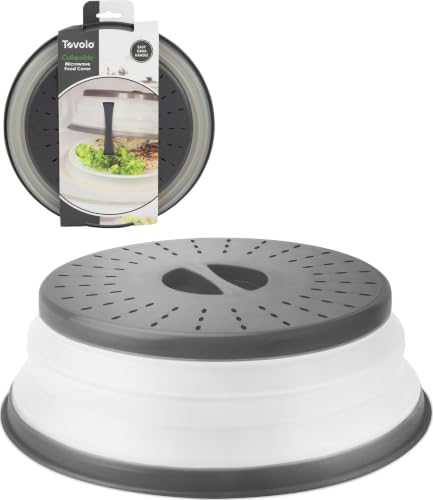
Tovolo Collapsible Microwave Splatter Cover, 10.5 Inch
A vented dome that sits over a plate or bowl, so nothing rests on the food. It pops up to 3 inches tall, folds to 0.75 inch for storage, and goes in the dishwasher.
Good for: covering plates and bowls under 10 inches across
The drawback: it is silicone and plastic, not glass, so it is a cover rather than a container. It only rises 3 inches, which is too short for a mug or a tall bowl, and one buyer says the handle on a newer one keeps popping out.
See the Tovolo cover on AmazonCan You Microwave Ziploc and Other Plastic Bags?
Zipper bags like Ziploc can go in for thawing or reheating, with the zipper open. Grocery and produce bags cannot. Ziploc says its bags “can be used in the microwave, but only to defrost or reheat food” and that “it's important to leave the zipper of the bag open at least one inch to vent any steam or heat.” Ziploc's FAQ gives no maximum time, so heat in short bursts and stop if the bag softens. It also says its polyethylene bags should not be used for sous vide because “the softening point is 230°F”.
Harvard Health is stricter: “Don't microwave plastic storage bags or plastic bags from the grocery store.” If you use a zipper bag, follow the maker's rules exactly, keep sugary and fatty food out of it, and move the food to a bowl when you can.
Can You Microwave Takeout or To-Go Containers?
Usually not. Harvard Health says “Most takeout containers, water bottles, and plastic tubs or jars made to hold margarine, yogurt, whipped topping, and foods such as cream cheese, mayonnaise, and mustard are not microwave-safe.” The FDA adds that “Some plastic containers should not be used in a microwave oven because they can be melted by the heat of the food inside.”
The exception is a tray made for it. Harvard Health says microwavable takeout dinner trays are for one-time use only and will say so on the package. If the container has no microwave label, put the food on a plate. The Canadian Cancer Society explains why: “Single-use containers, like margarine tubs, tend to warp or melt in the microwave,” which “may allow more of the substances in the plastic to leach into the food.”
Foam clamshells are a separate case, covered in our guide to microwaving Styrofoam.
How to Microwave in Plastic More Safely
On top of the short rules above, these habits help when you do use plastic:
- Use medium power and short bursts, and stir in between.
- Stop and switch dishes if the plastic softens, warps or smells.
- Let hot food cool before you store it in plastic. The Canadian Cancer Society says to “Let food cool before adding it to a plastic container, then put it in the fridge immediately.”
What to Use Instead of Plastic in the Microwave
Glass and plain ceramic marked microwave safe are the easy defaults. The FDA notes that containers “can become hot from the heat of the food cooking inside,” so use oven mitts either way. Skip dishes with metallic trim. For more, see can you microwave glass and is porcelain microwave safe. For foil, stainless steel and other metal, see can you microwave metal.
As an Amazon Associate we earn from qualifying purchases.
| Problem | Swap | Amazon |
|---|---|---|
| Reheating leftovers without plastic | Pyrex Simply Store glass, 9 containers | See it |
| Covering a plate without plastic wrap | Tovolo collapsible cover, 10.5 in | See it |
How we chose: popular Amazon listings with thousands of buyer reviews, checked October 20, 2026, one product per job. We did not pick a plastic container: the point of this page is to reheat without one. Each card names a real limit from the listing or from buyers.
Need plates and bowls that can go in? See our picks for microwave safe dinnerware.
Questions People Ask
Can you put plastic in the microwave for 30 seconds?
A short time does not make an unlabeled container safe. If it is labeled microwave safe, 30 seconds is fine. If it is not, or it is a takeout tub, move the food to a plate. Fatty and sugary foods heat up very quickly and can melt thin plastic wrap.
Does microwaving food in plastic containers cause cancer?
No study has shown that microwaving food in labeled plastic causes cancer, but research on plastic chemicals and microplastics is still going on. Harvard Health says the old dioxin warning was wrong because “plastics don't contain dioxins.” The Canadian Cancer Society advises using containers labeled microwave safe and following their instructions.
Is BPA-free plastic safe to microwave?
BPA free is not the same as microwave safe. A BPA-free container still needs the microwave label, and it can still contain other additives. Check for the label and vent the lid.
Can plastic melt in the microwave?
Yes. Thin, single-use plastic can soften or melt, mostly with fatty or sugary food. Containers labeled microwave safe are made to hold up when used as the label says.
Can you microwave plastic water bottles?
No. Pour the drink into a mug.
What should you do if plastic melts in the microwave?
Stop the microwave. If there is smoke or flame, keep the door closed and unplug it. Let everything cool before you touch the melted plastic, and air out the kitchen. Throw out the food and the container; the Canadian Cancer Society says warped or melted plastic may let more of its substances leach into food. Then clean the microwave; our microwave cleaning guide explains how.
What does “microwave safe, reheat only” mean?
It means the container is for warming food, not cooking it. Our microwave safe symbol guide explains the marks.
Sources
- FDA: Microwave Ovens
- FDA: Microplastics and Nanoplastics in Foods
- FDA: Bisphenol A (BPA): Use in Food Contact Application
- Harvard Health: Microwaving food in plastic: Dangerous or not?
- Canadian Cancer Society: Should I put plastic containers in the microwave?
- Hussain et al., Environmental Science & Technology, 2023 (abstract)
- University of Nebraska-Lincoln news release, July 21, 2023
- ASTM D7611: Resin Identification Codes
- American Chemistry Council: Plastic Packaging Resins chart
- Reynolds: The Ultimate Guide for Using Plastic Wrap for Food
- Ziploc: Frequently Asked Questions
- Amazon listings for each product, checked October 20, 2026.
Cupindy is not affiliated with any brand or organization named on this page. Product names are trademarks of their owners.


