

Written by Lara Yehia. Lara researches home and kitchen products for Cupindy. · Published October 2026 · Last reviewed October 4, 2026
Dryer sheets are one of those things most of us use without reading the box. Then someone tells you they are full of chemicals, and someone else tells you wool balls do the same job for years. Both claims are half right.
Below: what a dryer sheet actually leaves on your laundry, what is and is not known about safety, and whether wool dryer balls are worth the switch.
How we put this together: we read the makers' ingredient disclosures and label cautions, the appliance makers' guidance and the studies listed at the end, plus Amazon listings and buyer review summaries checked with a US delivery address on October 4, 2026. We have not tested these products ourselves.
The short answer
- Dryer sheets coat your laundry on purpose. Heat melts a softening chemical (a type of quat) and, in most sheets, fragrance onto the fabric. That coating is what makes clothes feel soft and cuts static.
- "Toxic" is not proven. Michigan State University's ingredient safety center found no evidence that normal use harms health. The real, measured problem is fragrance: in a national US survey, about a third of adults said scented products make them feel unwell.
- Wool dryer balls leave nothing behind. They tumble between clothes, cut wrinkles and may shorten drying time. They do not control static as well as a sheet.
- Our pick: wool dryer balls for most loads. If static or softness matters more to you, a fragrance-free sheet is the gentler sheet.
As an Amazon Associate we earn from qualifying purchases. This does not change which products we recommend.
Our pick for most homes
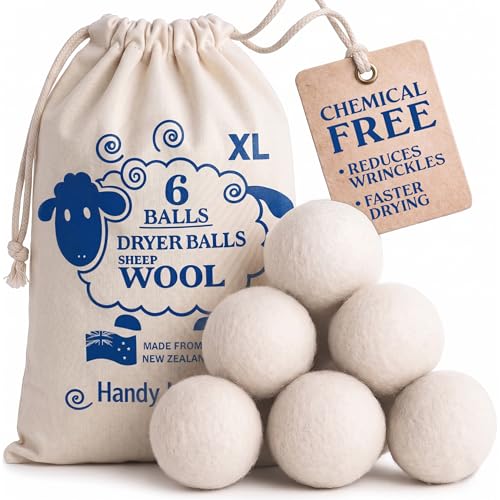
Handy Laundry Wool Dryer Balls, 6 pack
Amazon's number one best seller in dryer balls when we checked in October 2026. The maker says 100% New Zealand wool with no synthetic filler. Nothing is left on your clothes.
See the dryer balls on AmazonBigger loads, or keeping sheets?
Extra-large balls: Smart SheepOrganic-wool claim: FriendsheepFragrance-free sheets: Seventh GenerationWhat do dryer sheets actually do?
A dryer sheet is a thin fabric sheet soaked in a waxy softening mix. In the heat of the dryer the mix softens and rubs off onto your clothes as they tumble. The main ingredient is a cationic softener, part of a chemical family called quaternary ammonium compounds, or quats. It carries a small positive charge, so it clings to fibers, makes them slide past each other more easily and stops static charge from building up. Fragrance rides along in the same coating.
You do not have to guess what is in one. Procter & Gamble lists the Bounce ingredients on its SmartLabel site, and Seventh Generation lists its fragrance-free version on its own product page:

Both sheets soften with a quat. Only one adds fragrance, and only one is made of plastic.
Two details stand out. The Bounce sheet itself is polyester, which is a plastic fabric. Seventh Generation uses rayon, made from plant cellulose. And even the plant-based, fragrance-free sheet softens with a quat. "Fragrance-free" takes the scent out. It does not take the coating out.
That coating goes on your dryer as well as your clothes. P&G's own directions tell you what to do if a sheet leaves spots at high heat (rub with bar soap and rewash). GE Appliances tells owners who use fabric softener or anti-static products to wash the lint filter now and then with warm soapy water, because residue builds up on the screen.
Are dryer sheets toxic? What the research actually shows
Short version: no study shows that dryer sheets harm your health in normal home use, and there are real reasons some people should skip them. Here is what each piece of evidence actually says.
- The ingredient-safety view. Michigan State University's Center for Research on Ingredient Safety reviewed the usual dryer sheet ingredients in 2022 and found no scientific evidence that they harm health when used normally. It singled out fragrance as the exception: in sensitive people it can trigger allergic reactions, asthma, migraines or skin rashes.
- The dryer vent study. In a study published in 2011, researchers sampled the air coming out of the dryer vents of two homes while they washed and dried laundry with a scented detergent and scented dryer sheets. They found more than 25 volatile chemicals. Seven are classed in the US as hazardous air pollutants, and two of those, acetaldehyde and benzene, as carcinogens. The limits matter: it was two homes, detergent and sheets were used together, and nobody measured health effects. It shows what scented laundry puts into the air, not that dryer sheets make people ill.
- The fragrance survey. A 2016 national survey of 1,136 US adults by the same lead researcher found that 34.7% reported health problems such as headaches or breathing trouble from fragranced products, and 12.5% from the scent of laundry products coming out of a dryer vent. That is self-reported, but it is a large group.
- The quats question. Quats get a lot of blame online. A 2023 scientific review of the whole quat family linked them to work-related asthma and skin irritation, but that evidence comes mostly from disinfectants used in hospitals and cleaning jobs. We found no study of dryer sheet softeners and asthma in ordinary home use. That is a gap in the research, not a clean bill of health.
Where the coating does cause problems
These are not health scares. They come from a dryer sheet maker's own label:
- Flame-resistant clothing. Seventh Generation's label says not to use its sheets on children's sleepwear or any garment labeled flame resistant, because the product may reduce flame resistance.
- Towels, fleece and flannel. The same label says to avoid extra-fluffy cotton fabrics like fleece, flannel and terrycloth. Terrycloth is what bath towels are made of. A softening coating on a towel is a coating on the thing you want to soak up water.
- Your lint filter. As above, softener residue builds up on the screen and needs washing off.
Our reading: dryer sheets are not proven toxic, the fragrance is the part with measured effects on people, and the coating has practical downsides for towels, kids' sleepwear and the dryer itself.
If you keep using dryer sheets, pick fragrance-free
Sheets still win on one thing: static. If you dry a lot of synthetic clothes in a dry winter climate, you may decide a sheet is worth it. In that case, a fragrance-free sheet removes the part with the clearest evidence against it, the scent. It does not remove the softening coating, so keep it away from towels and flame-resistant sleepwear either way.
Several big brands sell a fragrance-free version, including Bounce. We prefer Seventh Generation's, because the company publishes its full ingredient list and the sheet is rayon rather than polyester. If you want to understand what "unscented" and "fragrance-free" really mean on a label, our guide to free and clear laundry detergent walks through it.
As an Amazon Associate we earn from qualifying purchases.

If you keep using sheets
Seventh Generation Free & Clear Dryer Sheets, 80 count, pack of 4
No added fragrance or dyes. The sheet is rayon, and the brand lists every ingredient on its website. It says the sheets are USDA Certified Biobased (97%) and EPA Safer Choice certified. Sold and shipped by Amazon.
Good for: static in synthetics, and anyone who wants soft clothes without added scent.
The drawback: it still leaves a softening coating, a quat like other sheets, so the brand's own label says to skip towels, fleece and flame-resistant sleepwear. Some buyers report sticky spots on clothes, and opinions on the smell are mixed.
See the fragrance-free sheets on AmazonDo wool dryer balls really work?
Wool dryer balls are tightly felted balls of sheep's wool. You toss a few in with the load and use them again and again. They do three things, all mechanical:
- They keep the load apart. Wet clothes clump, especially sheets and towels. The balls bounce between them, so hot air reaches more of the fabric. Whirlpool says this can cut drying time and stop laundry clumping.
- They cut wrinkles. Less clumping means fewer creases set in by heat. If wrinkles are your main problem, see our guide to getting wrinkles out without an iron.
- They soften by movement, not by coating. The tumbling fluffs fibers. Nothing is left on the fabric, which is the whole point for towels and sensitive skin.
Do they really dry clothes faster? Probably a little, and nobody has proven how much. Handy Laundry says "up to 25%", and another seller says 10 to 30%. We found no peer-reviewed test of wool balls. The only side-by-side measurement we found was a reviewer's own test: 10 loads in the same dryer, five with and five without two plastic dryer balls. With balls, drying averaged about 14% faster; softness scored the same, and the static count was too close to call. Whirlpool's own advice is that results vary and that an overloaded dryer cancels the benefit.
What they do not do is control static as well as a sheet. Static is the most common complaint in buyer reviews of every wool ball we looked at. The fixes are below.
As an Amazon Associate we earn from qualifying purchases.
Our pick
Handy Laundry Wool Dryer Balls, 6 pack
The top seller in Amazon's dryer ball category when we checked in October 2026, sold by the brand and shipped by Amazon. The maker says they are 100% New Zealand wool with no synthetic filler, extra large and good for more than a thousand loads (its claim). Buyers most often praise how well they work, the shorter drying time, fewer wrinkles and softer clothes.
Good for: replacing dryer sheets on everyday loads, towels and bedding.
The drawback: static is the most common complaint, especially with synthetic clothes, and buyers are split on the smell: some notice a woolly smell at first.
See Handy Laundry on AmazonRunning two dryers, or a big family? The same balls come in a 12 pack.
Wool dryer balls vs dryer sheets vs nothing

Sheets win on static. Balls win on what they leave behind.
Swipe the table sideways on a phone.
| Dryer sheet | Wool dryer balls | Nothing | |
|---|---|---|---|
| Leaves a coating on fabric | Yes, a quat softener | No | No |
| Adds fragrance | Most do | No, unless you add oil | No |
| Static control | Best | Partly | Least |
| Towels, fleece, flannel | Seventh Generation's label says avoid | Fine | Fine |
| Flame-resistant kids' sleepwear | Label says do not use | Fine | Fine |
| Reuse | One load | Hundreds of loads (makers claim about a thousand) | n/a |
| Lint filter | Residue builds up; wash it | No residue | No residue |
How to use wool dryer balls
How many to use
Whirlpool suggests three balls for a normal load, plus one for a bigger load. Smart Sheep suggests three or four for small and medium loads and five to eight for large ones. Start with three to four, add more for towels and bedding, and do not overfill the drum: the balls need room to move.
As an Amazon Associate we earn from qualifying purchases.

For big and bulky loads
Smart Sheep Wool Dryer Balls, XL, 6 pack
Extra large (the maker gives about 9 inches around), handmade, 100% New Zealand wool with no fillers, according to the listing. Buyers most often praise the quality, how well they work and the shorter drying time, and many mention that they add no scent.
Good for: bedding, towels and full loads where bigger balls have more effect.
The drawback: static still gets mixed reviews even at this size, and it is sold by a third-party seller (shipped by Amazon), not by Amazon itself.
See Smart Sheep XL on AmazonHow to cut static without a dryer sheet
Whirlpool's own tips work with or without balls:
- Do not over-dry. Bone-dry clothes build the most static. Use the moisture-sensing or lower-heat setting, and take synthetics out while very slightly damp.
- Dry synthetics separately. Polyester and nylon build far more charge than cotton or wool.
- Dampen the balls. Whirlpool suggests lightly spraying the wool balls with water before a load when static is a problem.
- Use the static setting if you have one. Some dryers have a Static Reduce option that adds moisture at the end of the cycle.
What about essential oils on dryer balls?
Many dryer ball brands suggest a few drops of essential oil for scent. Smart Sheep says two or three drops per ball, left to soak in before the load, and that oil absorbed into wool is not concentrated enough to ignite. Whirlpool's dryer guide is stricter about oil in general: it warns never to dry anything that has had any kind of oil on it, including cooking oil. It does not mention dryer balls. (That rule matters in a kitchen: towels that have soaked up cooking oil should be line-dried.)
There is also the fragrance question. Lavender oil is rich in linalool and citrus oils in limonene, and both are on the EU's list of fragrance allergens that must be named on cosmetic labels above set levels. If you switched to wool balls to get away from fragrance, adding oil brings fragrance back. Our suggestion: skip the oil. If you use it, keep it to a few drops and let it soak in fully first, as the brands say.
Towels

No coating means nothing between the towel and the water it is meant to soak up.
Towels are where switching shows most. Seventh Generation's own label tells you to keep its sheets off terrycloth, which is what bath towels are made of. Dryer balls fluff the loops without coating them.
Which wool dryer balls to buy
Wool dryer balls are a simple product, so a few details decide quality:
- 100% wool, no fillers. The better listings say both outright. It is still the seller's claim, so it helps to buy from a brand with a long review history.
- Size. Most of the best sellers are extra large, and makers suggest more balls, not smaller ones, for bigger loads.
- Undyed if you avoid dyes. Plain cream or natural wool has no color added.
- Enough of them. A six pack covers most homes. Big families can split a 12 pack across loads.
As an Amazon Associate we earn from qualifying purchases.
The premium pick
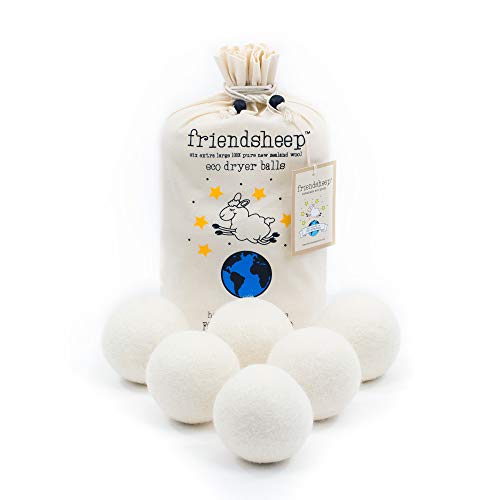
Friendsheep Wool Dryer Balls, XL, 6 pack, Creamy White
Handmade in Nepal. The brand describes the wool as organic New Zealand wool and the balls as fair trade and plastic-free. Buyers most often praise how well they work, the shorter drying time and how they look. Pick the plain Creamy White version if you want no dyes.
Good for: people who want a handmade, undyed ball and care about how it is made.
The drawback: it costs a lot more than our main pick for the same job, and "organic" and "fair trade" are the brand's own words: the listing does not name a certifying body. Static gets mixed reviews here too.
See Friendsheep on AmazonThe picks compared
Swipe the table sideways on a phone.
| Product | What it is | Best for | The catch |
|---|---|---|---|
|
Handy Laundry, 6 pack See it |
Wool dryer balls, extra large; category best seller | Most homes, everyday loads | Static with synthetics; woolly smell at first |
|
Smart Sheep XL, 6 pack See it |
Wool dryer balls, extra large, handmade | Bedding, towels, full loads | Static still mixed; third-party seller |
|
Friendsheep XL, Creamy White See it |
Handmade wool balls, undyed | Buyers who want handmade and undyed | Costs much more; no certifier named on the listing |
|
Seventh Generation Free & Clear sheets See it |
Fragrance-free dryer sheets, rayon | Static, if you keep using sheets | Still a quat coating; not for towels or flame-resistant sleepwear |
Natural fabric softener: what actually works
- Wool dryer balls. The closest thing to a natural softener: softness from movement, nothing left behind.
- White vinegar in the rinse. Popular advice, and we found no controlled test of it as a softener. Maytag warns that vinegar's acidity can wear down washer seals and hoses over time, so check your washer's manual before making it a habit.
- A fragrance-free liquid softener. It works like a sheet, so it coats like a sheet. Same cautions for towels and flame-resistant sleepwear.
- No dryer at all? Air-dried clothes often feel stiff. Shake each piece out well before hanging, and if you have a dryer with an air-only setting, a few minutes of tumbling once they are dry softens them without heat.
Questions people ask
Do wool dryer balls really work?
Yes for wrinkles, tangling and leaving nothing on your clothes. Probably a little for drying time: brands claim up to about 25%, and the only side-by-side test we found (with plastic balls) measured about 14%. They control static less well than a dryer sheet.
How many dryer balls should you use?
Three or four for a normal load, more for towels, bedding or a big load, with room left in the drum for them to move.
How long do wool dryer balls last?
Makers claim about a thousand loads, or several years; that is their figure, not one anyone has tested. Smart Sheep says to replace them when they look scraggly and pieces of wool start to tear off.
How do you clean or recharge wool dryer balls?
Run a lint roller over them, wash them in hot water on a gentle cycle with no detergent, and dry them on high heat. That is Whirlpool's method.
Do wool dryer balls reduce static?
Somewhat, but static is the most common complaint about them. The fixes that work are in the static section above: do not over-dry, dry synthetics separately and dampen the balls.
Can you use dryer balls and dryer sheets together?
You can, but the sheet still coats your clothes, so you lose the main benefit of the balls. If you need the static control, use a fragrance-free sheet only for synthetic loads.
Are wool or plastic dryer balls better?
For a non-toxic laundry routine, wool. Plastic balls are plastic, which is often what people switching away from polyester dryer sheets want to avoid. Both work by keeping the load apart, and the one side-by-side test we found used plastic balls.
Are there microplastics in dryer sheets?
The sheet itself can be plastic. P&G lists the Bounce sheet as polyester, while Seventh Generation uses rayon made from plant cellulose. We found no study measuring how much a dryer sheet sheds.
Do dryer sheets reduce wrinkles?
Some are sold as wrinkle-reducing, and the slippery coating can help a little. Not overloading the drum and taking clothes out as soon as the cycle ends help too, and wool balls cut wrinkles by keeping the load from clumping. For clothes that are already creased, see our guide to getting wrinkles out without an iron.
Should you use dryer sheets on baby clothes?
Not on sleepwear labeled flame resistant: Seventh Generation's own label says its sheets may reduce flame resistance. For everyday baby clothes, fragrance is the main reason to skip sheets. See our guide to washing new baby clothes.
Are dryer sheets bad for your dryer?
They leave residue on the lint screen, which GE Appliances says to wash off with warm soapy water. A clean lint filter matters: the US Fire Administration found that failure to clean was the leading factor in home clothes dryer fires.
Which dryer sheet is the least toxic?
None has been shown to be toxic in normal use. If you want the gentlest one, choose fragrance-free and pick a brand that publishes its full ingredient list. Seventh Generation Free & Clear does both.
Keep reading
- Non-toxic laundry detergent: what free and clear really means
- How to wash clothes without shrinking them
- How to get wrinkles out without an iron
- Washing new baby clothes before the first wear
About this guide: Written by Lara Yehia. We did not test these products. Labels and listings change, so check the current ones before you buy. As an Amazon Associate we earn from qualifying purchases.
Sources reviewed
- P&G SmartLabel: Bounce Dryer Sheets, Outdoor Fresh, ingredients and directions
- Seventh Generation: Fabric Softener Sheets, Free & Clear (ingredients and label cautions)
- Michigan State University, Center for Research on Ingredient Safety: Dryer sheet ingredient safety (2022)
- Steinemann et al., Chemical emissions from residential dryer vents during use of fragranced laundry products, Air Quality, Atmosphere & Health (2011)
- Steinemann, Fragranced consumer products: exposures and effects from emissions, Air Quality, Atmosphere & Health (2016)
- Arnold et al., Quaternary ammonium compounds: a chemical class of emerging concern, Environmental Science & Technology (2023)
- GE Appliances: Dryer lint filters and how to clean them
- Whirlpool: Reducing static in the dryer
- Whirlpool: How to use wool dryer balls
- Whirlpool dryer cycle guide W11423872 (fire hazard warning on oily fabrics)
- Smart Sheep: How to use wool dryer balls
- Smart Sheep: Can you put essential oils in the dryer?
- Prudent Reviews: Do dryer balls actually work? (10-load side-by-side test)
- EU Cosmetics Regulation 1223/2009, Annex III (labelled fragrance allergens)
- US Fire Administration: Clothes dryer fires in residential buildings (2012)
- Maytag: Stop using vinegar to clean your washing machine
- Amazon listings and buyer review summaries for B014WOWNAY, B00GA9P5P0, B07VYS28JK, B092XBTRCF and B07L4ZQV4H (checked October 4, 2026).


