
Written by Sara Ibrahim. Sara researches home and kitchen products for Cupindy.
Published November 2026 · Last reviewed 4 Nov 2026 · Cupindy is not affiliated with any brand on this page.
The short answer
No US rule defines the words freezer safe, so the label is a promise, not a standard. The home-freezing guides ask four things of a container instead: an airtight seal, a barrier to moisture and vapour, a material that does not go brittle or crack at freezer temperature, and a size small enough to freeze fast. Rigid plastic and glass both qualify. Leave room at the top, because liquid expands as it freezes.
As an Amazon Associate we earn from qualifying purchases.
Our quick picks
Everyday leftovers
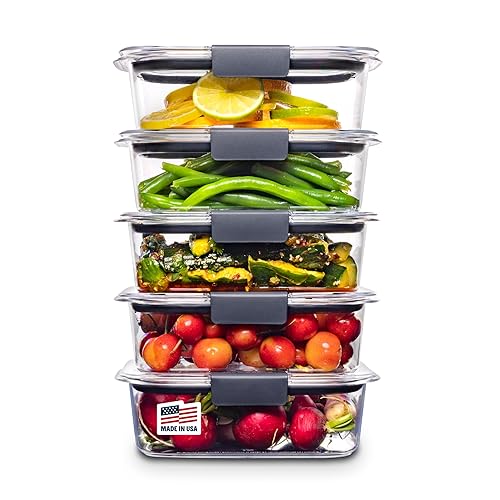
Rubbermaid Brilliance Tritan 3.2-Cup Set
Rubbermaid says these Tritan containers go in the freezer and the dishwasher without warping or discoloration, which answers the brittleness question in the maker's own words. The lids vent, so you can reheat with them on.
See the Rubbermaid Brilliance set on AmazonThe drawback: all five containers are the same 3.2-cup size, so the set suits leftovers rather than batch cooking.

Glass, four sizes
Vtopmart 8-Pack Glass Containers
Borosilicate glass with snap-lock lids and removable silicone seals. Vtopmart publishes a working range for the glass that starts at minus 4°F (minus 20°C).
See the Vtopmart glass set on AmazonThe drawback: that range is for the glass. Vtopmart's own page says nothing about what the plastic lid is rated for.

For soup, in portions
Souper Cubes 1-Cup Freezer Trays
Platinum-cured silicone trays with fill lines at half a cup and one cup. You freeze a block, pop it out, and the tray goes back to work the same evening.
See the Souper Cubes trays on AmazonThe drawback: it is a mould, not a container, so you still need somewhere to keep the blocks. Souper Cubes also states that the lids are not oven-safe.
Every feature and limit below comes from the maker's own product page or FAQ, or from the Amazon listing where the maker publishes nothing, read 4 Nov 2026. The freezing rules come from US extension services and USDA. Sources are listed at the end. We did not use these containers ourselves.
The 5 best freezer-safe containers at a glance
As an Amazon Associate we earn from qualifying purchases.
| Pick | Material | What you get | What the maker rates | One drawback | |
|---|---|---|---|---|---|
| Rubbermaid Brilliance Tritan (everyday leftovers) | Tritan plastic, clip lids | Five containers, all 3.2 cup | Freezer, dishwasher, microwave with the lid on. No oven claim | One size only | See it |
| Vtopmart 8-pack glass (glass, four sizes) | Borosilicate glass, plastic snap lids | Eight containers, 5 to 35 oz | Glass rated minus 4°F to 752°F. Lid not rated on the maker's page | Eight lids to store | See it |
| Souper Cubes 1-cup trays (soup, in portions) | Platinum silicone, steel rim | Two trays, four 1-cup wells each | Freezer, dishwasher. Trays to 415°F in the oven, lids not oven-safe | Blocks need their own box | See it |
| Rubbermaid Brilliance glass (bigger batches) | Glass bases, latching lids | Nine containers, 1.3 to 8 cup | Freezer, dishwasher. Glass bases to 450°F. Microwave for reheating, lids unlatched | The heaviest set here | See it |
| Freshware deli containers (bulk and basic) | Polypropylene, snap lids | Twenty-four round 32-oz sets | Listing says freezer, microwave, dishwasher top rack | Round, so they waste drawer space | See it |
Sizes and set contents are from each maker's page, and from the Amazon listing for Freshware, which publishes no spec page we could find.
What "freezer safe" actually covers
We could not find a US standard that defines the words freezer safe, or a mark a maker has to earn before printing them. Each brand states it for its own product, in its own words.
The useful definition is in the home-freezing guides from the US extension services, and it is a list of properties rather than a label. The National Center for Home Food Preservation at the University of Georgia says a freezer container has to resist moisture and vapour, stay durable and leakproof, and not become brittle or crack at freezer temperature. It also has to keep out oil and grease, stop food picking up off-flavours and odours, and be easy to seal and label.
Read the makers' own pages against that list and a pattern shows up: heat ratings attach to the base and not the lid. Rubbermaid writes that the glass container bases are also oven safe up to 450 degrees F, and says nothing about putting the lids in there. Souper Cubes is blunter, stating that the lids are not oven-safe while the trays go to 415°F. Vtopmart gives a working range for its glass and is silent on the plastic lid.
The gap is wider in the cold. Of the makers here, only Vtopmart publishes a low-temperature figure at all, a floor of minus 4°F (minus 20°C) for the glass. Everyone else writes freezer safe and leaves it there. A home freezer sits at 0°F, so the brittleness question in the extension list is the one most boxes do not answer.

A lid that has gone brittle splits at the rim, and then it stops sealing.
If you want to know what the number in the triangle on the base means, that is a separate question, and we went through it in our guide to plastic grades for food storage.
Glass, plastic, silicone or steel in the freezer
For liquids, the extension guides point at rigid plastic and glass, and prefer straight sides, because a frozen block comes out more easily and the containers stack.
Glass
In the cold: Does not stain and does not hold onto curry or tomato. You can still see what is in it after four months.
Watch for: weight, and thermal shock. NCHFP and Clemson both warn that ordinary glass jars break easily at freezer temperature, and send you to jars made for freezing and canning instead.
Rigid plastic
In the cold: Light, easy to replace, and it will not shatter.
Watch for: going brittle over time, and staining. Almost no maker publishes a cold limit, so the word on the box is all you have.
Silicone
In the cold: Stays flexible at 0°F, which is why a frozen block releases from a tray and sticks in rigid plastic.
Watch for: it works as a mould rather than a container. Lids often carry different limits from the tray itself.
Stainless steel
In the cold: Will not crack, will not stain, will not hold a smell.
Watch for: you cannot see in, and it will not go in a microwave. None of the US freezing guides we read addresses steel containers either way.
For the wider comparison across your whole kitchen rather than just the freezer, see glass against plastic food storage containers. For the material itself, we looked at whether silicone is safe for cooking.
Best plastic freezer containers
As an Amazon Associate we earn from qualifying purchases.
Plastic is what most people reach for, because it weighs nothing and stacks. One of the two below is a matching set for the fridge-to-freezer-to-lunchbox run. The other is the bulk answer.
Our plastic pick
Rubbermaid Brilliance Tritan 3.2-Cup Set
Good for: leftovers, lunches and single portions you will eat within a few months.
Why we picked it: Rubbermaid makes the bases and lids from Tritan and says the containers can be placed in the freezer and the dishwasher without warping or discoloration, which is the brittleness and staining question answered in the maker's own words. The lids have a two-latch seal Rubbermaid calls airtight and leakproof, with vents under the latches so you can microwave with the lid on.
What to know: the set is five containers of one size, 3.2 cup. Rubbermaid publishes no oven rating at all for the plastic line, so reheating here means the microwave.
The drawback: a 3.2-cup box holds a portion of soup rather than a batch. If you freeze in quarts, you want the glass picks or the deli containers below.
See the Rubbermaid Brilliance set on Amazon
Bulk and basic
Freshware 32-Ounce Deli Containers, 24 Sets
Good for: batch cooking, soup, stock, and anyone who freezes in large numbers of small portions.
Why we picked it: Round polypropylene deli containers, 32 ounces, twenty-four of them with lids. The listing gives polypropylene, free of BPA, PVC and phthalates, with snap lids rated for the freezer and the microwave and the dishwasher top rack. One size, one lid, easy to replace.
What to know: Freshware does not publish a cold limit, and we could not find a spec page of its own, so treat the freezer claim as a listing claim rather than a maker statement.
The drawback: round containers waste drawer space next to square ones, and a 32-ounce container is a deep one, which freezes more slowly in the middle than a shallow one does.
See the Freshware containers on AmazonBest glass freezer containers
As an Amazon Associate we earn from qualifying purchases.
Glass is the choice for anything that stains or smells, and the only material here that tells you what is inside at a glance after a season. The trade is weight and thermal shock. Pyrex states the rule in capitals: do not transfer directly from freezer to hot oven. Thermal shock is a property of glass rather than of one brand, so we would apply that to every glass container here, though Pyrex is the only maker that says it outright.
Our glass pick
Vtopmart 8-Pack Glass Containers
Good for: a mixed freezer: sauces in the small containers, portions in the big ones, all of it visible.
Why we picked it: Eight borosilicate containers in four square and four rectangular sizes, from about 5 ounces to about 35. The lids are plastic with removable silicone seals and four snap locks. Vtopmart publishes a working range for the glass of minus 4°F to 752°F (minus 20°C to 400°C), the only cold rating any maker here states.
What to know: that range covers the glass. Vtopmart's own page does not say what the plastic lid is rated for, hot or cold, so we would take the lid off before an oven goes near it.
The drawback: eight containers means eight lids, and four shapes do not all stack on each other. Glass is also heavy once it is full.
See the Vtopmart glass set on Amazon
For bigger batches
Rubbermaid Brilliance Glass 9-Container Set
Good for: families, and anyone who freezes a whole dish rather than portions.
Why we picked it: Nine glass-based containers from 1.3 cup up to a single 8-cup, with the latching lids Rubbermaid uses across the Brilliance line, so lids swap between the glass and plastic containers of the same size. Rubbermaid rates the glass bases to 450°F in the oven and calls the set freezer and dishwasher safe.
What to know: the oven figure is for the bases. Rubbermaid caps microwave use at reheating with the lids unlatched, and says nothing about lids in an oven. Measure your freezer drawer before you count on the 8-cup.
The drawback: it is the heaviest set here, and the latching lids add bulk.
See the Rubbermaid Brilliance glass set on AmazonContainers for freezing soup and liquids
As an Amazon Associate we earn from qualifying purchases.
Liquid expands as it freezes, so a container needs room at the top or the lid lifts and the seal goes. Allow half an inch in a wide-mouth pint and an inch in a wide-mouth quart, and more in a narrow-mouth container, where expanding liquid has nowhere to go but the neck.
The figures below are the National Center for Home Food Preservation headspace table, repeated by Penn State Extension and Clemson Extension. One thing to know before you use it: none of them gives a figure for soup by name. The table is written for liquid packs, and the soup guidance points back to that row, so that is the row to read for stock, soup and sauce.

Left, filled with room to spare. Right, filled to the rim, with the lid already lifting at one corner.
| What you are freezing | Wide-mouth container | Narrow-mouth container |
|---|---|---|
| Liquid pack, pint size (about 2 cups). Use this row for soup, stock and sauce | 1/2 inch | 3/4 inch |
| Liquid pack, quart size (about 4 cups) | 1 inch | 1 1/2 inches |
| Dry pack with no liquid added (berries, chopped vegetables) | 1/2 inch | 1/2 inch |
| Loose vegetables, bony cuts of meat, bread | None needed | None needed |
For soup specifically, a silicone tray solves a different problem. You freeze the portion as a block and store the blocks stacked in a bag or a box, so the tray is free again the same evening instead of being tied up until the batch thaws.

Silicone stays flexible at freezer temperature, so the block releases instead of gripping the walls.
Our pick for soup
Souper Cubes 1-Cup Freezer Trays
Good for: stock, soup, sauce, chilli, leftover gravy, anything you want in measured portions.
Why we picked it: Two trays, four one-cup wells each, moulded in platinum-cured silicone with a steel-reinforced rim. Fill lines are marked at half a cup and one cup, and in millilitres. Souper Cubes rates the trays to 415°F in the oven and puts trays and lids both in the dishwasher.
What to know: Souper Cubes states that the lids are not oven-safe, and publishes no cold limit for either tray or lid. The company also notes the tray loses its microwave rating if the steel rim is exposed.
The drawback: the blocks still need a bag or a box once they are out, and the trays take up flat freezer space while they set.
See the Souper Cubes trays on AmazonCool the soup before it goes in. Clemson asks for food to be cooled quickly before packaging, and the UGA guidance on freezing soups and stews suggests an ice bath to get there. Do not let it stand, either. FoodSafety.gov allows two hours at room temperature, one hour above 90°F (32°C), and asks you to divide a big batch into shallow containers so it cools fast. If it is still warm when the two hours are up, refrigerate it to finish.
Portions and meal prep
A freezer used as a meal-prep system gets judged on different things: how the containers divide, whether they travel, whether the lid survives a week of lunches. We keep a separate guide to meal prep containers for that job.
The rules that keep frozen food worth eating
Set the freezer to 0°F (-18°C) or below, cool food before it goes in, freeze it fast in small packages, press the air out, and label it with what it is and the date.
- 0°F or below. FoodSafety.gov gives 0°F (-18°C) as the freezer setting and suggests an appliance thermometer, because a freezer dial is not a reading. NCHFP goes further for a big batch and suggests turning the freezer down to -10°F about a day ahead.
- Do not load it all at once. NCHFP and Clemson both put a number on this: no more unfrozen food than the freezer can freeze in 24 hours, which is roughly 2 to 3 pounds per cubic foot of space.
- Leave gaps while it freezes, stack afterwards. Set the packages against a cold surface with air space between them, and push them together once they are solid.
- Keep packages small and shallow. The published limit is half a gallon, and it is written for fruit and vegetables, the reason given being that a large container freezes too slowly in the middle. That reasoning is ours to extend, but it applies just as well to a deep container of soup.
- Press the air out and seal clean. Air is what causes freezer burn. Keep the sealing edge free of food and moisture, or the lid will not close properly on it.
- Label it. NCHFP asks for the name, anything added, the date and the amount.

The name, the date and the amount is about as much as fits on a strip of tape, and it is what the guides ask for.
Freezer burn is not a safety problem. USDA describes it as the greyish-brown leathery patches where air has reached the surface of the food, and says you can cut those parts away and eat the rest, or throw out badly affected food because the quality has gone. Clemson lists the causes, and they are all packaging: a torn or unsealed package, wrapping that does not block moisture and vapour, or too much air left inside.
Freezing does not kill bacteria. It makes them dormant, and they become active again as the food thaws, which is why thawed food has to be handled like fresh food. USDA's position is that food held constantly at 0°F stays safe to eat indefinitely, and that long storage costs quality rather than safety. Ohio State Extension states the same.
Thaw it in one of three places. USDA names the fridge, cold water in a leakproof bag with the water changed every 30 minutes, and the microwave. Food thawed in cold water or a microwave has to be cooked straight away. MSU Extension adds that cooking from frozen is safe and takes about half as long again, and that only fridge-thawed food can go back in the freezer without being cooked first. Not the counter, and not a sink of warm water.
Questions people ask
What is a freezer safe container?
One that seals airtight, blocks moisture and vapour, resists oil and grease, keeps odours out, and does not go brittle or crack at freezer temperature. That is the list NCHFP publishes, and no US standard defines the words on the box.
Is glass or plastic better for freezing?
Glass if the food stains or smells, plastic if weight and breakage matter. Both are on the recommended list for liquids, so it is a preference rather than a rule. The long version is in glass against plastic containers.
Are deli containers freezer safe?
The polypropylene ones sold for the job say so on the listing, and they are a common choice for stock and soup. Two cautions: the maker rarely publishes a cold limit, and a 32-ounce round container is a deep one, so it freezes more slowly in the middle than a shallow container of the same volume.
Can glass containers with plastic lids go in the freezer?
Yes, and that is what most glass sets are. What to check is which part the maker actually rates: Vtopmart publishes a range for its glass and nothing for the lid. For glass jars specifically, including what cracks and why, see freezing in mason jars.
Can you put stainless steel containers in the freezer?
Steel will not crack, stain or hold a smell, and it is common in lunch boxes. None of the US freezing guides we read addresses steel containers, though, so there is no extension-service backing to point at either way, and you cannot see in or reheat in a microwave.
What is the best container for freezing soup?
A silicone tray if you want measured portions, or a straight-sided rigid container or wide-mouth freezing jar to freeze and forget. Either way, leave the headspace in the table above.
How do I stop freezer burn?
Keep the air away from the food. Match the container to the amount you are freezing, wipe the sealing edge before you close it, and press the air out of bags. Freezer burn is a quality problem rather than a safety one.
Are freezer bags better than containers?
For flat, dry things bags win, and the guides list freezer bags and freezer wrap alongside rigid containers. For liquids they recommend rigid plastic and glass. Whichever you use has to be sold for freezing: ordinary foil, wax paper and bread wrappers are not recommended for long storage.
What containers work for freezing a whole dinner?
Two or three shallow containers rather than one deep one, because a large container freezes slowly in the middle. The 8-cup glass container in the Rubbermaid set is about as big as we would go.
How should I freeze raw meat?
Overwrap it. USDA points out that the clear supermarket wrap lets air through, so for anything beyond a short stay it needs a second layer of freezer wrap, heavy foil or a freezer bag, or moving into a rigid container. An unopened vacuum pack goes in as it is. Clemson gives storage times at 0°F of around three months for ground or stewing meat and up to a year for beef steaks and roasts.
Can you freeze cooked rice in a container?
You can, and two separate things matter. On quality, NCHFP lists cooked rice and pasta among the foods that freeze badly on their own, turning soft and tasting warmed over. On safety, NC State Extension explains that cooked rice can carry Bacillus cereus spores, that the risk builds while it sits warm, and that the toxin they produce survives reheating. Chill it fast in a shallow layer and freeze it the same day.
How do I freeze food without plastic?
Glass containers made for freezing, wide-mouth freezing and canning jars, and stainless boxes cover most of it, with nothing going from the freezer straight into a hot oven. The freezing guides do not weigh in on plastic safety at all, which is a separate question we work through in non-toxic food storage containers.
The verdict
Buy the Rubbermaid Brilliance Tritan set for leftovers and lunches. It is the one pick here where the maker answers the warping and clouding question in writing. If you want to see into your freezer, take the Vtopmart glass set, and treat the lid as unrated until Vtopmart says otherwise. Soup goes in the Souper Cubes trays. Two others are worth a look if they match how you cook: the Rubbermaid glass set for whole dishes, and the Freshware deli containers if you freeze in volume.
See the Rubbermaid Brilliance setSee the Vtopmart glass setSee the Souper Cubes trays
Freezing the week's bread too? We went through what works in our guide to keeping bread fresh. If the plastic question is the one bothering you, start with whether plastic food containers are safe.
How we put this together
On 4 Nov 2026 we checked every pick on Amazon US for stock and model through the Amazon Creators API, then looked for the maker's own product page or FAQ for each one. Rubbermaid, Souper Cubes, Vtopmart and Pyrex all publish usable statements, and those are attributed to them. Freshware has no spec page we could find, so its claims come from the Amazon listing and are labelled that way. The freezing rules are from the National Center for Home Food Preservation, Clemson, Penn State, Ohio State and MSU Extension, FoodSafety.gov and USDA, all linked below. Left out: Glad FreezerWare, because we could not source its freezer-engineering claim on glad.com; the KOMUEE glass set, which has no maker page we could find; and freezer bags, which are a different product. We did not freeze anything ourselves, and no brand saw this page before it went up.
Sources (opened 4 Nov 2026).
- NCHFP (University of Georgia): Containers for Freezing
- NCHFP: Headspace to Allow
- NCHFP: Packaging and Labeling Foods
- NCHFP: Freezing Pointers
- NCHFP: Freezing Soups and Stews
- NCHFP: Foods That Do Not Freeze Well
- Clemson Cooperative Extension HGIC 3060: Freezing Basics
- Penn State Extension: Why Allow Headspace When Canning and Freezing Food
- Ohio State University Extension HYG-5402: Freezer Storage
- MSU Extension E-3259: Thawing Foods Safely (PDF)
- FoodSafety.gov: 4 Steps to Food Safety
- USDA Food Safety and Inspection Service: Freezing and Food Safety
- NC State Extension: Safety of Leftover Rice
- Rubbermaid: Brilliance food storage container (plastic)
- Rubbermaid: Brilliance glass food storage container
- Souper Cubes: frequently asked questions
- Vtopmart: 8-pack glass food storage containers
- Pyrex: product warranties, safety and usage


