
Written by: Lara Yehia, Cupindy Home & Kitchen Team
Experience note: Lara has 8 years of experience creating home and kitchen product guidance, safety-focused buying content, and practical household-use articles for Cupindy readers.
Last reviewed: September 2026 · Reviewed for: cavity and accessory materials, manufacturer chemical disclosures, recall history, and practical buying guidance
THE SHORT ANSWER
Your oven has five surfaces that touch food, and the "non-toxic" claim on the box almost always describes just one of them.
The cavity gets the marketing. Meanwhile the bake pan is ceramic-coated, or the basket is chrome-plated, or the grill plate is non-stick. That's true of the most expensive oven in this category and of the cheapest one we recommend.
And the chemical disclosure everyone tells you to look up? It doesn't cover the part of an oven most likely to be coated. We'll show you the oven with the cleanest filing in the whole category whose own manual says the interior walls are non-stick.
Disclosure: Cupindy earns an Amazon commission on qualifying purchases made through links in this article, at no extra cost to you. Our picks, and both of our rejections, are unaffected by it. We don't link the products we advise against. Full disclosure.
WHICH ONE, IN ONE LINE
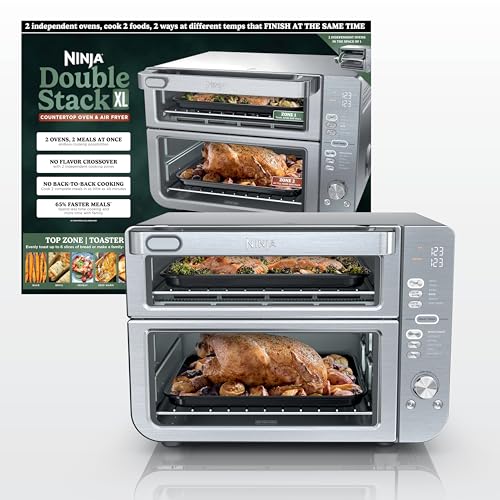
→ You want the paperwork to actually cover your model — Ninja DCT601
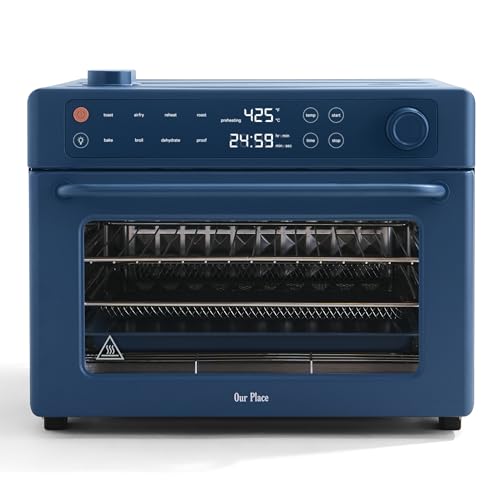
→ Materials matter more to you than anything else — Wonder Oven Pro
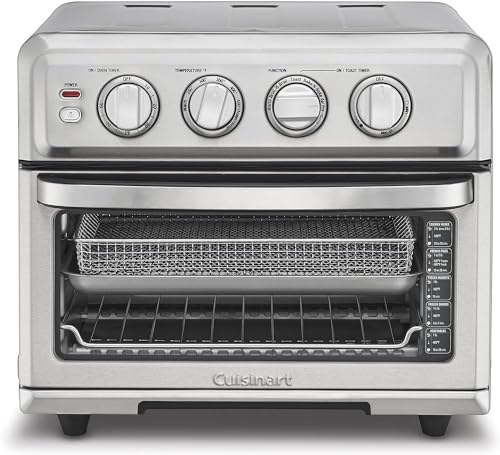
→ You want to spend the least and still get a stainless cavity — Cuisinart TOA-70
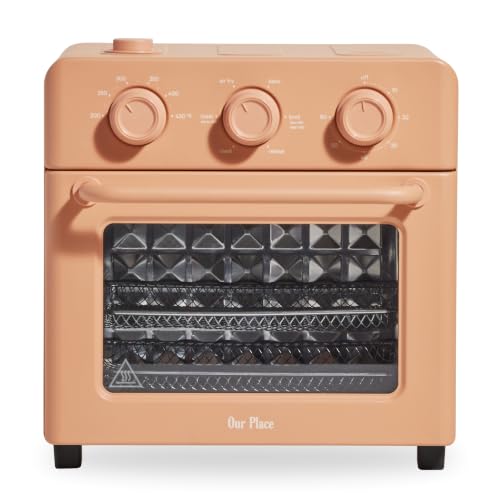
→ Counter space is the real problem — Wonder Oven, 12.7 qt
→ Your current oven works fine — don't replace it, replace the tray
IN THIS GUIDE
Our picks The five surfaces What the filing misses What goes wrong FAQs
SECTION ONE
What actually touches your food
A slow cooker has one surface that touches food. A frying pan has one. This appliance has five, and they're rarely made of the same thing.
That's the whole problem with how these ovens are sold. "Stainless steel interior" is a statement about the walls. Your dinner never touches the walls.

Cavity walls
Stainless, aluminised or galvanised steel, porcelain enamel, or a non-stick coating. The part the marketing describes.
Wire rack
Bare steel or chrome-plated steel. Food sits on it directly.
Air fry basket
Mesh, usually chrome-plated or bare steel. Sometimes coated.
Bake pan or grill plate
◄ this is the coated one
Aluminium with a non-stick coating, on most ovens sold as non-toxic.
Crumb tray
Steel or aluminised steel. Catches drips rather than holding food.
Look at what that means at the two ends of this market.
Our Place sells the Wonder Oven Pro on a "stainless steel and glass interior" and says the accessories are made without "PTFE (Teflon), PFOA, PFAS, Lead & Cadmium." All true. Their own spec sheet lists the basket, rack and crumb tray as steel. It also lists the bake pan as "aluminum with non-toxic ceramic coating." One coated surface out of five, stated plainly by the manufacturer, and almost never mentioned by the articles recommending it.
Cuisinart sells the TOA-70 on a "stainless steel easy-clean interior." It's one of the best-selling countertop ovens in the country. In the box: an oven rack, a baking pan, an air fryer basket, and a "Dual-Sided ceramic nonstick Grill/Griddle Plate."
Same pattern. Different part. Very different price.
SO HERE'S WHAT TO DO ON ANY LISTING
Skip the interior claim. Go straight to the accessory list and count how many of the five parts are described by material.
If a pan, plate or basket is called "non-stick" without naming the coating, that's the surface your food will sit on, and nobody has told you what it is.
SECTION TWO
What we'd actually buy
Disclosure: As an Amazon Associate, Cupindy earns from qualifying purchases made through the links below, at no extra cost to you. See our affiliate disclosure. As an Amazon Associate we earn from qualifying purchases.
READ THIS BEFORE YOU SPEND ANYTHING
Every oven we looked at for this guide has a pattern of owners reporting failure inside one to two years. Controllers, fans, start buttons, door hinges. Cheap ones and expensive ones alike, across five brands.
In this category, money buys you better materials and better features. It doesn't appear to buy durability. So choose on the cavity material and on whether the thing has a real auto shut-off, and don't pay a premium expecting to keep it for a decade.

THE OPTION THAT EARNS US NOTHING
Keep the oven you own. Replace the one coated part.
This is what we'd tell a friend, and we make nothing from it.
You can't re-line a slow cooker crock or re-surface a frying pan. But in a countertop oven the coated part is almost always the removable part. A bake pan. A grill plate. A basket. Those are commodity items in standard sizes.
A stainless replacement tray costs a small fraction of a new oven, fits most cavities, and takes the single coated surface out of the equation completely. Third-party stainless trays and baskets are sold for most popular models, and some are better made than the pan that came in the box.

So unless your oven is recalled, damaged, or coated on the walls themselves, replacing it is a purchase and a landfill item that solves a problem you can solve for the price of a takeaway. Measure your rack, buy a stainless tray, run the burn-in, put a thermometer inside. That's the whole upgrade.
Do you even need the air fryer function?
Worth asking before you spend anything at all.
An air fry setting on a countertop oven is a high fan speed and a mesh rack. Owners of nearly every model here say it crisps less well than a dedicated basket fryer, and it's the function that generates the drips, the spatter and the smoke. If you mostly toast and reheat, a plain toaster oven is simpler, cheaper and has fewer parts to fail. Our guides to toasters versus toaster ovens and choosing a toaster cover that route. If air frying is the main event, our non-toxic air fryer guide looks at basket models, where the material question is simpler because there are fewer surfaces to check.
SECTION THREE
The disclosure everyone recommends, and the part it misses
Since 2023, California's Assembly Bill 1200 has required cookware manufacturers selling into the state to publish, on their own websites, the intentionally added chemicals that appear on designated hazard lists. It's a legal obligation, not a marketing decision.
We've recommended it before. In our guide to the best non-toxic slow cooker we told readers to search any brand name plus "AB 1200" before buying, and we stand by that.
Writing this guide showed us where it stops working, though, and the gap is bigger than we realised.
WHAT THE LAW ACTUALLY REACHES
The California Attorney General's enforcement advisory says the requirement applies when a listed chemical is intentionally included "in the handle of the product or in any product surface that comes into contact with food, foodstuffs, or beverages."
Read that against the five parts in section one. Racks, baskets and pans contact food. Cavity walls don't. Neither does the heating element, the fan housing or the exhaust vent.
Which means an oven can be lined with non-stick coating from top to bottom and have nothing to declare. That isn't a hypothetical, either. It describes the oven with the cleanest filing in this whole category.
TWO DOCUMENTS FROM THE SAME COMPANY
Breville's AB 1200 disclosure covers "Ovens & Air Fryers" and lists iron, chromium, nickel, manganese, molybdenum, phosphorus and copper. The constituents of stainless steel, and nothing else. On paper it's the cleanest document any oven brand publishes.
Breville's own instruction book for the Smart Oven Air Fryer Pro says: "The walls on the inside of the oven feature a non-stick coating for easy cleaning." The accessory list in the same book includes a 13-inch non-stick pizza pan.

Both documents are accurate. The cavity walls fall outside the statute because food doesn't touch them, and a coating only has to be listed if it contains a designated-list chemical. Breville isn't doing anything wrong here.
But a reader who followed our earlier advice, found a filing with nothing in it but steel, and concluded the oven was uncoated would have got the wrong answer. That's on us, and it's why this section exists.
How to tell a useful filing from an empty one
The test is whether the same document declares a fluoropolymer anywhere else. If it never does, a clean entry tells you nothing about that company's habits. If it does, a clean entry starts to mean something.
SharkNinja's filing passes. Its oven series manufactured after 15 August 2024, including the DCT600 range, list aluminium and stainless steel constituents and no fluoropolymer. Elsewhere in the same document, its waffle makers list "Polytetrafluoroethylene (PTFE)," annotated in the filing itself as "This chemical provides a non-stick coating."
Instant Brands' doesn't. A single statement covers the entire catalogue: its products contain a list of metals "and/or PFAS (including PTFE, PFA, and FEP)." Compliant, and no help at all when you're choosing between two models.
One more trap, and we walked into it ourselves. A filing that covers a brand doesn't always cover the model in front of you. When we checked SharkNinja's list in September 2026, the DCT600 series was named and the newer DCT800 series wasn't. Filings get updated, so the point isn't about one model number. Check that your exact model appears before you treat the document as evidence of anything.
SECTION FOUR
Does the heat actually bake fumes off the coating?
This is the fear driving the entire search. Most articles either wave it away or treat it as settled fact.
The literature supports neither, because there isn't one temperature here. There are four, and they measure different things.
PTFE begins releasing fumes
◄ the number that matters to you
260 °C / 500 °F
Symptoms in humans generally begin
350 °C / 662 °F
Pyrolysis commences
400 °C / 752 °F
The polymer itself breaks down
550 °C / 1,020 °F
The first three come from the clinical literature on polymer fume fever. The fourth comes from a 2025 study in the Journal of Hazardous Materials, which heated PTFE, PCTFE and PVDF from 200 to 890 °C and found PTFE "remaining intact until ≥ 550 °C" while detecting "no short- or long-chain per- and polyfluoroalkyl substances (PFAS)" under any condition it tested.

NOW PUT YOUR OVEN NEXT TO THAT
These ovens run to 450 to 480 °F. The temperature at which fume release is first reported is 500 °F.
That's a margin of twenty to fifty degrees, not the enormous headroom you'd infer from the 550 °C figure on its own. And a dial describes the oven's air temperature. A metal pan sitting directly under a broiler element runs hotter than the air around it, which is exactly why makers of coated bakeware tell you not to broil on it.
So the honest answer is narrower than either camp usually gives you. Normal baking and air frying sits below the threshold. Broiling, an empty preheat with the top element at full, or a coated pan pushed up under the element doesn't leave much room, and nobody has measured the surface temperature of your particular pan.
If you'd rather the question went away than be managed, that's a perfectly good reason to buy uncoated. It's also a better reason than the ones usually offered.
THE PRACTICAL VERSION
1. Don't put a coated pan under the broiler element. Use the bare rack or a stainless tray.
2. Don't preheat empty on broil with a coated pan still sitting in the cavity.
3. Coatings wear and bare steel doesn't. A scratched steel tray still works; a worn-through coating means replacing the part.
4. "Ceramic non-stick" usually means a sol-gel silica finish rather than a fluoropolymer, so none of the thresholds above may apply to it. But you can't apply any threshold to a material nobody has named, which is the real problem with a listing that says only "non-stick."
Why we're showing you all four numbers. It would be easy to quote only the 550 °C study and tell you the fear is baseless. Just as easy to quote only the 260 °C figure and tell you to panic. Both are in the literature, they measure different things, and an article that gives you one without the other has picked your conclusion for you.
If the coating question is what brought you here, two of our other guides go deeper: what PFOA-free actually means, and PFAS-free versus PTFE-free air fryers.
And the galvanised steel scare, while we're here
Several guides in this category warn about galvanised, or zinc-coated, cavity interiors. The galvanising industry's own position is worth knowing.
The American Galvanizers Association gives a recommended maximum short-term service temperature of about 660 °F for galvanised steel. That figure is about protecting the zinc coating rather than a health limit, and the same page says "most galvanized tray components or galvanized grill/toaster/smoker elements will not reach temperatures of concern."
There's a real rule underneath the scare, and it's narrower than the warnings suggest. The FDA Food Code restricts galvanised metal on food contact surfaces used with acidic food, because acid is what mobilises zinc. That's a rule about a tray holding tomato sauce, not about a wall three inches from your dinner. If a galvanised cavity is your only objection to an oven, it isn't a strong one. If the tray is galvanised, line it or replace it.
SECTION FIVE
What actually goes wrong with these ovens
Four things, and none of them is the one this category worries about.
1. The burning-plastic smell on day one
Owners across this whole category report a sharp chemical smell for the first few uses, sometimes strong enough to taste in the food. When you've just paid a premium specifically to avoid fumes, that's alarming.
It's also expected, and the manufacturers say so. Our Place's setup guide makes a burn-off part of unboxing: "A small amount of smoke or odor is normal during this step — it's just the newness burning off." Ninja tells owners to wash the accessories and run them in the empty oven for 25 minutes before cooking. Maytag puts the same effect in full-size ovens down to "chemicals and other protective coatings in your oven cavity being exposed to heat for the first time."
THE BURN-IN, BEFORE YOU COOK ANYTHING
1 Wash the racks, basket and pans by hand and dry them.
2 Open a window and turn on the extractor.
3 Run the oven empty at around 350 °F for up to an hour, or follow your model's own instruction if it gives one.
4 Let it cool, wipe the interior with a damp cloth, repeat once if you can still smell it.
Still there after several cycles? Return it. That's a different problem from ordinary burn-in.
2. The rust, at around month six
This is the honest cost of everything we've recommended, and we haven't seen another guide mention it.
A coating does two jobs. It stops food sticking, and it seals the metal underneath. Take it away and you lose both.
Owners of bare-metal-interior ovens, across more than one brand in this guide, report rust on interior walls, rack supports and drip trays within months of normal use, sometimes with a white residue that won't wipe off. Steam functions and daily reheating make it worse, because the cavity spends more of its life damp.
None of that makes uncoated the wrong choice. It makes it a choice with a maintenance cost, and you should hear that before you spend the money rather than at month six.
IF YOU BUY UNCOATED, DO THIS
Dry the cavity after any steam or wet cooking instead of shutting the door on a damp interior. Wipe spills before they bake on, since the recommended cleaning method for these interiors is a soft damp cloth and nothing abrasive. And don't leave a wet crumb tray sitting in the base overnight. It's the part that goes first.
3. Doors, cords and glass — the recorded injuries
Every guide in this category is about chemistry. The documented, government-recorded harm from these appliances is not chemistry.
Oster French Door countertop ovens
September 2025 · about 1,290,000 US units
"The oven's doors can unexpectedly close, posing a burn hazard to consumers." 95 reports, including two second-degree burns.
Panasonic NB-G200 toaster oven
July 2026 · about 11,480 US units
Cord insulation insufficient where a protective fibreglass sleeve didn't cover it, "posing a risk of shock and/or fire hazard."
Several of the recalled Oster models include air fry functions, and they're the same French-door format this category is full of. Not one non-toxic toaster oven guide we read while researching this article mentions either recall.

Then there's the glass, which nobody in this niche looks at.
In May 2026, Consumer Reports wrote to the Consumer Product Safety Commission after searching the public SaferProducts.gov database. Between January 2025 and March 2026 they found at least 386 incidents of oven glass doors shattering, some of which, in their description, "spontaneously exploded while the oven was not in use."
The honest limit on that figure: the Consumer Reports analysis covered full-size range ovens, not countertop ones, and we're not going to present it as a countertop statistic. What connects them is the same tempered glass in the same thermal cycle. What differs is that a countertop oven sits at chest height on a work surface rather than at knee height across the room.
4. The everyday one: what falls onto the element
In most of these ovens the heating elements run along the floor of the cavity, uncovered. The racks that ship with them often have slats wide enough for a chip, a crumb or a piece of cheese to drop straight through.
Owners across several brands describe food landing on the lower element, smoking, and setting off alarms. One keeps tongs beside the oven for what she calls food rescues. It's the most common way these ovens cause real trouble, and it costs nothing to prevent: put a solid tray on the rack below anything that can drip or drop.
THE 30-SECOND CHECK ON THE OVEN YOU ALREADY OWN
1 Look up your exact model on the CPSC recall database. The base, cord and door fail far more often than anything chemical.
2 Put a solid tray on the rack below anything that can drip.
3 Check the clearance your manual asks for. Several of these want two to four inches on every side and nothing above.
4 Put an oven thermometer inside and compare it with the display.
5 Check the door closes flush and the glass has no chip or star. A damaged pane is a reason to stop using it.
That fourth one matters more than it sounds. An oven that reads 425 and delivers 375 will leave chicken and fish undercooked at the moment the recipe says they're done.
SECTION SIX
Two that look like the answer and aren't
Neither of these is linked. We earn nothing from this section, and both appear as picks in other publications' non-toxic toaster oven guides. Everything below comes from the manufacturer's own documents or a government recall notice.
NOT RECOMMENDED, FOR THIS PURPOSE
Breville Smart Oven Air Fryer Pro (BOV900)
Sold in brushed stainless steel, with the cleanest chemical filing of any oven brand we checked. Its own instruction book states that "the walls on the inside of the oven feature a non-stick coating for easy cleaning," and lists a non-stick pizza pan alongside an enamel roasting pan.
To be fair to Breville, nothing here is hidden. The manual is public, the coating is disclosed in it, and the enamel roasting pan is a genuinely good inclusion. Enamel is fired glass, not a polymer, and it's what we'd want a roasting pan to be. The problem is only that this oven keeps turning up on lists of non-toxic toaster ovens, and it's the one oven here whose own manufacturer says the interior is coated.
Separately, and worth knowing whatever you think about coatings: owners report racks that arrive too tight to slide, doors that stop closing flush, and a displayed temperature that doesn't match what a thermometer reads inside. If you already own one and like it, none of that is a reason to replace it. It's a reason not to buy it for this particular purpose.
CHECK YOUR MODEL NUMBER FIRST
Oster French Door countertop ovens, recalled models
Oster countertop ovens appear on more than one non-toxic list, on the reasonable basis that their interiors are uncoated. That part is true. It also isn't the whole picture, because in September 2025 the Consumer Product Safety Commission announced a recall of approximately 1,290,000 Oster French Door countertop ovens sold in the United States.
The recalled models are TSSTTVFDXL, TSSTTVFDDG, TSSTTVFDMAF and TSSTTVFDDAF, some with air fry functions. The stated hazard: "The oven's doors can unexpectedly close, posing a burn hazard to consumers." CPSC records 95 reports of doors closing unexpectedly and causing burns, two of them second-degree. The remedy is a free repair kit rather than a refund, so these units stay in kitchens and circulate secondhand.
This isn't a claim about materials, and a repaired unit isn't a reason to throw anything away. It's just that the guides recommending these ovens for their uncoated interiors don't mention a recall of more than a million units on the same product line. Check your model number against the CPSC notice before buying one, new or used.
READY TO CHOOSE?
Four ovens, what each one is coated with, and the catch on every one.
SECTION SEVEN
Questions people actually ask us
What is the most non-toxic air fryer toaster oven?
On published materials, the Our Place Wonder Oven Pro: a stainless steel and glass cavity with a steel basket, rack and crumb tray, leaving only the bake pan coated. On verifiable documentation, the Ninja DCT601, because its exact model series appears in SharkNinja's chemical filing with no fluoropolymer listed and nothing coated in its specification. No oven we found is uncoated on every part as sold.
Do air fryer toaster ovens release PFAS when they heat up?
There are several thresholds, not one. The clinical literature on polymer fume fever reports PTFE beginning to release fumes from about 260 °C (500 °F), symptoms in humans generally from 350 °C (662 °F), and pyrolysis from 400 °C (752 °F). A 2025 study in the Journal of Hazardous Materials found the polymer itself stays intact until at least 550 °C and detected no short- or long-chain PFAS at any temperature it tested. These ovens run to 450 to 480 °F. Normal baking and air frying sits below the first threshold. Broiling with a coated pan directly under the element leaves much less margin, because a pan runs hotter than the air around it.
Does a clean AB 1200 filing mean the oven has no coating?
No, and it's the most common mistake in this category. AB 1200 applies to the handle and to surfaces that contact food. Oven cavity walls don't contact food, so a coating there never appears in the filing. Breville's disclosure lists only stainless steel constituents while its own instruction book states the interior walls are non-stick coated. Both documents are correct.
Is a stainless steel interior enough to call an oven non-toxic?
It covers one of five food-contact surfaces. The wire rack, air fry basket, bake pan and crumb tray are separate parts made of separate materials, and on most ovens sold as non-toxic at least one of them is coated. Read the accessory list, not the interior claim.
Why does my new air fryer toaster oven smell like burning plastic?
Almost always manufacturing residues and protective coatings on new parts heating for the first time. Manufacturers expect it. Our Place describes a small amount of smoke or odour during setup as "the newness burning off," and Ninja tells owners to run the accessories in the empty oven for 25 minutes before cooking. Ventilate, run it empty at around 350 °F, repeat once. If it survives several cycles, return it.
Is a galvanised steel oven interior safe?
The American Galvanizers Association gives a recommended short-term maximum service temperature of about 660 °F, a figure about protecting the coating rather than a health limit, and says galvanised grill and toaster elements won't usually reach temperatures of concern. These ovens top out around 450 to 480 °F. The real restriction is in the FDA Food Code, which limits galvanised metal on food contact surfaces used with acidic food, because acid mobilises zinc. That's a rule about trays and pans, not cavity walls.
Why is my oven interior rusting?
Because it's uncoated. A non-stick or enamel finish also seals the metal underneath, and removing it removes that protection too. Ovens with bare metal cavities, especially ones with steam functions or heavy daily reheating, develop corrosion on walls, rack supports and drip trays. Dry the cavity after wet cooking, and don't leave a damp crumb tray in the base.
Is the Breville Smart Oven Air Fryer non-toxic?
Breville's instruction book for the BOV900 states that the walls inside the oven have a non-stick coating, and the accessory list includes a non-stick pizza pan along with an enamel roasting pan. Its AB 1200 filing lists only stainless steel constituents, because cavity walls fall outside what that law covers. It's a capable oven and the enamel pan is a real plus. It just isn't the right choice if an uncoated interior is your reason for buying.
Are air fryer toaster ovens a fire or burn risk?
The recorded regulatory actions in this category are mechanical and electrical rather than chemical. In September 2025 about 1,290,000 Oster French Door countertop ovens were recalled in the US because the doors could unexpectedly close, with 95 reports and two second-degree burns. In July 2026 Panasonic recalled a toaster oven over cord insulation and a shock and fire risk. Day to day, the common problem is food dropping through wide rack slats onto an exposed lower element. Put a solid tray underneath anything that can drip.
Can I replace the non-stick pan that came with my oven?
Usually yes, and it's the cheapest upgrade in this article. Bake pans, grill plates and air fry baskets are removable and come in standard sizes. Measure the interior width and rack depth, buy a stainless replacement, and the single coated surface in most of these ovens disappears. Check the replacement clears the heating elements before you use it.
Sources
Dolatabad, A. A., Zhang, X., Mai, J., Kubátová, A., Cao, J., & Xiao, F., "Thermal decomposition of fluoropolymers: Stability, decomposition products, and possible PFAS release", Journal of Hazardous Materials, vol. 496, 2025, article 139322.
StatPearls / National Center for Biotechnology Information, "Polymer Fume Fever", for the 260 °C fume-release, 350 °C symptom-onset and 400 °C pyrolysis figures.
California Office of the Attorney General, "Assembly Bill 1200 — Hazardous Chemicals in Food Packaging and Cookware, Enforcement Advisory".
US Consumer Product Safety Commission, "Sunbeam Products Recalls More than One Million Oster French Door Countertop Ovens Due to Burn Hazard", recall 25-475, 25 September 2025.
US Consumer Product Safety Commission, "Panasonic Recalls Electric Toaster Ovens Due to Shock and Fire Hazards", recall 26-618, 16 July 2026.
Consumer Reports, "Letter to CPSC urging investigation into range oven glass doors", 4 May 2026.
US Food and Drug Administration, FDA Food Code 2022, section 4-101.15, galvanized metal use limitation.
SharkNinja, California AB 1200 cookware chemical disclosure.
Breville, "Product Chemical Disclosure", California AB 1200 statement.
Breville, "the Smart Oven Air — Instruction Book, suits all BOV900 models".
Our Place, California AB 1200 disclosure, and "How to Setup, Clean & Maintain The Wonder Oven Pro".
Instant Brands, "Cookware Chemical Disclosures", AB 1200 statement.
American Galvanizers Association, "Zinc & Household Items FAQ".
Maytag, "New Oven Smell: What Causes It and How to Get Rid of It".
Material and chemical claims for the products above are as stated by their manufacturers in published specifications, instruction books and regulatory disclosures. Cupindy has not independently lab-verified them and has not tested these ovens. Where we describe patterns reported by owners, those are unverified accounts and we say so in the text.
ABOUT THE AUTHOR
Lara Yehia writes Cupindy's cookware materials coverage. She checks claims against manufacturer documentation and regulatory sources, and says so plainly when a claim can't be verified. Including when that means correcting something we published ourselves.
Editorial note: This guide explains what manufacturers and US regulators publish about the materials in countertop air fryer ovens, and how those disclosures apply part by part. It's general buying and safety guidance, not a lab report on any specific product, and it doesn't replace the manual for your exact model. Recall status and manufacturer disclosures change over time, so check your model number against the CPSC database before relying on anything here.


