
Written by Sara Ibrahim. Sara researches home and kitchen products for Cupindy.
Published October 2026 · Last reviewed October 26, 2026 · Cupindy is not affiliated with any brand on this page.
The short answer
Usually no. The FDA says metal pans and aluminum foil generally should not go in a microwave. Some oven makers allow a small, smooth piece of foil if you follow their rules, and a few stainless containers are sold as microwave safe. For everyday reheating, use glass or ceramic.
The answer has two parts because the people who write the rules don't agree. The FDA, GE, Whirlpool and Maytag lean hard toward no. Amana says foil “and some metal can be used” in its ovens. Below is what each says about foil, and why most stainless steel stays out.
As an Amazon Associate we earn from qualifying purchases.
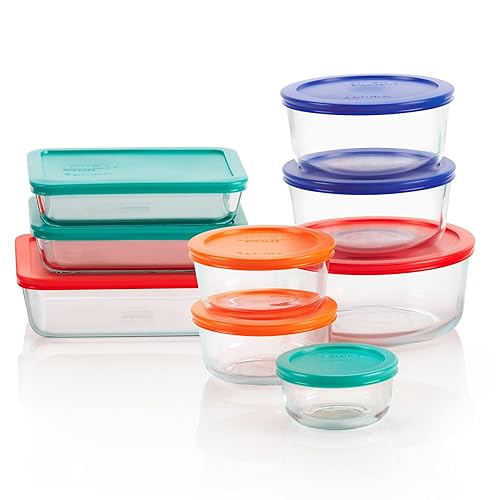
Use this instead of metal
Pyrex Simply Store Glass Food Storage Containers, 9-Pack
Glass containers that go from the fridge into the microwave, so leftovers never need foil or a metal bowl.
See the Pyrex set on AmazonThe drawback: the lids are plastic. Lift them off or rest them loosely on top when you reheat.
Why Does Metal Spark in a Microwave?
Caroline Ross, a materials science professor at MIT, wrote in 2010 that it is “counterproductive to put something metallic inside your microwave oven if you want to heat it up.” Microwaves pass through glass, paper, ceramic and plastic. Metal bounces them back, so the food behind it heats unevenly, and the FDA says it may damage the oven.
Sparks are the other problem. They start where metal is thin, wrinkled or comes to a point. The USDA says arcing happens when microwaves “react to gold paint on dishes, twist ties and other metallic materials.” So the foil rules below all ask for small, smooth, flat pieces.

What goes in the microwave, at a glance:
ONLY IF
Aluminum foil
Small, smooth pieces, and only if your manual allows it.
NO
Foil trays and takeout containers
Move the food to a plate.
NO
Stainless bowls, pots, cutlery, travel mugs
Metal cookware stays out.
ONLY IF
Stainless box labeled microwave safe
Only the way its maker's label says.
NO
Dishes with gold or silver trim
Metallic trim can spark.
YES
Glass and plain ceramic marked microwave safe
Microwaves pass through them.
If you are replacing foil or a metal bowl, these are the four we would pick. Each listing was read on October 26, 2026.
As an Amazon Associate we earn from qualifying purchases.
| Pick | Best for | Amazon |
|---|---|---|
|
Pyrex Simply Store, 9-pack Our quick pick |
Leftovers, lunches, meal prep | See it |
|
Pyrex Simply Store, 3-pack 2, 4 and 7 cup |
A small starter set | See it |
|
Vtopmart glass containers, 8-pack Glass containers with lids |
Batch cooking in matching boxes | See it |
|
Tovolo collapsible cover, 10.5 in Vented, folds flat |
Covering a plate instead of foil | See it |
Can You Put Aluminum Foil in the Microwave?
Aluminum (tin) foil can go in sometimes, in small amounts, if your microwave's manual says so. GE, Amana and the USDA allow smooth foil to shield parts of the food that cook too fast, such as turkey wing tips. Whirlpool says to follow your manual and, if the manual is silent, not to use foil at all.
The foil rules oven makers print
- New and smooth. The USDA: “Use new, smooth foil only. Wrinkled foil can cause arcing (sparks).”
- A little, pressed flat. The USDA says to “Cover no more than 1/4 of the food with foil.” GE adds: “No foil should be sticking up or out away from the food product.”
- An inch of space. “Do not place the foil closer than one inch from the oven walls,” says the USDA. Amana counts the door as a wall too.
- Never wrap the food. Maytag: “Don't attempt to microwave food wrapped in aluminum foil.”
- Turntable in. Maytag and Amana both say “Always use the turntable.”
- Stop at the first spark. Whirlpool says to “immediately end use if you see or hear sparks.”
Past those six points the makers part ways. Amana is the most relaxed. Maytag ends its guide with “When in doubt, avoid placing any kind of metal, even aluminum foil, in your microwave.” Whirlpool says “Always defer to your user manual,” and if the manual doesn't mention foil, to “avoid using it in the appliance at all.” We go with the manual. If yours says nothing about foil, leave it out.
Foil Trays, Takeout Containers and Aluminum Pans
Here the rules get stricter. The USDA says: “If the microwave oven has metal shelves OR a metal turntable, don't microwave food in foil containers or metal pans.” Maytag goes further for every oven: “It is also not recommended to use aluminum bowls or trays inside your microwave.” Amana lists disposable containers with metal rims as unsafe, and the USDA adds takeout containers with metal handles and metal twist ties.
Tip the leftovers onto a plate or into a glass dish. And if you only wanted foil to cover the plate, a vented cover does that with no metal at all.

As an Amazon Associate we earn from qualifying purchases.

For covering a plate
Tovolo Collapsible Microwave Splatter Cover, 10.5 in
A vented silicone and plastic dome that folds flat for the drawer and goes in the dishwasher.
Good for: Reheating dinner plates and soup bowls, keeping splatter off the walls
The drawback: it won't protect the thin end of a fillet from overcooking, which is still a job for a small strip of foil under the rules above. It fits plates under about 10 inches, so measure yours, and it is not for the oven or stovetop.
See the Tovolo cover on AmazonUsing foil somewhere else? The rules change with the appliance. See foil in the oven, foil in an air fryer, and whether aluminum cookware is safe to cook with at all.
Can You Microwave Stainless Steel?
Most stainless steel should stay out of the microwave: mixing bowls, pots, cutlery, lunch boxes and travel mugs. The only exception is a container its maker sells and labels as microwave safe, used exactly the way the label says.
GE says: “Metal cookware should not be used in a microwave.” The FDA tells you to “Use microwave safe cookware specially manufactured for use in the microwave oven.” Even Greenvyne, an Australian company that sells stainless containers it calls microwave safe, says in its own FAQ that “most stainless steel is not microwave safe.”
How to Tell if a Stainless Container Is Microwave Safe
We found no government or appliance-maker advice that approves stainless food containers in general. What follows is what two container makers, Greenvyne and Elephant Box, say about their own products. Treat it as their claim, not our endorsement.
- The label comes first. Elephant Box says only certain named ranges of its boxes are microwave safe, not all of them.
- Shape matters. Greenvyne builds its microwave line with rounded corners and a controlled wall thickness. Both makers say a dented box should not go in.
- One at a time. Elephant Box says one box, not touching the walls or a rack.
- Low power, short time. Both put the ceiling at 1,000 watts. Greenvyne says to reheat in 60-second bursts.
- Lid off, food in. Elephant Box says to remove the lid first, and Greenvyne says a container should never go in empty.
No microwave-safe label on the box? Assume it is not microwave safe.

Yeti Tumblers, Thermoses and Travel Mugs
No. A double-walled steel mug is metal cookware under every rule on this page. Warm the drink in a ceramic mug and pour it back. For a lunch box you can heat at work, glass does it with no conditions.
As an Amazon Associate we earn from qualifying purchases.
Best overall
Pyrex Simply Store Glass Food Storage Containers, 9-Pack
Clear glass containers with snap-on plastic lids, in a mix of sizes for single lunches and family leftovers.
Good for: Leftovers, packed lunches, meal prep
The drawback: heavier than steel in a lunch bag, and the lids are plastic. Lift the lid off or rest it loosely on top to reheat.
See the Pyrex set on AmazonWhat to Do if Metal Sparks in Your Microwave
- Stop it straight away. The USDA says to “turn off the oven immediately to end the sparks.”
- Take the metal out with an oven mitt. It may be hot.
- Don't try again with the same piece. A spark usually means an edge lifted, the foil was creased, or it sat too close to a wall.
- Look at the walls. If you see burn marks or pitting inside, stop using the microwave and contact the maker's service line.

What to Use Instead of Metal
Glass and ceramic. The FDA says “Glass, paper, ceramic, or plastic containers are used in microwave cooking because microwaves pass through these materials.” Look for the mark on the bottom first; our guide to microwave-safe symbols shows what each one looks like.
For glass, read can you microwave glass before you trust an old jar. For plates, our microwave-safe dinnerware picks cover sets that skip the trim. Gold and silver edges are their own problem: Whirlpool lists “objects with gold or silver trim or a metallic glaze” among the things to keep out, and our guide to whether porcelain is microwave safe explains why.
Frequently Asked Questions
Can you microwave aluminum foil for 30 seconds?
A short time doesn't make foil safe, because crumpled foil can spark within seconds. If your manual allows foil, use a small, smooth piece pressed flat to the food and keep it an inch from the walls. If the manual doesn't mention foil, skip it.
Can you put a metal bowl in the microwave?
No. GE says metal cookware should not be used in a microwave, and Maytag advises against aluminum bowls as well. Move the food to a glass or ceramic bowl marked microwave safe.
Can you leave a metal spoon or fork in the microwave?
Take it out first. Amana lists forks among the items that are unsafe in its ovens, and the points of a fork are where sparks start.
Is 304 stainless steel microwave safe?
The grade alone doesn't decide it. Greenvyne makes its microwave line in 304 steel, but it also relies on the box's shape, wall thickness and a vented lid. Go by the maker's microwave-safe label, not the grade stamped on the bottom.
Can you defrost food in a stainless steel container?
Only if the maker labels that container microwave safe, and only at the power it gives. Otherwise, move the frozen food into a glass dish to defrost it.
Is a metal rack or turntable in my microwave a problem?
Use the parts that came with your oven as the manual says. GE says a convection microwave can take metal and foil on its convection setting only.
What about the crisping sleeves that come with frozen snacks?
They are made to go in the microwave with that food. Use them only as the box says.
How We Checked
On October 26, 2026 we read the FDA, USDA, GE, Whirlpool, Maytag and Amana guidance, an MIT Q&A, and two stainless container makers' guides. Product facts come from each Amazon listing, checked the same day. We did not test metal in a microwave, and no brand saw this page before it went up.
Sources (opened October 26, 2026). Product facts come from each Amazon listing on the same date.
- U.S. Food and Drug Administration: Microwave Ovens
- USDA Food Safety and Inspection Service: Cooking With Microwave Ovens
- GE Appliances: Using Metal or Foil in the Microwave
- Whirlpool: Can You Microwave Aluminum Foil?
- Whirlpool Product Help: What Shouldn't Be Used in a Microwave
- Maytag: Can You Put Aluminum Foil in the Microwave?
- Amana Product Help: Can Metal or Aluminum Foil be Used in the Microwave
- MIT School of Engineering: Why can't we put metal objects in a microwave? (November 2, 2010)
- Greenvyne: Can You Microwave Stainless Steel? (maker)
- Elephant Box: Microwaving Metal (maker)
Pyrex, Vtopmart, Tovolo, GE, Whirlpool, Maytag, Amana, Yeti, Greenvyne and Elephant Box are trademarks of their owners and are named here only to identify their products. Listings change; check the listing before you buy.


