

Cupindy is reader-supported. Some links on this page are affiliate links, which means we may earn a small commission if you buy through them, at no extra cost to you. As an Amazon Associate we earn from qualifying purchases. See our Affiliate Disclosure.
By Sara Ibrahim · Updated 13 September 2026 · Reviewed against FDA and manufacturer guidance
The short answer
Air fryer liners are safe to use — with three conditions. The liner has to be rated for your cooking temperature, it must never go into the basket empty during preheating, and if it is a paper liner it should say unbleached parchment with a silicone coating, not just "non-stick."
That applies to both kinds. Silicone liners are safe below their temperature rating, usually around 450°F — the honest catch is that brands almost never say how the silicone was cured. Paper liners are safe when they are unbleached parchment with a silicone coating, rather than an unnamed grease barrier.
Miss any of those and you have either a fire risk or a chemical question mark sitting under your food. Below: both liner types, what they are made of, whether the holes matter, what the FDA actually changed about PFAS in food papers, and the two liners we would put in our own air fryers.
Jump to: the real risks · what they are made of · paper vs silicone · do they need holes? · choosing the right size · what the FDA changed · our picks · FAQs
The three real risks (and the one that is overblown)
1 Fire from an empty liner
This is the risk that actually sends air fryers to the trash. An air fryer is a convection oven with a violent fan. A paper liner with no food on it lifts straight into the heating element, where it scorches or ignites — even liner manufacturers like Reynolds warn never to preheat with a liner inside and no food on top. Lightweight silicone mats can lift too. The rule is simple: liner goes in, food goes on it immediately, always.
2 PFAS grease-proofing on cheap paper liners
For years, the way to make cheap food paper grease-proof was a fluorinated coating — PFAS, the "forever chemicals." Quality parchment resists grease differently: a thin cured-silicone coating on unbleached paper. If a bargain liner does not say silicone-coated parchment, you do not know what is providing the grease resistance. More on what the FDA did about this below — the story is better than most people think, but not finished. If you want the wider picture on these chemicals in air fryers generally, see our guide to the chemicals in air fryers.
Go and look at your own pack now. If the words "unbleached" and "silicone-coated" are not on it, the grease barrier is unidentified. That does not mean it is PFAS — it means nobody has told you what it is.
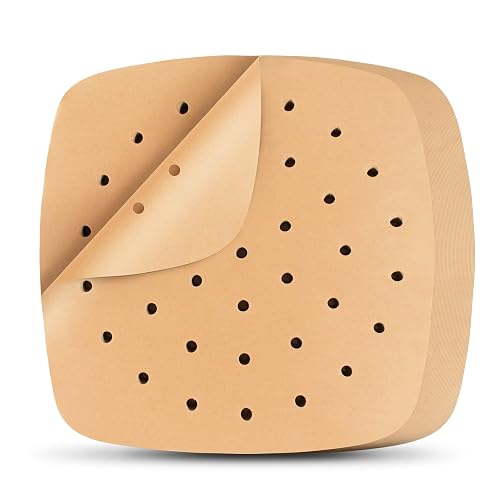
If yours does not say it, here is one that does
This pack states unbleached parchment, a food-grade silicone coating and a 446°F rating on the listing itself — the three things worth reading before you buy. It is also perforated, which matters for crisping. Full write-up and its drawback are in our picks below.
3 Unknown silicone quality
Food-grade silicone itself is stable at air fryer temperatures — we covered the science in our guide to whether silicone is safe for cooking. The catch is that the words "food-grade" on a listing tell you nothing about how the silicone was cured. Platinum-cured silicone is the cleaner, more stable standard; peroxide-cured is cheaper and can leave residues. Almost no liner brand discloses which one you are getting.
That is not a reason to panic — it is a reason to buy from brands that state their temperature rating plainly, and to retire any liner that turns cloudy, sticky, or smelly. We are not going to pretend we can tell you which silicone is platinum-cured, because the brands do not publish it. What we can do is pick one that states its rating and is perforated, so you are not also giving up crisping.

If you would rather not think about it again
Perforated silicone mats, so the airflow that makes an air fryer work still reaches the underside of the food. One purchase replaces hundreds of paper liners. Full write-up, and the things the brand does not disclose, in our picks below.
The overblown one: "liners release toxins at air fryer heat"
A liner rated to 425–450°F used below its rating is doing exactly what parchment has done in ovens for decades. The material is not the problem; using an unrated liner, or running any liner above its stated limit, is. If your recipe calls for maximum temperature, check the number printed on the box first — ratings commonly range from about 400°F to 450°F and they are not interchangeable.
What are air fryer liners made of?
Two materials, and the answer to almost every safety question on this page follows from which one you are holding.
Paper liners are parchment. The good ones are unbleached wood pulp with a thin layer of cured food-grade silicone on the surface. That silicone layer is what makes the paper grease-proof and non-stick — not a coating sprayed on afterwards, but part of how parchment is made. Bleached parchment exists and is also sold for food; unbleached simply skips the whitening step. What matters more than the colour is whether the silicone coating is stated at all.
Reusable liners are moulded food-grade silicone — the same material family as silicone bakeware and spatulas, formed into a mat or a cup shape. Silicone here is a synthetic polymer built on a silicon-oxygen backbone, which is why it tolerates heat that would destroy a plastic.
What you want to avoid is the third category: paper that is grease-proof but does not say how. If a listing says non-stick and stops there, the grease barrier is unidentified. Historically that job was often done by a fluorinated coating, which is the PFAS question this article keeps coming back to.
The one-line version
Unbleached parchment + silicone coating, or moulded food-grade silicone. Anything that will not name its material is the category to skip.
Paper vs silicone liners, honestly compared
| Parchment paper liners | Silicone liners | |
|---|---|---|
| Typical heat rating | About 425–450°F, varies by brand | About 450°F |
| Reusable | No — single use | Yes, for years |
| Crisping | Good if perforated | Perforated mats: good. Solid cups: noticeably softer bottoms |
| What to check | Unbleached, silicone-coated, PFAS-free stated | Temperature rating printed, food-grade stated, fits your basket |
| Fire rule | Never in an empty or preheating basket | Same rule — lightweight mats can lift |
Do air fryer liners need holes?
Yes, for most cooking — and this is the row product listings never mention.
An air fryer cooks by moving hot air fast. A solid liner sits between your food and that airflow, so the underside cooks by contact with a warm sheet instead of by circulating heat. Fries and wings come out with softer bottoms unless you flip them. Perforated liners let air through to the underside and interfere far less.
The exceptions are real, though. A solid liner is the right choice when you are cooking something that drips — marinated chicken, anything battered, cheese that will melt and run. There, catching the liquid is the point, and a few holes just means it lands on the basket anyway.
The rule of thumb
Perforated for anything you want crisp — fries, wings, frozen food, vegetables.
Solid for anything wet or sticky you want contained.
No liner at all for dry food where crisp is the whole point. This is the option roundups skip, and it is free.
Choosing the right size, which matters more than the brand
A liner that is too big is the single most common cause of the fire problem, because the excess edge is exactly what the fan catches. Measure the flat floor of your basket, not the rim, and buy a liner at least half an inch smaller on every side.
Rough guide by air fryer capacity
2–3 quart (small, single person): 6.3 inch round liners
4–5.8 quart (most common basket models): 7.5 to 8 inch round, or 8 inch square
6 quart and up: 8.5 to 9 inch round or square
Dual-basket models: measure each drawer — they are usually rectangular, not round, and round liners waste most of the floor
Square and rectangular liners fit basket-style fryers better than round ones, which leave the corners bare. If you own an oven-style air fryer with a flat tray, a cut-to-size sheet of parchment held down by food works and costs less than pre-cut liners.
If you have just measured and yours is the wrong size
Nothing here is urgent — a liner that is slightly small is perfectly safe, and it is only a liner that overhangs you need to replace. But if you do need the right shape, these are the three that cover almost every basket. All three are square or rectangular, which is what basket fryers actually want.
4 to 5.8 quart, the common single basket: Katbite 8 inch square parchment
Dual-basket drawers, Ninja-style: the same Katbite liner in 8.6 x 5.5 inch rectangle — round liners waste most of a drawer floor, which is why this shape exists. Its listing describes the same silicone-coated 45GSM paper and the same 450°F rating, though it does not repeat the word unbleached in its own copy the way the square does.
6 quart and up, or if you would rather buy once: the 8.5 inch perforated silicone mats
Measure the flat floor before ordering any of them. Half an inch of clearance on every side is the number that matters, and it is the whole reason this section exists.
What the FDA actually did about PFAS in food papers
On 28 February 2024, the FDA announced that grease-proofing substances containing PFAS are no longer being sold by manufacturers for food contact use in the United States. That completed a voluntary phase-out agreed with manufacturers in 2020.
The FDA noted that existing stock could take up to 18 months to clear the market from the last date of sale — a window that closed around August 2025. So American-made food paper should now be clear of intentionally added PFAS grease-proofing.
The honest caveat
The phase-out covers substances sold into the US market. Air fryer liners on marketplaces ship from everywhere, and a listing claiming "PFAS-free" is the seller's own statement, not a lab certificate. That is why the practical filter is construction, not claims: unbleached parchment with a silicone coating has no need for a fluorinated grease barrier in the first place.
For the deeper background on how these labels differ, see our guide to PFAS-free vs PTFE-free air fryers.
How to use liners safely: the 60-second version
✓ Preheat empty — no liner
✓ Add the liner and put food on it immediately
✓ Keep the liner smaller than the basket — it must never touch the heating element
✓ Use perforated liners when you can, for airflow and crisping
✓ Stay under the printed temperature rating
✓ Retire silicone liners that discolor or hold smells; never reuse a paper liner
The liners we would actually buy
Disclosure: As an Amazon Associate, Cupindy earns from qualifying purchases made through the links below, at no extra cost to you.
Four liners, and each one is here for a different job. Most people need one of them, some need none at all, and the last section is for that.
Which one is yours, in one line each
You mostly cook things you want crisp — fries, wings, frozen food — and you want cheap: the perforated paper below.
You mostly cook things that drip — marinades, cheese, batter: the solid paper. Holes would just let the mess through.
You have a dual-basket fryer: the rectangle. Round and square liners waste most of a drawer floor.
You line the basket most days and would rather buy once: the reusable silicone mats.


Or buy nothing
This is the option product roundups skip: for dry foods, no liner gives the best crisping and the fewest unknowns. Liners earn their place with sticky marinades, cheese, and batters — and a basket without a liner takes about two extra minutes to wash. Our air fryer cleaning guide shows the fast way.
And if you are lining the basket because the coating is flaking, the liner is a bandage. See our non-toxic air fryer guide for machines without coatings to worry about, or are air fryers toxic? for the wider question.
Frequently asked questions
Are silicone air fryer liners safe?
Yes, when they are food-grade silicone used below their temperature rating, typically around 450°F. Silicone is stable at those temperatures. The two practical cautions: brands rarely disclose the curing method, and a worn liner that turns cloudy or holds odors should be replaced.
Are silicone air fryer liners toxic?
No, not when used as intended. Food-grade silicone is stable well past normal air fryer temperatures and does not break down into the fumes people worry about. The honest gap is that brands almost never state whether their silicone is platinum-cured or peroxide-cured, and peroxide curing can leave residues. Buy from a brand that prints a temperature rating, stay under it, and replace any liner that turns cloudy, sticky, or holds a smell.
Do air fryer liners need holes?
Perforated liners crisp noticeably better, because an air fryer cooks with moving air and holes let that air reach the underside of the food. Solid liners work for saucy or drippy foods where you want to catch liquid, at the cost of softer bottoms.
Can you use air fryer liners in the oven?
Usually yes — parchment liners are oven-safe up to their printed rating, and most silicone liners are too. The same two rules follow them: stay under the temperature rating, and keep paper away from direct contact with heating elements.
What are air fryer liners made of?
Paper liners are parchment — ideally unbleached wood pulp with a food-grade silicone coating for grease resistance. Reusable liners are molded food-grade silicone. Avoid paper liners that are grease-proof but do not say silicone-coated parchment, because the grease barrier is then unidentified.
Do air fryer liners affect cooking?
Yes. Any liner reduces airflow to the underside of food, and solid liners reduce it most. Expect slightly longer cook times and softer bottoms; flipping food halfway largely compensates. For maximum crisp, cook directly on the basket.
Why can't I preheat my air fryer with a liner in it?
With no food weighing it down, the fan lifts a light liner into the heating element, where paper can scorch or ignite. Liner makers themselves warn against it. Preheat empty, then add the liner with food on top in one step.
Can you reuse air fryer parchment liners?
No. Parchment liners are single use. Heat and grease break down the silicone coating, and a used liner is weaker — which makes it more likely to tear or lift. If you want a reusable option, buy a perforated silicone mat instead.
What size air fryer liner do I need?
Measure the flat floor of your basket and choose a liner at least half an inch smaller on every side. As a rough guide: 6.3 inch for 2–3 quart fryers, 7.5 to 8 inch for 4–5.8 quart, and 8.5 to 9 inch for 6 quart and larger. Square liners suit basket models better than round.
Are air fryer liners worth it?
For sticky marinades, cheese, and battered food, yes — they save real scrubbing. For dry or frozen food, no: you lose crisping and gain nothing. Most people over-use liners out of habit rather than need.
Sources
US Food and Drug Administration, "FDA Announces PFAS Used as Grease-Proofing Agents in Food Packaging No Longer Being Sold in the US," 28 February 2024.
US Food and Drug Administration, "Market Phase-Out of Grease-Proofing Substances Containing PFAS."
Reynolds Brands, "How to Use Air Fryer Liners."
Temperature ratings, sizes and material claims for the products above are as stated by their manufacturers on the product packaging and listings, read September 2026, and have not been independently lab-verified by Cupindy. Listings change; check the current one before buying.
About the author
Sara Ibrahim writes Cupindy's air fryer safety coverage, including our non-toxic air fryer guide. She tests claims against manufacturer documentation and regulatory sources, and says so plainly when a claim cannot be verified.


