
Open your cutlery drawer and you'll probably find three generations of forks in there — a supermarket multipack, a few pieces inherited from a grandmother, maybe something with a colourful handle that's started to flake. Most of it is fine. Some of it isn't, and the difference isn't obvious by looking.
Here's what actually matters, what the marketing terms mean, and how to tell in about ten seconds whether a piece is worth keeping.
Written by Lara Yehia — Lara researches home and kitchen products for Cupindy. She uses these items daily in her own kitchen and collects real-use feedback from other households before anything gets recommended here.
How we researched this: we did not lab-test flatware, and we're not materials scientists. This guide combines published food-contact guidance from the U.S. Food and Drug Administration and NSF International, published stainless steel grade specifications, and everyday use experience. Where the evidence is limited or contested, we say so instead of guessing.
Published: 22 February 2026 · Last reviewed: 6 September 2026
The short version
- Solid 18/10 stainless steel is the safest everyday choice, and it's what most quality flatware already is. See the set we'd buy.
- If nickel bothers your skin, buy 18/0. Same chromium, no added nickel. It spots more easily — that's the trade. See the nickel-free set.
- Avoid plated anything. When plating chips, you're eating off whatever is underneath, and that's rarely documented.
- Vintage sets are the real risk, not modern ones. Old plated pieces and pewter predate today's food-contact rules.
- Replace on damage, not on age. Pitting, rust spots, flaking coating. Undamaged stainless lasts decades.
What's on this page
What "non-toxic" actually means here
"Non-toxic silverware" is a search term more than a technical category. Nobody's flatware is poisoning them in a dramatic way. What people are actually asking is narrower and more sensible: is this metal stable, or is something coming off it into my food?
Stable means three things. It resists corrosion. It doesn't react much with acidic or salty food. And it has no coating that can chip away and expose something else.
That third point is where most problems live. A solid piece of stainless steel is a known quantity — the alloy is the same all the way through. A plated piece is a thin decorative shell over an undisclosed base metal, and every scratch is a small archaeological dig into material nobody documented.
Materials meant for repeated food contact are regulated by the FDA in the United States, and independent certification to NSF/ANSI standards is a further signal that a material has been assessed for food use. Neither of those things is printed on a supermarket fork, which is why the visual checks below matter.

18/10, 18/8, 18/0 — decoded
Those two numbers stamped on the back of a spoon handle are the whole story. The first is the percentage of chromium; the second is nickel.
Chromium is what makes stainless steel stainless. It reacts with oxygen to form a thin invisible layer over the surface, and that layer is what stops rust. Scratch it and it reforms on its own. Nickel is about shine, some extra corrosion resistance, and a slightly softer feel in the hand.

This is what you're looking for. The marking on this blade reads SS 18/10 — 18% chromium, 10% nickel. Photographed in our own stockroom, because no product listing ever shows you the stamp.
| Grade | Nickel | Corrosion resistance | Who it's for |
|---|---|---|---|
| 18/10 | ~10% | High | Most households. The default good choice. |
| 18/8 | ~8% | High | Effectively the same thing. Don't overthink it. |
| 18/0 | None added | Moderate | Nickel-sensitive skin. Spots more; dry it well. |
| 13/0 | None | Lower | Common for knife blades — it holds an edge better. |
| No marking | Unknown | Unknown | Nobody. Skip it. |
A note on 18/8 versus 18/10, because a surprising number of people search for this: in practice they're both from the same austenitic 300-series family and behave nearly identically in a kitchen. If a set is honestly labelled either way, you're fine.
The one that should stop you is no marking at all. It doesn't automatically mean the metal is bad — plenty of decent flatware is unstamped — but it means you have no idea what you're buying, and unmarked bargain cutlery is exactly where mystery alloys turn up.

The set that stamp came from. On most flatware the marking sits on the back of the handle; on knives it's usually on the blade near the bolster.
For more on how these alloys behave under heat rather than at the table, our stainless steel grades guide goes deeper.
The nickel question
This is the single most common worry we see, so it's worth being precise.
Nickel allergy is genuinely common — it's one of the most frequent contact allergies there is, and it's the reason cheap earrings make some people's ears itch. But contact allergy and eating are different situations. Reacting to a belt buckle pressed against your skin all day doesn't automatically mean a fork touching your lip for a second will do anything.
That said, some people with significant nickel sensitivity do report irritation from flatware, and if that's you, there's no reason to tough it out when a straightforward alternative exists.
Affiliate disclosure: Cupindy is reader-supported. If you buy through a link on this page, we may earn a commission at no extra cost to you. As an Amazon Associate we earn from qualifying purchases.
The practical answer: if nickel is a concern, buy 18/0. It has the chromium that does the protective work and no added nickel. You'll lose a little shine and it'll show water spots sooner — dry it properly and it's a non-issue. Check the knives separately, though: knife blades in an "18/0" set are often 13/0, which is also nickel-free, but confirm rather than assume.
The set that meets that bar is the STILLOYE 40-piece 18/0 — the grade is stated in the product bullets, solid construction, no plating, dishwasher safe. Full write-up and the honest drawback here.
Affiliate link — we may earn a commission at no extra cost to you.
Titanium is the other genuinely nickel-free option, and it's inert and very light. It costs considerably more and mostly comes as travel cutlery rather than full dinner sets.
Every material, ranked by confidence
Not all of these are equally safe for daily use, so they're grouped honestly rather than presented as an equal list of eight.

Solid polished stainless steel — no plating, no colour coating, no painted handles. The surface you see is the metal itself all the way through, which is the whole point.
Buy without hesitating
18/10 and 18/8 stainless steel
The default, and deservedly so. Corrosion-resistant, dishwasher-tolerant, inert with food, and it survives decades of daily use. If you want one recommendation and no caveats, this is it.
18/0 stainless steel
The nickel-free version. Slightly more prone to spotting and surface wear, particularly with hard water and aggressive detergent. Worth the small trade if you're sensitive.
Titanium
Extremely light, highly corrosion-resistant, biologically inert — it's what surgical implants are made from. Sold mostly for camping and lunch kits. Expensive per piece, and the finish feels different from steel, which some people dislike.
Fine, with a caveat
"Surgical-grade" stainless steel
This is a marketing phrase, not a defined flatware grade. The alloys it usually points to are perfectly good. Treat the term as a prompt to ask which grade, rather than as a guarantee of anything.
Solid sterling silver
Genuinely durable and can outlast you if cared for. Tarnish is surface oxidation, not decay, and polishes off. Two honest caveats: it wants hand washing, and silver's antimicrobial properties — often repeated in articles like this one — are documented mainly in laboratory and medical settings. A silver fork is not self-cleaning.
We wouldn't use these daily
Copper
Beautiful and reactive, which is a bad combination for eating. Copper interacts with acidic food, and that's precisely why traditional copper cookware is lined with tin or steel.
There's a second thing worth knowing: almost no "copper" cutlery sold today is actually copper. It's stainless steel with a copper-coloured finish applied on top — usually PVD, a vapour-deposited coating. That's better news than solid copper for reactivity, but it's still a coating, and coatings wear at the edges and high-contact points over years of dishwasher cycles. Lovely on a table; check the tines and edges periodically.

Copper-coloured, not copper. Sets like this are stainless steel underneath with a vapour-deposited finish on top — which is why they're sold as "copper colour" rather than copper.
Hard-anodized aluminium
Anodizing creates a genuinely tough oxide layer, far more stable than bare aluminium. But the layer can be damaged by scratching and harsh dishwasher detergent, and bare aluminium reacts with acidic and salty food. For flatware specifically, stainless steel does the same job with none of the conditions.
Bamboo and plant-based cutlery
Fine for picnics and children's lunchboxes. Not a serious everyday option — it absorbs moisture, harbours residue in scratches, and wears out. Worth knowing that "plant-based" doesn't mean binder-free; composite cutlery is held together with resins that vary in quality.
Vintage and inherited sets
Here's the part most guides skip, and it's the one place where a real concern exists.
Modern flatware made for the US or EU market is subject to food-contact rules. A set that's been in the family since the 1960s isn't. Older silver-plated pieces, historic pewter, and decorated or enamelled handles were made under different standards, and pewter formulations in particular historically contained lead.
A sensible approach to an inherited set:
- Solid sterling marked "sterling" or "925" is the safest old category. Use it.
- Unmarked plated pieces, pewter, and anything with painted or enamelled handles — display them, don't eat off them.
- Never use a piece where the plating has visibly worn through to a different-coloured metal underneath.
- Don't store acidic food in contact with old metal.
If you've inherited something you'd genuinely like to use and can't identify, household lead-testing swabs give a quick indication. They're not laboratory analysis and a negative result isn't a certificate — but a positive one settles the question immediately.
Affiliate disclosure: the link below is a paid affiliate link. Cupindy participates in the Amazon Services LLC Associates Program and earns a commission on qualifying purchases at no extra cost to you. This product is featured as part of a paid brand partnership with AssuTest.
For testing inherited piecesAssuTest Lead Test Swab Kit

Moisten, rub, read in thirty seconds — pink or purple means lead, mustard yellow means none detected. That mustard-yellow baseline is what makes it usable: several cheaper kits leave you squinting at an ambiguous off-white and guessing. It ships direct from the AssuTest store rather than a reseller, carries a two-year shelf life, and thirty swabs is enough to work through a whole drawer in one sitting. A sixty-swab pack exists if you have more than one set to check.
What it can and can't tell you: a swab reads the surface it touches. On a piece with intact plating, you're testing the plating rather than the metal underneath — so it's most informative on worn-through spots, painted or enamelled handles, and bare pewter. It's a screening tool, not a laboratory. A positive is worth acting on; a negative means "nothing detected on that spot," not "certified safe."
This product is for initial home screening purposes only. Results provide a visual indication and should not replace professional laboratory analysis or definitive safety certifications. For adult use only. Swabs contain chemical reagents—do not ingest, inhale, or touch swab tips with bare hands. Keep out of reach of children.
What to actually avoid
- Unmarked bargain multipacks. No grade stamp means no documented alloy.
- Anything plated. The chip is when the problem starts, and it always chips eventually.
- Painted, coloured, or enamelled handles that have begun to flake. Colour coatings and dishwashers are a losing combination.
- Rainbow, black, and gold "PVD" finishes — usually fine when intact, but they are coatings, and coatings wear. If yours is scratching through, retire it.
- Pieces with pitting or persistent rust spots. The protective layer has failed and won't come back.

Decorative gold banding on stainless handles. Nothing wrong with it while it's intact — but it is a coating, it sits where fingers and dishwasher racks make contact, and that's where it goes first.
None of these mean you've been harmed. They mean uncertainty, and uncertainty is avoidable by buying solid, marked metal once.
What we'd buy
| The set | Best for | |
|---|---|---|
|
KINGSTONE 18/10 stainless, 40 pc |
Most households | Check on Amazon |
|
STILLOYE 18/0 stainless, 40 pc |
Nickel-sensitive skin | Check on Amazon |
|
Oneida Moda 18/10 stainless, 20 pc |
Smaller households | Check on Amazon |
|
Oneida Grant 18/0 stainless, 20 pc |
Nickel-sensitive, smaller households | Check on Amazon |
|
Snow Peak Solid titanium, 2 pc |
Lunchboxes and travel | Check on Amazon |
Each set is written up below, drawbacks included. We'd rather you read the drawback first.
KINGSTONE 18/10 Stainless Steel Silverware Set

Food-grade 18/10 stated plainly on the listing, no plating, no coated handles — the boring correct answer for a family drawer. What sold us is a small thing most brands skip: they publish the weight of each piece. A dinner fork that tells you it's 2.26 oz is a brand that isn't hiding thin, bendy tines. Comes in sizes from service for four up to thirteen; pick the 40-piece if you're feeding a household.
The honest trade: the hammered ripple handles are a style choice, not a functional one — the texture looks good on a table but a smooth handle wipes clean marginally faster. And treat "rust-proof" marketing with the scepticism it deserves; 18/10 resists rust well in normal use, but no stainless survives being left wet in salt indefinitely. If you want something plain and minimal, this isn't it. If nickel is your concern, take the 18/0 set below instead.
Affiliate links: we may earn a commission if you start a Prime trial or membership, at no extra cost to you.
Not a Prime member?
A free 30-day Prime trial gives you free Prime delivery on eligible items, and you can cancel before it renews.
If you already have Prime, skip this – there is nothing here you are missing.
Start a free 30-day Prime trial
Student or 18–24? Prime for Young Adults has a 6-month free trial.
STILLOYE 40-Piece 18/0 Stainless Steel Silverware Set
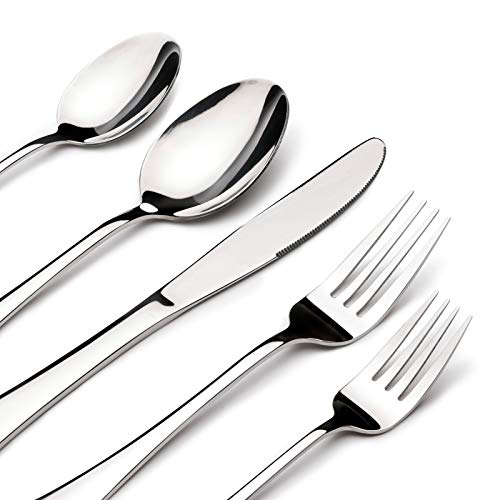
The product bullets state it plainly — "solid made of high quality premium 18/0 stainless steel" — which is more than most sets at this price will tell you, and it's the reason this one makes the list. Note that you have to read down to find it: the title and the material field both just say "stainless steel." That's the vagueness this guide keeps warning about, and it's worth knowing that a grade being absent from the title doesn't always mean it's absent. Chromium doing the protective work, no added nickel, and no plating to chip. Service for eight, with serrated dinner knives, and the manufacturer rates the whole set dishwasher safe.
The honest trade: 18/0 is the grade most prone to water spotting and, over years of hard water and harsh detergent, surface pitting. Dry it after washing and rinse anything that touched lemon or brine before it sits overnight. Do that and it behaves. Skip it if nickel isn't a concern for you — 18/10 holds its finish better for the same money.
Oneida Moda 20-Piece 18/10 Stainless Steel Silverware Set

If you're cooking for one or two, a 40-piece box is mostly drawer clutter. This is service for four, with 18/10 stated in the title, the bullets and the description, so there's no hunting for the grade. The pattern is plain: straight handles, a clean mirror finish, no hammering and no scrollwork, which also makes it the one to pick if the ripple handles above aren't your style. The real reason it's here is what happens later. The same listing sells matching Moda pieces in fours, dinner forks and teaspoons through to soup spoons and steak knives, so you can start small and add to it when the household grows instead of buying for eight on day one. Dishwasher safe.
The honest trade: per piece, it costs noticeably more than the KINGSTONE. Some owners say the pieces run large, and one finds the knives too long for a drawer organiser and reports occasional rust stains on them, only ever the knives, after the dishwasher. The listing gives one grade for the whole set and says nothing separate about the blades, so dry the knives rather than leaving them to sit in a steamy machine. It's also a newer listing with far fewer ratings than the sets above. If you're feeding four or more most nights, the 40-piece KINGSTONE is the better buy.
Oneida Grant 20-Piece 18/0 Stainless Steel Silverware Set

Oneida puts 18/0 right in the product title, which is exactly where the STILLOYE listing leaves it out. When nickel is the whole reason you're shopping, that's the first thing you want to see. It's a simple rounded pattern with a mirror finish, sized for four, and most owners describe it the same way: sturdy, a good everyday weight, comes out of the dishwasher clean. The listing also states a limited lifetime warranty. If you live alone or as a couple and nickel bothers your skin, this is the smaller, simpler route to the same grade.
The honest trade: it's still 18/0, so everything in the nickel section applies. It spots more easily than 18/10 and wants drying, especially if you have hard water. The listing doesn't give a separate grade for the knife blades; if they're 13/0, as knives in 18/0 sets often are, that's nickel-free too, but it's worth knowing rather than assuming. One owner found the spoon edges sharp enough to scrape plastic bowls. And this listing sells service for four only, with no bigger box or extra pieces, so it costs more per piece than the STILLOYE. Feeding a family of eight? Take the STILLOYE above instead.
Snow Peak Titanium Fork & Spoon Set
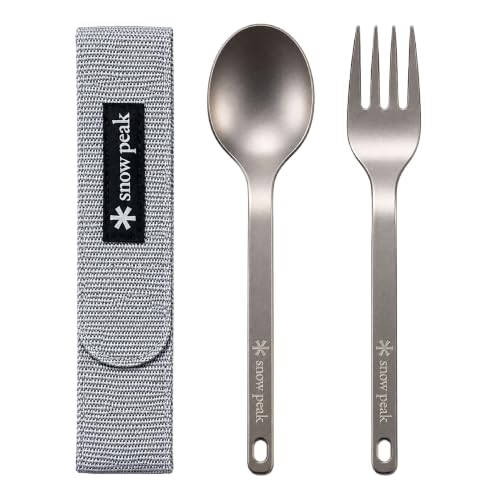
Solid titanium, not titanium-coated — worth checking on every listing you look at, because plenty of cheap "titanium" cutlery is a coating over steel, and coatings are the thing this guide keeps telling you to avoid. Titanium is inert, corrosion-proof and barely there in the hand, which makes it immune to the wet-packed-in-a-bag problem that kills cheap travel sets. Comes with a slim canvas case, and it's dishwasher safe. Snow Peak is an established Japanese outdoor brand selling directly rather than through a reseller, which is unusual enough on Amazon to be worth saying.
The honest trade: it's two utensils, fork and spoon, with no knife, plus the case — and it costs several times what a stainless set does per utensil. The finish is matte and utilitarian; nobody is putting this on a dinner table. Buy it if you carry lunch daily or camp. If you just want something for a desk drawer, a spare stainless fork from the set above does the same job for nothing.
The ten-second check, in a shop or at home
- Turn it over and look for a grade stamp — 18/10, 18/8, 18/0.
- Check whether the colour is the metal itself or a coating over something else.
- Flex it gently. Flimsy pieces bend, pit, and fail early.
- Look for pitting, rust freckles, or plating worn through.
- If it's colourful and the colour is chipping, it's done.
Making a set last
Stainless steel doesn't really fail on its own. It fails from salt, from sitting wet, and from being left in contact with other metals.
- Rinse anything that touched something acidic or salty before it sits in the dishwasher overnight. Tomato, lemon, vinegar, brine — these are what cause pitting, and pitting is permanent.
- Don't soak in salty water. Same reason.
- Keep silver away from stainless in the basket. Two dissimilar metals touching in a wet, hot, salty environment accelerates tarnish.
- Dry it if your water is hard. Those white spots are mineral deposits, and left long enough they mark the surface.
- Look through the drawer once a year and retire anything pitted or peeling. It takes two minutes.

Lunchboxes and packed meals
Travel cutlery has the hardest life of any flatware you own: packed damp, pressed against acidic food for hours, washed daily. Stainless and titanium handle it. Plated and painted travel sets don't — they're the fastest thing in this whole guide to fail.
The same logic applies to what you're carrying it in: see our guides to non-toxic lunch boxes and stainless steel food containers.
If you'd rather skip straight to the specific sets that meet these criteria, jump to what we'd buy.
Sources
Questions people ask
What is the least toxic silverware?
Solid, unplated 18/10 stainless steel. It's corrosion-resistant, doesn't react meaningfully with food, and has no coating to wear through. If nickel is a concern, 18/0 is the same answer minus the nickel.
What silverware has no lead in it?
Modern stainless steel flatware sold for the US or EU market. Lead is a concern with vintage plated pieces, historic pewter, and painted or enamelled handles made before current food-contact rules — not with contemporary stainless.
Is silver flatware toxic?
Solid sterling silver marked "925" is not. Silver plate is a different matter: once the plating wears through, you're in contact with an undisclosed base metal, and on older pieces that base can include lead-containing alloys.
What's the difference between flatware and silverware?
Nothing, in everyday use. "Flatware" is the general term for forks, spoons and knives. "Silverware" historically meant sterling or silver-plated sets, but retailers now apply it to any everyday set regardless of material.
Which is better, 18/0 or 18/10?
18/10 for corrosion resistance and shine; 18/0 if you're nickel-sensitive. Both are safe for daily use. 18/0 shows water spots sooner and wants drying after washing.
When should you replace flatware?
On damage, not on age. Chipped plating, pitting, and persistent rust spots mean the protective surface has failed. Undamaged solid stainless steel can last decades.


