
By Rawia Younis · Last reviewed 22 November 2026 · Images are AI-generated illustrations
The short answer
NONo. USDA says to thaw chicken before it goes into a slow cooker. Frozen chicken warms so slowly on low heat that it can sit too long between 40°F and 140°F (4°C and 60°C), the range where bacteria grow. In a hurry? Thaw it in cold water or the microwave, or skip the slow cooker and cook it from frozen in the oven or on the stove. That takes about 50% longer.
Slow cooker: thawed chicken only, for every cut and every setting.
Oven or stove: fine straight from frozen, about 50% longer.
Fast thaw: cold water changed every 30 minutes, or the microwave. Cook it right after.
Done means 165°F (74°C) in the thickest part. For a whole chicken, check the innermost thigh and wing and the thickest part of the breast.
Thinking about a new slow cooker? Our non-toxic slow cooker guide covers which insert materials to look for.
As an Amazon Associate we earn from qualifying purchases.
The tool that answers “is it safe yet?”
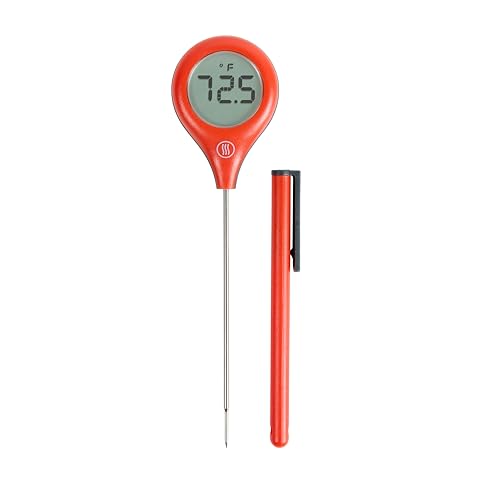
An instant-read thermometer. ThermoWorks ThermoPop 2. Whether your chicken started frozen or thawed, the number in the thickest part is the only real test. The listing gives a 2 to 3 second reading, accuracy of ±1°F (±0.5°C) and a switch between °F and °C. Hand wash only.
See the thermometer on AmazonListing checked 22 November 2026.
Why frozen chicken and a slow cooker don't mix
40–140°F
The range where bacteria grow (4–60°C)
+50%
Extra time when you cook chicken from frozen in the oven or on the stove
165°F
Done, in the thickest part (74°C)
A slow cooker is a safe way to cook. USDA's Food Safety and Inspection Service (FSIS) explains that the direct heat, the long cooking time and the steam trapped under the lid work together to kill bacteria. It just cooks low, generally between 170°F and 280°F (77°C and 138°C).
The weak spot is the start. Even with thawed food, FSIS notes that a slow cooker may take several hours to reach a temperature that kills bacteria. Frozen chicken makes that climb longer. It starts below freezing, and the ice has to melt before the meat itself warms up.
That matters because freezing doesn't kill bacteria. It only stops them. As soon as the meat thaws and warms past 40°F (4°C), FSIS says any bacteria that were there before freezing can start to multiply again. USDA treats 40°F to 140°F (4°C to 60°C) as the range where food isn't safe to sit. A frozen breast in a cooker set to low spends longer in that range than a thawed one would. USDA gives no figure for how long, so that part is our reasoning.
So the problem is time, not how hot the cooker gets in the end. The chicken can finish well above 165°F (74°C) and the risky hours still happened on the way up. The HIGH setting shortens the climb, but USDA doesn't make an exception for it. FSIS's chicken guide is blunt: don't cook frozen chicken in a slow cooker; thaw it first.
“But I've always done it”
Plenty of cooks say they've done it for years and never got sick, and that can be true. Most food-safety shortcuts don't make someone ill every single time. The advice is about the odds across a lot of dinners, not about one pot. If your slow cooker's manual gives its own directions for frozen food, those are written for that model. Otherwise, USDA's general advice is the one to follow.

A frozen block like this has to melt before the meat can even start to warm. (AI-generated scene)
Frozen chicken in a slow cooker: what to do, by cut
The answer to the first question is the same for every cut. What changes is your best move tonight. Cooking from frozen in the oven or on the stove takes about 50% longer than thawed, for every cut below.
Boneless breasts
✗ Not in the slow cookerCook it from frozen: Oven or stove
Or thaw it first: Cold water or microwave, then cook right away
Bone-in thighs and drumsticks
✗ Not in the slow cookerCook it from frozen: Oven or stove
Or thaw it first: Cold water, microwave, or the fridge (1 to 2 days or longer)
Wings
✗ Not in the slow cookerCook it from frozen: Oven
Or thaw it first: Cold water or microwave, then cook right away
Whole chicken
✗ Not in the slow cookerCook it from frozen: Oven
Or thaw it first: Fridge (1 to 2 days or longer) or cold water
Pieces frozen in one solid block
✗ Not in the slow cookerCook it from frozen: Oven works, but the pieces in the middle lag; check each one
Or thaw it first: Cold water in a leakproof bag until the pieces pull apart
The slow cooker rule, the 50% longer cooking time and the fridge thawing times come from USDA FSIS (read 22 November 2026). Every cut is done at 165°F (74°C) in its thickest part; for a whole chicken, check the innermost thigh and wing and the thickest part of the breast.
How long to cook frozen chicken in a slow cooker?
We're not giving a time here, on purpose. Recipe sites quote all sorts of hours, but USDA doesn't publish a slow cooker time for frozen chicken, because its advice is not to do it at all. A number on the clock also can't tell you how long the meat spent warming through 40°F to 140°F (4°C to 60°C), which is the part that matters.
Found a recipe that starts with frozen chicken? You can still make it. Thaw the chicken first, then follow the recipe as written and check the meat with a thermometer at the end.
With thawed chicken, these habits help
Start on the highest setting for the first hour if you can, then turn it down. FSIS suggests this, and says low for the whole time is also fine.
Fill it between half and two-thirds full. That's the range FoodSafety.gov gives.
Keep the lid on, lifting it only to stir or check doneness.
Check the chicken at the end, not the clock: 165°F (74°C) in the thickest piece.

Thawed chicken, liquid in the pot, lid on next. (AI-generated scene)
The fastest safe ways to thaw chicken
FSIS lists three safe ways to thaw chicken: in the fridge, in cold water and in the microwave. The kitchen counter isn't on the list, and neither is a sink of hot water. FSIS calls both of those unsafe.
Cold water
Fastest without a microwave
Keep the chicken sealed in its package or a leakproof bag and sink it in a bowl of cold water. Change the water every 30 minutes so it stays cold. Cook the chicken as soon as it's thawed.
Microwave
Fastest overall
Thaw it, then cook it immediately. Don't let it sit.
Fridge
Slowest, least work
Boneless breasts, bone-in parts and whole birds can take 1 to 2 days or longer. Once thawed, raw chicken can wait in the fridge another day or two before cooking.
One more rule worth knowing: chicken thawed in the fridge can go back in the freezer uncooked if your plans change. Chicken thawed in cold water or the microwave should be cooked before you freeze it again.

Sealed bag, cold water, fresh water every 30 minutes. (AI-generated scene)
Cooking chicken from frozen: oven or stove
If dinner can't wait for a thaw, skip the slow cooker. FSIS says chicken can be cooked from frozen in the oven or on the stove. Plan on about 50% more time than the same cut thawed, and cook it to 165°F (74°C).
Break pieces apart as soon as they loosen, so each one cooks evenly.
Season once the surface thaws. Salt and spices slide off a frozen, icy outside.
Check every piece. Frozen pieces are rarely the same size, and the thick end lags.
When you do have time to thaw, see our oven times for thawed chicken breast. Simmering instead? Our guide to boiling chicken breast has stovetop times for frozen breasts. For where to put the probe on breasts, thighs, wings and whole birds, see our chicken internal temperature guide.

From frozen in the oven: give it extra time, then probe the thickest piece. (AI-generated scene)
Instant-read thermometers worth a look
As an Amazon Associate we earn from qualifying purchases.
ThermoWorks ThermoPop 2
What the listing says: 2 to 3 second reading, ±1°F (±0.5°C), switches between °F and °C
Good to know: No hold button, so read the number with the probe still in the meat; hand wash only, not dishwasher safe
Check price on Amazon
Alpha Grillers Meat Thermometer Digital
What the listing says: 1 to 2 second reading
Good to know: Reads up to 300°F (149°C) per the listing specs; hand wash only
Check price on Amazon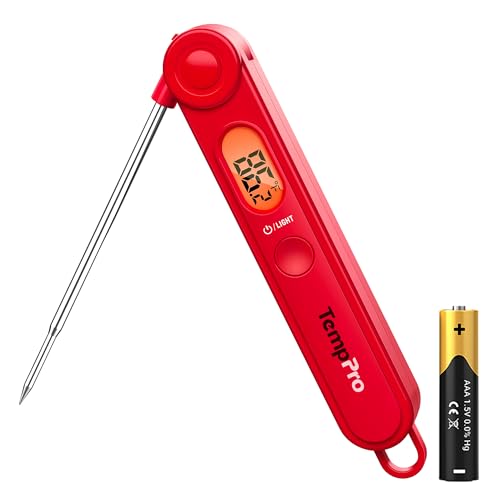
TempPro TempSwift (TP-03B)
What the listing says: 1 second reading per the listing, ±0.9°F (±0.5°C), 3.9 in (10 cm) probe that folds away
Good to know: Made for hand-held checks; the listing says not to leave it in the oven
Check price on AmazonListings checked 22 November 2026. We didn't test these; details come from the Amazon listings.
I already put frozen chicken in the slow cooker. Now what?
USDA doesn't publish a rule for food that's already cooking this way, so here's how we'd think it through.
Easy fix
You just noticed, and it's still frozen hard.
Take it out and cook it from frozen in the oven or on the stove now. That's a method USDA accepts.
Check first
It's been cooking a while and has thawed.
Check the thickest part of every piece with a thermometer. If any piece is under 165°F (74°C), it isn't done. If it reads 165°F (74°C), it's cooked, but it has already had the slow warm-up USDA's advice is meant to avoid. If you're feeding anyone more likely to get seriously ill from food poisoning, the cautious call is to start over.
Throw it out
The power went out while you were away.
FSIS says to throw the food away, even if it looks done.
Next step
Leftovers
Get them in the fridge within 2 hours of cooking. FSIS doesn't recommend reheating leftovers in a slow cooker; use the stove, oven or microwave. Our guide to how long cooked chicken keeps in the fridge covers the day count.
A quick read in two or three spots settles most of this. Any instant-read thermometer works; the point is to stop guessing by color or time.
Questions people ask
Can you put frozen chicken in a crockpot on high?
No. HIGH gets the slow cooker hot faster, but USDA's advice to thaw chicken before slow cooking covers every setting. Thaw it first, or cook it from frozen in the oven or on the stove.
Can you put frozen chicken breasts in a slow cooker?
USDA says no. Thaw the breasts in cold water or the microwave and cook them right away, or bake or simmer them from frozen with the extra time given above, to 165°F (74°C).
Can you cook a whole chicken from frozen?
Yes, in the oven. FSIS says chicken can be cooked from frozen in the oven or on the stove, and it takes about 50% longer. Check the innermost thigh and wing and the thickest part of the breast for 165°F (74°C). Not in the slow cooker.
Can you put frozen chicken wings in a slow cooker?
Same rule as any other cut: thaw them first. Wings cook well from frozen in the oven, with the extra time given above.
Why is frozen chicken fine in the oven but not in a slow cooker?
USDA doesn't spell out the reason, but speed is the likely one. An oven runs much hotter than a slow cooker, which works at about 170°F to 280°F (77°C to 138°C), so frozen chicken gets through the 40°F to 140°F (4°C to 60°C) range faster.
Can you cook frozen chicken in the microwave?
FSIS says not to cook frozen chicken in the microwave or the slow cooker. You can thaw it in the microwave, then cook it straight away.
I left frozen chicken on the counter for 3 hours. Is it safe?
USDA says frozen meat or poultry left thawing on the counter for more than 2 hours isn't at a safe temperature, even if the middle is still frozen, because the outer layer sits in the danger zone. The safe choice is to throw it out.
Can you refreeze chicken after thawing it?
If it thawed in the fridge, yes, even uncooked. If it thawed in cold water or the microwave, cook it first, then freeze the cooked chicken.
How we checked
On 22 November 2026 we read the USDA FSIS and FoodSafety.gov pages listed below. The slow cooker rule, the 50% longer time for cooking from frozen, the thawing methods and the refreezing rules come from FSIS's chicken guide. The slow cooker temperature range, the first-hour tip, the power-outage rule and the advice on reheating leftovers come from FSIS's slow cooker fact sheet; the live page didn't load for us, so we used FSIS's published copy of the same sheet. The 40°F to 140°F range and the 2-hour counter rule come from FSIS; the fill level, the 165°F (74°C) temperature and the 2-hour leftovers rule come from FoodSafety.gov. The section on what to do after the fact is our own reasoning from those rules, since USDA doesn't cover it directly. We didn't test the products; their details come from the Amazon listings. The images are AI-generated illustrations, not photos of our own cooking.
Written by Rawia Younis. Rawia researches home and kitchen topics for Cupindy. This page is general cooking and food-safety information, not medical advice.
Sources
- USDA FSIS: Chicken from Farm to Table (read 22 Nov 2026)
- USDA FSIS: Slow Cookers and Food Safety (live page did not load on 22 Nov 2026; figures checked against the published fact sheet below)
- USDA FSIS: Slow Cookers and Food Safety (published fact sheet, revised February 2012) (read 22 Nov 2026)
- USDA FSIS: The Big Thaw, Safe Defrosting Methods (read 22 Nov 2026)
- USDA FSIS: Turkey Basics, Safe Thawing (read 22 Nov 2026)
- USDA FSIS: Safe Handling of Take-Out Foods (read 22 Nov 2026)
- FoodSafety.gov: Warm Up with a Safely Slow-Cooked Meal (read 22 Nov 2026)
As an Amazon Associate we earn from qualifying purchases. Cupindy earns a commission if you buy through the Amazon links on this page, at no extra cost to you. No brand paid to be included.


