
By Lara Yehia · Last reviewed November 2026
Cooking a steak in a cast iron skillet takes 3 to 4 minutes a side for a 1 inch (2.5 cm) steak, in a pan that has heated for a full 5 minutes. Pull it at 125 to 130°F (52 to 54°C) for medium rare and let it rest 5 minutes before you cut it.
- Pat the steak dry. A wet surface steams gray before it browns.
- Heat the empty pan for about 5 minutes, medium first, then medium-high.
- Sear in a thin film of refined oil. Butter goes in for the last minute only.
- Leave the steak alone until it lets go of the pan on its own.
- Thicker than 1½ inches (3.8 cm)? Sear it, then finish in a 400°F (204°C) oven.
That's the short version of cooking steak in cast iron. Medium rare finishes below the USDA's 145°F (63°C) minimum for steak, and the doneness section explains what that means. If the pan itself is new to you, our cast iron cookware guide covers the seasoning layer and how to keep it.
As an Amazon Associate we earn from qualifying purchases.
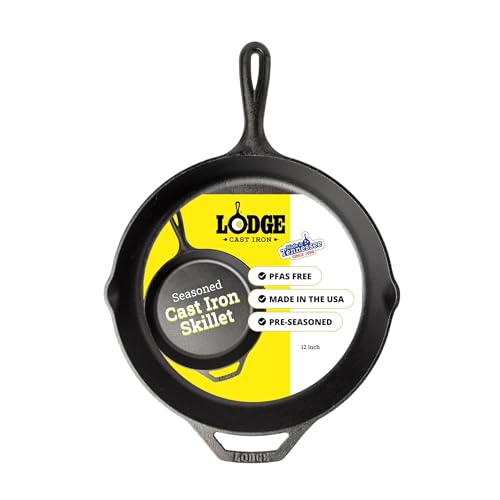
The pan we'd start with
A plain, pre-seasoned skillet with no coating and no rubber grip, so it goes from the burner into a hot oven. We'd start with the Lodge 12 inch: room for two steaks, an iron handle plus a helper handle, and a listing that rates it to 500°F (260°C). It's heavy, about 7.9 pounds (3.6 kg) empty. Cooking one steak at a time? The lighter 10.25 inch is in the table below.
See the Lodge 12 inch skillet on AmazonWhat you need before the pan goes on
Start with the steak. Buy it 1 to 1½ inches (2.5 to 3.8 cm) thick if you can. A thin steak cooks through in the time it takes to brown, so you end up choosing between a crust and a pink middle. A thick one gives you both.
Then get these out: paper towels (kitchen roll), kosher salt, a refined oil with a high smoke point, a couple of tablespoons of butter if you want to baste, tongs, and an instant-read thermometer. Use tongs rather than a fork, because every hole you poke lets juice run into the pan, where it steams instead of searing.
Turn the range hood on now, before anything is hot.
Pick the pan: size, weight and handle
Size first. A 10 inch (25 cm) skillet holds one large steak with room around it. Two steaks need a 12 inch (30 cm) pan. Leave about an inch between the meat and the wall and between the steaks. Pack them tight and the juice that comes out has nowhere to go, so it pools, boils, and the steaks turn gray.
Now look at your burner. Cast iron is slow to spread heat sideways, so a big pan on a small burner gets a hot circle in the middle and a cool rim. A steak that hangs over that rim browns in patches. Match the pan's base to the burner as closely as you can. If your biggest burner is still small, preheat the skillet in the oven instead (more on that in the heat section).
Weight matters more than people expect. A loaded 12 inch skillet is heavy to lift with one hand when it's blazing hot, which is why a helper handle opposite the main one is worth having. And check what the handle is made of. The two plain-handle skillets in the table below list 500°F (260°C) as their limit, which covers the oven finish on this page. A silicone sleeve, a wooden grip or a coated handle has a lower limit of its own, so read the listing before you plan an oven finish.
Pre-seasoned or bare? The skillets in the table below all come pre-seasoned from the factory, ready to cook in. A bare pan, an old one stripped back to gray metal or a vintage find, needs a few coats of seasoning before a steak goes near it, or the crust will glue itself down. If you'd rather cook two or three steaks at once on a flat surface, our best cast iron griddle guide compares uncoated griddles by the stove each one suits.
As an Amazon Associate we earn from qualifying purchases.
| Skillet | Best for | Size and weight | Handle and oven | Trade-off | |
|---|---|---|---|---|---|
| Lodge 10.25 inch pre-seasoned skillet | One steak, smaller burners | 10.25 in (26 cm), about 5.1 lb (2.3 kg) | Iron handle and helper handle; listed to 500°F (260°C) | Holds one steak only | See it |
| Lodge 12 inch pre-seasoned skillet | Two steaks, oven finish | 12 in (30 cm), about 7.9 lb (3.6 kg) | Iron handle and helper handle; listed to 500°F (260°C) | About 7.9 lb empty, heavy to lift one-handed | See it |
| Lodge 12 inch dual handle pan | Two steaks in a small oven, or lifting with both hands | 12 in (30 cm), about 6.6 lb (3 kg) | Two short loop handles; listed as oven safe, no maximum given | No maximum oven temperature listed, so check before a 500°F preheat | See it |
Dry the steak and season it (the counter wait is optional)
A wet steak can't brown. The pan has to boil off every bit of surface water before the crust starts, and while it boils, the outer layer of meat cooks gray. So pat both sides and the edges with paper towels until the towel comes away almost dry. This one step does more for the crust than anything else on this page.
You'll see advice to leave the steak out to reach room temperature first. It helps less than it sounds. In one widely cited test kitchen trial, 1 inch ribeyes sat on the counter for an hour and their centers only reached 52°F (11°C). That's still close to fridge cold. Twenty or thirty minutes out does no harm, but don't stretch it: FSIS, the USDA's food safety agency, says perishable food shouldn't sit out for more than 2 hours, or 1 hour when the room is above 90°F (32°C).
Timing the salt matters more than timing the counter. Salt pulls moisture to the surface, and it takes a while for that brine to soak back in. So salt either right before the steak goes into the pan, or at least 40 minutes ahead. Salting 10 or 20 minutes before is the worst of both: the surface is wet just when you need it dry. If you salt the night before, leave the steak uncovered on a rack in the fridge, not on the counter. Pepper can go on any time.

Pat it dry first. Salt right before the pan, or at least 40 minutes ahead.
Heat the pan: how hot and for how long
Put the empty skillet on the burner at medium, give it a minute, then turn it up to medium-high. Going straight to full blast on a cold pan stresses the iron, and it's the start of the warping problem covered in the mistakes section. From there, give it about 5 minutes. Medium-high is enough once the iron is fully hot, and it smokes far less than high. Iron heats slowly, and most bad sears come from a pan that felt hot but wasn't hot all the way across.
How do you know it's ready? Flick a few drops of water on it. If they bead up, skate across the iron and vanish within a second or two, you're there. Then add the oil, a thin film, about a tablespoon for a 10 inch pan. It should shimmer straight away and send up the first thin wisp of smoke within a few seconds. That's the moment the steak goes in.

Drops that bead up and skate across the iron, then vanish, mean the pan is ready.
On a small burner or an electric coil, there's a better way to preheat. Put the skillet in the oven while the oven heats to 500°F (260°C), then move it to the burner set to medium-high. If you're finishing the steak in the oven, preheat at 400°F (204°C) instead. The oven heats the whole pan evenly, rim included. Use a thick, dry oven mitt, and keep it on the handle the whole time you cook. People forget the handle is now 500°F too.
Pick the oil: smoke points that matter for searing
A hot skillet sits well above the point where some fats start to burn. When oil smokes hard, it turns bitter and sets off the alarm. Use a refined oil with a high smoke point for the sear, and keep butter for the end.
| Fat | Smoke point | For a steak sear |
|---|---|---|
| Avocado oil, refined | 520°F (271°C) | The most room for error |
| Peanut oil, refined | 450°F (232°C) | Good, neutral taste |
| Soybean oil | 450°F (232°C) | Good, cheap |
| Canola oil | 435°F (224°C) | Fine on medium-high |
| Grapeseed oil | 421°F (216°C) | Fine on medium-high |
| Olive oil, extra virgin | 374°F (190°C) | Smokes early, better for lower heat |
| Butter | 302°F (150°C) | Burns if added at the start, use it to baste |
Smoke points shift with how refined the oil is and from bottle to bottle. Figures from the published oil chart listed under Sources.
How long to cook steak in a cast iron skillet, by thickness
Lay the steak in the pan away from you so any spatter flies the other way. It should hiss loudly. If it only sizzles quietly, the pan wasn't hot enough, and the best fix is to pull the steak out, let the pan recover for a minute, and start again.
Then leave it alone. The steak will stick for the first minute or so and let go on its own once a crust forms. Pull it early and the crust tears off. So wait, then lift a corner with the tongs. If it comes up easily and the underside is deep brown, flip it.
Use these times as a starting point for medium rare on a fully preheated pan at medium-high.
| Steak thickness | Sear per side | Then | Pull for medium rare |
|---|---|---|---|
| ½ in (1.3 cm) | 1½ to 2 min | Done. Check right after the flip | 125-130°F (52-54°C) |
| ¾ in (2 cm) | 2 to 3 min | Usually done in the pan | 125-130°F (52-54°C) |
| 1 in (2.5 cm) | 3 to 4 min | Baste for the last minute | 125-130°F (52-54°C) |
| 1½ in (3.8 cm) | 3 to 4 min | Keep flipping every 2 min on the stove, 14 to 16 min in all, or move to the oven | 125-130°F (52-54°C) |
| 2 in (5 cm) | 3 to 4 min | Finish in a 400°F (204°C) oven, check every 2 min | 125-130°F (52-54°C) |
Times are a blend of the stovetop charts and recipes listed under Sources, rounded. The ½ and ¾ inch rows are scaled down from them. Pull temperatures are chef ranges, below the USDA's 145°F (63°C), and match our steak doneness temperature chart.
For medium, add about a minute to the total and pull at 130 to 140°F (54 to 60°C). Your stove, the cut and how cold the steak started all move these numbers, which is why the last column is the one to trust. Use the minutes to get close and the thermometer to decide when it's done.

Flip once the underside lets go and looks like this: deep brown, edge to edge.
How to cook ribeye in cast iron
Ribeye is the easiest steak to get right in a skillet and the messiest to cook. It carries more fat than a strip or a sirloin, which keeps it juicy if you overshoot a little, but that fat also spatters and smokes. Two things help. First, stand the steak on its fat edge with the tongs for a minute before you lay it flat. The fat renders into the pan, which gives the steak something to sear in and leaves less chewy fat on the plate. Second, aim for medium rare to medium. A bit more heat softens the fat running through the meat. Cut 1 to 1½ inches thick, a ribeye follows the same rows in the table above.

Render the fat edge first so it ends up golden like this, not white and chewy.
Baste with butter for the last minute
Basting is optional, but it's the part people remember. Once the steak has been flipped and the second side is nearly done, turn the heat down to medium. Add two tablespoons of butter, a couple of smashed garlic cloves and a sprig of thyme or rosemary. When the butter foams, tilt the pan toward you so it pools at the handle side. Spoon it over the steak again and again for 30 to 60 seconds.
Why lower the heat? Butter burns at about 302°F (150°C), far below where the pan has been. Added at full heat, it goes from nutty to black in seconds. If the butter starts to darken past light brown, take the pan off the burner and keep spooning.
Thick steaks: finish in the cast iron skillet and oven
Past about 1½ inches, the outside of a steak will burn before the middle gets warm if you keep it on the burner. The fix is to sear first, then let the oven finish it gently. That's the advantage of cast iron here: the same pan goes from one to the other.
Heat the oven to 400°F (204°C) while the pan preheats. Sear until both sides are deep brown, 3 to 4 minutes a side, then slide the whole skillet onto the middle rack. You can use the oven for a 1 inch steak too: sear it 2 to 3 minutes a side and it takes roughly 5 to 7 minutes in the oven for medium rare in the recipes we checked. Thicker ones take longer, so start checking the center after a few minutes and every couple of minutes after that. Skip the butter baste until the pan comes out, then baste on the stovetop off the heat.
Check doneness, then let it rest
Slide the thermometer probe in from the side of the steak, not from the top, so the tip sits in the middle of the thickest part. Going straight down on an inch-thick steak can push the tip through to the hot pan and give you a reading that's too high.
Pull the steak a few degrees under the doneness you want, because it keeps cooking for a few minutes off the heat. For medium rare that's 125 to 130°F (52 to 54°C), and it settles at 130 to 135°F (54 to 57°C). Our full rare-to-well-done chart has every level from rare to well done, and where the carryover comes from.
Those doneness ranges come from chefs and steakhouses. The USDA's number is different. FSIS says beef steaks should reach 145°F (63°C) before they leave the heat and then rest for at least 3 minutes. Rare, medium rare and most of medium finish below that. If you want to cook to the USDA standard, pull the steak at 145°F (63°C).
Either way, rest it on a board or a plate for about 5 minutes. Skip the foil, or lay it on loosely. Wrapped tight, the steam softens the crust you just worked for. Then slice across the grain.
As an Amazon Associate we earn from qualifying purchases.

Alpha Grillers instant-read thermometer
Why it fits: the listing gives it a 1 to 2 second reading, a thin probe and a backlit screen. You check a steak with the pan still blazing, so a fast number means less time leaning over the heat.
The drawback: the listing tops it out at 300°F (149°C), the body is plastic and it's hand wash only. Check the steak, then take it out. It can't stay in the meat in the oven.
Check it on AmazonClean and re-season the pan after steak
Let the skillet cool until it's warm, not smoking. Wipe out the fat, then rinse under hot water and scrub off the stuck bits with a brush or a chain mail scrubber. A small drop of dish soap won't hurt a well-seasoned pan. Never run cold water into it while it's still hot. Dry it with a towel, then set it back on low heat for a minute or two so the last of the water steams off. Rub in about half a teaspoon of oil and wipe until the surface looks almost dry.
Butter and garlic can leave dull, sticky patches. If you see gray spots or the next egg sticks, the seasoning has thinned and needs a fresh coat. Our guide on how to clean a cast iron pan walks through rust, burnt-on food and a full oven re-season.
Mistakes: smoke, gray steak, sticking and a warped pan
The kitchen fills with smoke. Some smoke comes with a proper sear. A lot of it usually means olive oil or butter at high heat, too much oil, or the burner left on high after the pan was already hot. Switch to a refined oil, use a thin film, cook at medium-high, and run the hood before you start. Fatty ribeyes smoke more than lean cuts. Open a window for those.
The steak comes out gray, not brown. Three causes cover most of it: a wet surface, a pan that wasn't hot enough, or too many steaks at once. Salting 10 to 20 minutes before cooking adds to it, since the surface goes wet right as the steak hits the pan. Dry it, heat the pan longer, and cook in batches if the steaks touch.
The crust sticks and tears. Usually the steak was moved too early. Give it time and it releases. If it still sticks with a fully hot pan, the seasoning is thin, and a coat or two will fix it.
The pan warps or cracks. Sudden temperature changes put iron under stress. The classic way to ruin a skillet is to run cold water over it straight after cooking. Blasting a cold, empty pan on the highest setting is the other. A warped skillet rocks on a flat glass top and heats unevenly from then on. Let the pan cool before washing, and bring it up to heat in steps.
Questions people ask
How long should I cook a 1/2 inch steak in a cast iron skillet?
About 1½ to 2 minutes a side on a fully preheated pan. Thin steaks go from pink to gray fast, so check the center as soon as you flip. You won't get much carryover, and you won't need the oven.
How long do you cook a 1 inch steak in cast iron?
3 to 4 minutes a side on medium-high, then check for 125 to 130°F (52 to 54°C) for medium rare. If you'd rather finish it in a 400°F (204°C) oven, sear 2 to 3 minutes a side and expect about 5 to 7 minutes in the oven.
How do you cook a ribeye in a cast iron skillet?
Cut 1 to 1½ inches (2.5 to 3.8 cm) thick, it takes the same times as any steak in the table above. Render the fat edge first by holding the steak on its side for a minute, and aim for medium rare to medium so the fat softens. Expect more spatter and smoke than with a lean cut.
Should I use butter or oil for steak in cast iron?
Both, at different times. Sear in a refined oil, which handles the heat. Butter burns at about 302°F (150°C), so add it only when the second side is nearly done: turn the heat to medium, add two tablespoons with garlic and thyme, tilt the pan and spoon it over the steak for 30 to 60 seconds.
How do you cook steak in cast iron without smoke?
You can't avoid all of it, but you can cut most of it. Use a refined oil with a high smoke point, keep it to a thin film, cook at medium-high instead of high once the pan is hot, and add butter only at the end. Turn the range hood on before the pan goes on.
Do I need to finish steak in the oven?
Not for steaks up to about an inch thick. Those finish on the stove. Past about 1½ inches, the oven saves the crust from burning while the middle catches up. A 1½ inch steak can still finish on the stove if you keep flipping it.
Should you flip a steak once or many times?
Both work. Flipping a few times cooks the steak a little faster and more evenly. Flipping once is simpler and easier to time. What matters is that the first side has released and browned before you turn it.
What's the best way to store a cast iron pan?
Completely dry, with a very thin coat of oil, somewhere that isn't damp. If you stack pans, put a paper towel between them to protect the surface and soak up moisture. Leave the lid off so water doesn't collect inside.
How we checked
On 13 November 2026 we read the FSIS pages on safe cooking temperatures and on how long food can sit out, the stovetop timing charts and oven-finish recipes listed below, a published oil smoke point chart, and the test kitchen trial on warming steak at room temperature. We also compared the cast iron steak guides that rank in US search for this topic. The images are illustrations made with an AI image tool, including the main image at the top; the times and temperatures come from the sources below, not from our own kitchen test. Product details come from the product listings linked above, checked on 13 November 2026.
Written by Lara Yehia. Lara researches home and kitchen products for Cupindy. This page is general cooking and food-safety information.
Sources
- FSIS: Safe Minimum Internal Temperature Chart (read 13 Nov 2026)
- FSIS: How Temperatures Affect Food (2-hour and 1-hour rule, read 13 Nov 2026)
- Cook's Illustrated: Should Steak Be Room Temperature Before Searing? (read 13 Nov 2026)
- Chowhound: The Salting Mistake That Prevents a Crust on Steak (read 13 Nov 2026)
- ThermoWorks: Oil Smoke Points, Temp Chart (read 13 Nov 2026)
- Kansas City Steaks: How to Cook Steak in a Cast Iron Skillet (time chart) (read 13 Nov 2026)
- 101 Cooking for Two: Pan-Seared, Oven-Finished Strip Steak (updated 27 Sep 2026)
- WebstaurantStore: How to Cook Steak in a Cast Iron Skillet (burner size, oils) (read 13 Nov 2026)
- The Takeout: Steak Myths You Thought Were True (flipping) (read 13 Nov 2026)
- Cast-Iron Cooking For Dummies: How to Make Your Cast Iron Last (thermal shock) (read 13 Nov 2026)
- The Daily Meal: Cast Iron Care, Soap and Cold Water (read 13 Nov 2026)
As an Amazon Associate we earn from qualifying purchases. Cupindy earns a commission if you buy through the Amazon links on this page, at no extra cost to you. No brand paid to be included.


