
Written by Rawia Younis. Rawia researches home and kitchen products for Cupindy.
Published November 2026 · Last reviewed November 21, 2026 · Cupindy is not affiliated with any brand on this page.
The short answer
Usually not. In most cases the black layer is burnt food stuck to the metal, not damaged metal, and it comes off. On stainless steel, the top-scoring fix in a 5-method test was baking soda paste scrubbed with a ball of aluminum foil: about 3 minutes. Do not try that on nonstick. Foil can scratch the coating, so a nonstick pan gets a soak, a gentle simmer and a soft pad instead.
As an Amazon Associate we earn from qualifying purchases.
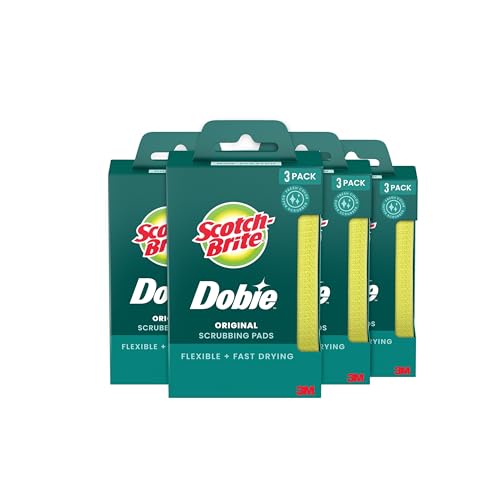
Our quick pick for any pan
Scotch-Brite Dobie Non-Scratch Scrub Pads, 12 pack
A sponge wrapped in a scrubbing mesh. The mesh grips well enough to finish off softened char, and the listing says the pads do not take protective coatings off cookware, so they are safe on a coated pan where foil or steel wool is not.
See the Dobie pads on AmazonThe drawback: a gentle pad will not shift thick char on its own. Soak or simmer the pan first, then let the pad do the finishing.
If your pan turns out to be past saving, our guide to which stainless steel cookware is safe to buy covers what to look for next.
What works on which pan
| Pan | Try this | Never use | Why |
|---|---|---|---|
| Stainless steel | Baking soda paste + a foil ball; simmer first if the burn is thick | Steel wool | Top score in the test; steel wool can damage the surface |
| Nonstick (PTFE or ceramic) | Warm soapy soak, gentle simmer, wooden or silicone spatula, soft pad | Foil, steel wool, chainmail, metal tools | They scratch the coating |
| Cast iron (bare) | A little water, gentle heat, scrape; coarse salt or baking soda paste; dry and oil | Long soaks, vinegar, lemon | Water and acid cause rust and wear away the seasoning |
| Enameled cast iron | Baking soda simmer, 8 to 10 minutes; wooden spoon | Metal scourers; cold water on a hot pot | Metal scratches enamel; a sudden temperature change can crack it |
| Aluminum (bare) | Soapy soak and a soft pad; baking soda only briefly, then rinse well | Long acid soaks; baking soda left sitting | Bare aluminum can pit or darken |
The stainless row comes from the test below. The other rows follow the cookware and appliance makers' care pages, Iowa State University Extension and our own guides, all listed at the end.

Everyone burns a pot sooner or later. Rice left on the heat while you answered the door, a stew that caught on the bottom, milk that boiled over and baked onto the base. The pan looks finished. It rarely is. The catch is that most fixes online are written as if every pan were the same, and the trick that brings stainless steel back to bright metal in three minutes is the one that can scratch a nonstick pan. That is why the table starts with the metal.
The 3-minute method that won (stainless steel)
The Kitchn tested five popular methods on a stainless steel pan with a burnt-on fried egg, one method per round. Baking soda paste scrubbed with crumpled aluminum foil won clearly. It took about 3 minutes, needed only a light scrub, and left the pan close to new. The writer called it the easiest of the five.
- Let the pan cool until it is warm, not hot. Pour off any fat and wipe out loose bits with a paper towel.
- If the burn is thick, loosen it first. Put the pan back on the stove, heat it until a drop of water sizzles, pour in about 1 cup (240 ml) of water and let it simmer while you scrape with a wooden spoon. Pour the water out.
- Sprinkle 2 to 3 tablespoons (30 to 45 ml) of baking soda (bicarbonate of soda) over the burnt area. Add just enough water to make a thick paste.
- Scrunch a sheet of aluminum foil into a loose ball and scrub in small circles. Make a fresh ball when the first one flattens.
- Rinse, wash with dish soap and warm water, and dry.
Two things to keep in mind. The test used one pan and one burnt egg per method, so a pot of scorched chili may need a second round or a paste left on overnight. And this is a method for bare stainless steel. Foil is still metal, and it does not belong on a coated pan.
Why the vinegar boil failed
The fix most people try first is a boil of water and white vinegar with baking soda stirred in. In the same test it tied for last place. It took about 25 minutes and loosened very little, and the pan only came clean after a second round of baking soda paste and a lot of scrubbing. The paste did the work, not the boil.
| Method | Score | Time | What happened |
|---|---|---|---|
| Baking soda paste + foil | 5/5 | About 3 min | Light scrub, pan nearly like new |
| Boiled lemons | 4/5 | About 25 min, 5 active | Almost no scrubbing; a few small bits left |
| Dishwasher tablet | 3/5 | 3 to 5 min | Quick and low-mess; the tablet acted as soap and scrubber |
| Water + vinegar + baking soda boil | 1/5 | About 25 min | Loosened little; needed a second paste and hard scrubbing |
| Dryer sheet soak | 1/5 | 65 to 70 min | Top layer lifted; the stubborn part stayed |
Scores from The Kitchn's test (updated February 2026): one stainless steel pan, one burnt egg per method.
That does not make vinegar useless. It is the usual fix for the white, chalky spots hard water leaves on stainless steel, which is a different job (more on that below). Cookware makers also disagree on how much acid stainless steel should see, so check your pan's care guide before a long vinegar soak.

Boiled lemons: easy, but not for every pan
Slice two or three lemons, lay them in the pan, cover them with water and boil, then scrub. It scored well and took little effort. Lemon is an acid, though, so leave it out of bare cast iron, and do not let it sit for long in bare aluminum.
Dishwasher tablet: quick, with two rules
A powder tablet rubbed over the damp pan works like a soft scouring block. Wear gloves, rinse the pan well and keep it to stainless steel; the test tried one brand only. Never use it in the same session as bleach. Automatic dishwasher detergents can contain acids, and bleach mixed with an acid gives off chlorine gas.
Salt, and why we would skip the dryer sheet
Coarse salt with a splash of water is the scrub for bare cast iron, covered below. The dryer sheet soak took more than an hour in the test and still left the hard part behind, so we would not bother.
Baking soda simmer: the low-effort option
If you would rather wait than scrub, simmer. Fill the pan with warm water to just above the burnt line, add 1 to 2 tablespoons (15 to 30 ml) of baking soda, and keep it at a simmer for 8 to 10 minutes. Let it cool, pour it out, and most of the softened residue lifts with a wooden spoon. One enameled cast iron maker gives exactly this method in its care guide, which makes it the safest first try on enamel. On stainless steel it is a good warm-up before the paste.
For a stubborn patch, spread a thick baking soda paste over the burn and leave it anywhere from an hour to overnight before you scrub again.
The one thing never to do on nonstick
Do not scrub a nonstick (non-stick) pan with foil, steel wool, a chainmail scrubber or a metal spatula. One appliance maker's cleaning guide warns that the foil method could scratch the coating. Scratches are where a nonstick pan starts to fail, and a scratched coating is one of the signs it needs replacing.
- Let the pan cool on the stove. A hot coated pan plunged into cold water can blister, and the coating can start to lift.
- Fill it with warm water and a little dish soap and let it soak.
- Still stuck? Put it back on low heat with about 1 inch (2.5 cm) of water and simmer for a few minutes, scraping with a wooden or silicone spatula.
- Finish with a soft, non-scratch pad.
Baking soda on nonstick is where makers' advice differs. Our nonstick cleaning guide sets out what each brand says.

Burnt food on nonstick often means the pan got too hot. The maker of one of the best-known PTFE coatings says its coating can be used up to about 500°F (260°C) without damage, and that cooking oils start to smoke at around 400°F (204°C). An empty pan on a high burner can pass that quickly, so never preheat nonstick empty, and keep it out from under the broiler (grill).
If the pan smoked hard, open a window, run the range hood and keep pet birds out of the kitchen. One cookware maker's manual warns that fumes from burning food and overheated fats can harm birds.
Cast iron: skip the long soak
Bare cast iron needs the opposite of a long soak. Add a little water, warm the pan gently and scrape with a wooden or silicone tool. If residue is left, scrub with coarse salt, or with baking soda paste and a nylon brush. Then dry it straight away and wipe on a thin film of oil. Vinegar and lemon are out, because acids can cause rust and wear away the seasoning. Full steps, including rust removal and re-seasoning, are in our cast iron cleaning guide.
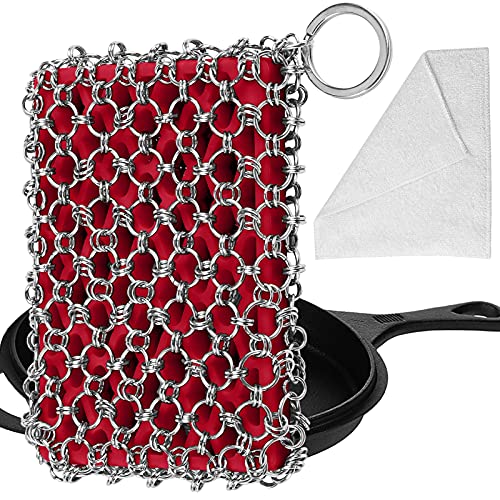
Enameled cast iron is different again. Treat it with the baking soda simmer above, never with metal, and let a hot pot cool before water goes in. Our enameled cast iron guide has the full routine.
Aluminum pans: gentle and quick
Soak bare aluminum in soapy water and use a soft pad. Baking soda helps, but rinse every trace of it off, because left on the metal it can darken it. For dark discoloration afterwards, Iowa State University Extension suggests boiling 2 to 3 tablespoons of cream of tartar, lemon juice or vinegar per quart (about 1 liter) of water in the pan for 5 to 10 minutes. Keep acids short: left to sit, they can pit uncoated aluminum. Hard-anodized and clad pans have their own care guides, so follow those.
Burnt grease and the black bottom of a pot
The black crust on the outside of a pot is old grease and food baked on one layer at a time. It will not come off in one wash, so plan on two or three rounds.
- Bare stainless steel base: spread a thick baking soda paste, leave it an hour or overnight, then scrub with a non-scratch pad. For what is left, a stainless cookware maker recommends a powdered cookware cleanser once the loose char is off; the one below is an oxalic acid powder. Wet the pan, sprinkle, rub into a paste and rinse within about a minute, as the label says.
- Nonstick or enameled outside: baking soda paste and a soft pad only.
Our stainless steel cleaning guide has a step-by-step section on the outside bottom of a pan.

Rainbow stains and white spots are not damage
After a burn, many people spot a blue or rainbow sheen on stainless steel, or white, chalky marks. Neither means the pan is ruined. The rainbow tint is heat tint from overheating and is only cosmetic. White spots are hard-water minerals, not rust. A little white vinegar shifts both; the stainless guide has the details.
Is a burnt pan ruined? When to stop using it
Most are not. What looks like burnt metal is often a layer of burnt food, and it lifts with the methods above. Stop using a pan, though, when:
- A nonstick coating is peeling, flaking, blistering or scratched through to the metal.
- The base has warped, so the pan rocks on a flat counter or heats unevenly.
- The layers of a clad stainless pan start to separate at the base, or the cooking surface is pitted.
- Food keeps sticking and burning even after a proper clean.

Our nonstick guide covers when to replace a nonstick pan in more detail. If you are replacing a stainless pot, start with what makes stainless steel cookware safe.
Safety rules while you clean
- Air the kitchen. Open a window and run the hood while a burnt pan heats or simmers.
- Never mix cleaners. Bleach with vinegar, lemon, ammonia or other acid cleaners gives off toxic gas. Use one product, rinse, then try the next.
- Add baking soda to hot vinegar slowly. It fizzes up fast.
- Let hot pans cool before cold water touches them, above all enamel and nonstick.
- Wear gloves for oxalic acid powders and dishwasher tablets.
- Rinse aluminum well after baking soda.
Questions people ask
Is a scorched pan ruined?
Usually not. The black layer is mostly burnt food on the metal. Replace the pan if a nonstick coating is flaking or scratched through, the base is warped, or food keeps burning after a proper clean.
How do I get burnt food off a stainless steel pan fast?
Make a paste of 2 to 3 tablespoons of baking soda and a little water, then scrub with a ball of crumpled aluminum foil. It took about 3 minutes in a 5-method test. Use it on bare stainless steel only.
Can I use aluminum foil on a nonstick pan?
No. Foil can scratch the coating. Soak the pan in warm soapy water, simmer a little water in it, and use a wooden or silicone spatula and a soft pad.
Does vinegar and baking soda clean a burnt pot?
Slowly. In the test it scored 1 out of 5: the boil loosened little, and a baking soda paste plus hard scrubbing did the real work. Vinegar is better kept for white hard-water spots.
How do I get the black stuff off the bottom of a pan?
Spread a thick baking soda paste on the outside base, leave it an hour or overnight, and scrub with a non-scratch pad. On bare stainless steel, finish with a powdered oxalic acid cookware cleanser, rinsed off within about a minute.
How do you remove years of burnt grease?
In rounds. Paste and soak first, then a powdered cookware cleanser on bare stainless steel. Grease baked on over months rarely comes off in one go, so expect two or three sessions.
Are rainbow stains on stainless steel a sign of damage?
No. The rainbow sheen is heat tint and is cosmetic, and white spots are hard-water minerals. A little white vinegar removes both.
How we checked
We did not run our own test. On 21 November 2026 we read The Kitchn's five-method test in full, the care pages of cookware and appliance makers, Iowa State University Extension's guidance on aluminum, and the Washington State Department of Health and Health Canada on mixing cleaners. Product details come from the Amazon listings on the same date. The photos on this page are illustrations, not records of a test.
Sources
- The Kitchn: I tested 5 methods for cleaning a burnt stainless steel pan (updated 18 Feb 2026)
- The Kitchn: How to clean a burnt pot, 5 easy ways (updated 17 Sep 2022)
- Maytag: How to clean a burnt pan
- KitchenAid: How to clean a burnt pot
- Le Creuset: How to clean your Dutch oven
- Teflon: The facts about polymer fume exposure
- Made In: How to clean a burnt stainless steel pan
- Iowa State University Extension: Removing discoloration from aluminum utensils
- Washington State Department of Health: Dangers of mixing bleach with cleaners
- Health Canada: Never mix bleach with other cleaning products
- America's Test Kitchen: How often should I replace my nonstick pan?
- Food Network: How to clean a burnt pot (updated 26 Aug 2024)
- Tasting Table: Take caution when using baking soda to clean aluminum pans
- Hunker: How to clean severely burned stainless steel pots
- Meyer: Cookware use and care guide (pet bird warning)
- CHOICE: Is it time to throw away your pans?
- Food & Wine (via AOL): Signs you need to replace a skillet
- Ideal Home (via inkl): Signs a nonstick pan needs replacing
