

Written by Sara Ibrahim. Sara researches home and kitchen products for Cupindy. · Published October 2026 · Last reviewed October 6, 2026
Stainless steel is hard to ruin and easy to mark. Food scorches onto the bottom, the inside turns rainbow-colored after one empty preheat on high heat, and hard water leaves a white haze that will not wipe off. All of it comes off. The trick is to match the fix to the mark and start with the gentlest one.
Below: how to find out what is on your pan, the cleaning order that removes burnt-on food without scratching, what the stains mean, what the pan makers allow and forbid, and whether Bar Keepers Friend is safe to use on the pan you cook in.
How we put this together: we read the care guides from All-Clad, Made In, Tramontina, Misen and Cuisinart, the Bar Keepers Friend label and safety data sheet, and the Amazon listings for each product, checked with a US delivery address on October 6, 2026. We have not tested these cleaners ourselves. The photos show typical marks; they are not test results.
The short answer
- Every day: let the pan cool, wash it with dish soap and a soft sponge, then dry it straight away. Never put a hot pan under cold water.
- Burnt-on food: soak in hot soapy water, then boil water with baking soda in the pan and scrape with a wooden spoon. If marks are left, use a cookware cleanser paste such as Bar Keepers Friend for about a minute, then rinse well.
- Rainbow or blue stains: wipe with white vinegar. They come from heat and do not affect cooking.
- White spots: hard-water minerals. Boil equal parts white vinegar and water in the pan.
- Never: steel wool, oven cleaner, or bleach.
As an Amazon Associate we earn from qualifying purchases.

When soaking and baking soda are not enough
Bar Keepers Friend Cookware Cleanser & Polish
The cleanser All-Clad and Tramontina name in their own care guides, in the formula made for pots and pans. It lifts burnt fat, heat tint and water spots. Wear gloves if you scrub for long, and rinse well.
See Bar Keepers Friend Cookware on AmazonDaily sponge, or a pan past saving?
Soft daily sponge: Scotch-Brite Zero ScratchPan past saving? The saucepan we would buyFind your problem first
Most stainless steel marks fall into a few groups, and each has its own fix. Match what you see, try the gentle fix, and only use the button if that fails.
Swipe the table sideways on a phone.
| What you see | What it is | Gentlest fix | If that fails |
|---|---|---|---|
| Brown or black crust inside after cooking | Burnt-on food | Soak 15 minutes in hot soapy water, then boil water with baking soda and scrape | Cleanser |
| Dark, greasy stains on the outside bottom | Grease and spills baked on by the burner | Baking soda paste and a nylon pad, on a cool pan | All-Clad cleaner |
| Rainbow, gold or blue patches | Heat tint: the steel's thin oxide layer thickens at high heat | Wipe with white vinegar and a soft cloth | Cleanser |
| Cloudy white spots or haze | Minerals left by hard water | Boil equal parts white vinegar and water, then dry | Cleanser |
| Amber, sticky film, often on the walls | Cooking oil baked onto the steel | Baking soda paste for 5 to 10 minutes, then scrub | Cleanser |
| Black specks that flake off | Carbonized bits of food | Soak, then lift with a plastic scraper | Pan scraper |
| Orange-brown rust stains | Rust staining on the surface | Cleanser paste for about a minute, rinse, dry | Cleanser |
| Greasy feel after washing | Leftover oil | Hot water, dish soap, a soft sponge, dry at once | Soft sponge |
| Tiny pits, a warped base, or layers coming apart | Damage, not dirt | Pits are cosmetic. A warped or separating pan is time to replace | Replacement pan |
How to clean a stainless steel pan every day
All-Clad's care guide keeps the daily routine simple: let the pan cool, rinse off loose food with warm water, soak in warm soapy water if anything is stuck, wash with a sponge or soft cloth, then rinse and dry straight away so water does not leave spots. A nylon scouring pad is fine for harder jobs on the steel surface.
- Cool it first. All-Clad warns never to put a hot pan under cold water, because it can warp. Tramontina says the same: the shock can warp the base for good.
- Deglaze while it is warm. Tramontina's tip: pour about half a cup of warm water or broth into the pan over medium heat and scrape up the browned bits. Most of the work is done before the sink.
- Dry it with a towel. Air-drying is what leaves the white spots in hard-water homes.
As an Amazon Associate we earn from qualifying purchases.
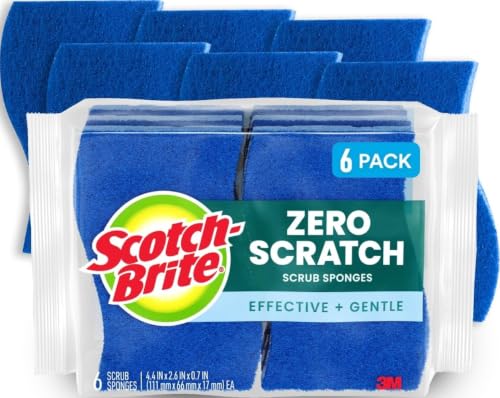
For the daily wash
Scotch-Brite Zero Scratch Scrub Sponge, 6 pack
A sponge with a non-scratch scrub side, sold for pots, pans and nonstick. It is the kind of soft scrubber All-Clad and Tramontina point you to instead of steel wool.
Good for: everyday washing and the final scrub after a soak.
The drawback: it is too gentle for a thick burnt crust. That is a job for the soak, the baking soda boil and a scraper.
See the sponges on AmazonHow to clean a burnt stainless steel pan

Work from gentle to strong and stop as soon as the steel is clean. Every step below comes from a pan maker's own care advice.
Step 1: Let it cool, then soak for 15 minutes
Fill the cooled pan with hot water and a little dish soap and leave it for about 15 minutes. All-Clad's cleaning guide says this soak makes the rest much easier and saves you from harsh scrubbing.
Step 2: Lift what comes loose
Push the softened food off with a wooden spoon or a plastic scraper. Do not reach for steel wool or a metal pad: All-Clad says they leave permanent scratches.
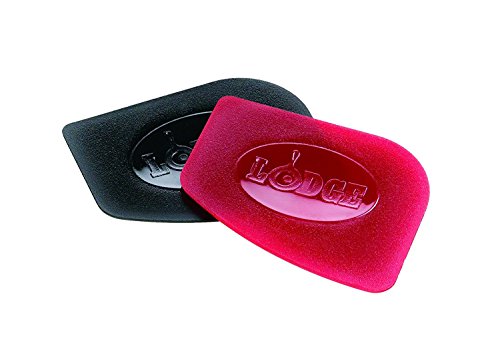
For lifting burnt bits
Lodge Pan Scrapers, 2 pack
Two stiff polycarbonate scrapers with different corners for flat bottoms, curves and the edge where the wall meets the base. Lodge describes them as ideal for all cookware and designed to scrape without scratching.
Good for: lifting softened crust after a soak or a baking soda boil.
The drawback: Lodge sells them for cast iron first, and a plastic edge only shifts food that has started to soften. It will not remove a stain or a baked-on oil film.
See the scrapers on AmazonStep 3: Boil water with baking soda
All-Clad's method for burnt food: sprinkle the bottom generously with baking soda, add water, bring it to a boil and loosen the food with a wooden spoon. Let the pan cool before the next step. For a lighter burn, Tramontina uses half an inch of water with a quarter cup of white vinegar, brought to a boil for one minute.
Step 4: Rub in a baking soda paste
Mix baking soda with a little water into a thick paste, spread it on what is left and wait 5 to 10 minutes, as All-Clad's guide suggests. Scrub with the soft side of a sponge or a nylon pad, then rinse.
Step 5: Use a cookware cleanser for what is left
For marks that survive, All-Clad names three nonabrasive, non-chlorine cleansers: its own cookware cleaner, Bar Keeper's Friend and Bon Ami. Make a paste with a little water and rub it in circles with a soft cloth or sponge. Tramontina adds one rule: Bar Keepers Friend contains oxalic acid, so do not leave it on the pan for more than a minute. All-Clad allows the paste to soak on a second round. We follow the shorter rule: a minute, scrub, rinse, and repeat if needed.
As an Amazon Associate we earn from qualifying purchases.
The cleanser the makers name
Bar Keepers Friend Cookware Cleanser & Polish, 2 x 12 oz
A powder cleanser in the formula sold for pots, pans and bakeware. The listing says it removes burnt food, oily residue, rust stains and lime deposits from stainless steel. It is the brand both All-Clad and Tramontina name.
Good for: burnt fat, brown film, heat tint and water spots that soaking and baking soda did not shift.
The drawback: it contains oxalic acid. The label warns against getting it in your eyes or breathing the dust, says to use gloves for long or sensitive-skin use, and says to rinse thoroughly. Read our safety section below before you use it.
See Bar Keepers Friend on AmazonStep 6: Rinse well and dry
Rinse the pan with warm water until no grit is left, then dry it with a towel. The Bar Keepers Friend label says to rinse thoroughly and wipe dry, and its safety data sheet says not to use it where you cannot rinse thoroughly.
How to clean the outside bottom of a stainless steel pan
The outside bottom collects grease and drips that the burner bakes on. Let the pan cool, turn it over in the sink and spread a thick baking soda paste on the stains. After 5 to 10 minutes, scrub with a nylon pad and rinse. For what is left, use a cookware cleanser paste. The All-Clad cleaner's listing says it can be used on brushed or polished exteriors, and Made In says its cleaner suits the stainless bottom of its pans.
Check the bottom first. The All-Clad cleaner's listing says it is not for hard-anodized, copper or nonstick cookware, so leave copper bottoms and coated surfaces out of it.

For the outside and for All-Clad owners
All-Clad Stainless Steel Cookware Cleaner, 12 oz powder
All-Clad's own powder cleanser for stainless and aluminum cookware. The listing says it can be used on brushed or polished exteriors, which makes it the easy choice for the outside bottom.
Good for: All-Clad pans, and burnt grease on the outside of stainless pans.
The drawback: the listing says it is not for hard-anodized, copper or nonstick cookware, and it does not list its ingredients on Amazon.
See the All-Clad cleaner on AmazonHow to remove rainbow stains from a stainless steel pan

The gold, blue or purple sheen is heat tint. Made In explains that when stainless steel is heated to high temperatures, the oxidized top layer of the metal thickens, which causes a rainbow tint. It calls it a purely aesthetic issue, and All-Clad says it does not usually affect how the pan performs.
Why it happened after one use: Made In's answer is short: rainbow tint is caused by overheating an empty pan. A pan preheated dry on high heat for too long is the usual reason. Preheat on low to medium instead; our guide to stopping food from sticking shows how to tell when the pan is ready.
- Vinegar first. All-Clad: wipe the pan with a sponge or soft cloth and white vinegar. Made In uses diluted white vinegar the same way. Rinse and dry.
- Cleanser second. Tramontina sprinkles about a tablespoon of Bar Keepers Friend on the wet, discolored area and scrubs with a damp sponge. Keep it to a minute and rinse well.
How to remove white spots from a stainless steel pan

White spots or a cloudy film are minerals from your water. All-Clad says they are often caused by minerals in water, especially if you have hard water. They are not rust and not damage.
- Boil it off. All-Clad's fix is to boil a 1:1 mix of white vinegar and water in the pan, then rinse and dry.
- Or let vinegar sit. Tramontina pours a few tablespoons of white vinegar into the pan, leaves it for five minutes, wipes with a soft cloth, rinses and dries.
- Stop them coming back. Dry the pan with a towel instead of leaving it on the rack.
A different white mark is worth knowing: small white dots that feel like tiny pits. All-Clad links those to adding salt before liquids boil, and says pitting does not interfere with cooking. The fix is prevention: add salt once the water boils.
How to get the brown, sticky film off a stainless steel pan

An amber or brown film that feels tacky, usually on the walls where oil splashed, is cooking oil that baked onto the steel. Soap alone will not move it, and it makes food stick.
- Baking soda paste: spread it on, wait 5 to 10 minutes, scrub with a nylon pad.
- Still there? All-Clad lists burnt fat as a job for a nonabrasive cleanser paste. Bar Keepers Friend's own listing names heavy oil and sticky residue.
If the pan turns sticky again soon after, our stainless steel sticking guide has a quick vinegar simmer for light buildup and the preheat that stops food sticking in the first place.
Black specks and rust spots
Black specks that flake off are carbonized food. Treat them as burnt-on food: soak, boil with baking soda, lift with a plastic scraper.
Orange-brown rust stains can be cleaned off. The Bar Keepers Friend Cookware listing names rust stains among what it removes. Use the paste for about a minute, rinse and dry the pan fully before you put it away.
Is Bar Keepers Friend safe on stainless steel cookware?
For the pan, yes: All-Clad and Tramontina both name it in their care advice, and Misen suggests it too. The question is how you use it, because it is an acid cleanser. Here is what the product's own paperwork says:
- Active ingredient: oxalic acid. The 2015 safety data sheet for the Cookware Cleanser lists it at 7.5 to 9.5 percent, with feldspar (a powdered mineral) and a detergent.
- Hazard class: the same sheet classes it as an eye irritant and a mild skin irritant, with the signal word Warning.
- Label warnings: do not ingest, inhale or get in eyes; do not mix with other household chemicals such as ammonia or bleach; use gloves for prolonged use or sensitive skin; keep away from children.
- Rinse: the label says rinse thoroughly and wipe dry. The safety data sheet says not to use it where rinsing thoroughly is difficult or impossible.
- Contact time: Tramontina says not to let it sit on the pan for more than a minute.
The Environmental Working Group, which rates cleaning products on their ingredients, gives this product an F. That is one reason we put it last in the cleaning order, after hot water, soap, baking soda and vinegar. Used that way, with gloves on, for a minute, and rinsed off well, it is the step that finishes the job the gentler ones cannot.
One more point: the Amazon listing describes it as containing no harsh chemicals. We go by the label and the safety data sheet instead.
Best stainless steel cookware cleaner
Two powder cleansers do the heavy work for most people. Both are made for cookware, both come up in the pan makers' own guides, and both were sold by Amazon or the brand and shipped from Amazon when we checked on October 6, 2026.
As an Amazon Associate we earn from qualifying purchases.
Swipe the table sideways on a phone.
| Cleaner | What is in it | Best for | The catch | |
|---|---|---|---|---|
| Bar Keepers Friend Cookware Cleanser & Polish (2 x 12 oz) | Oxalic acid, feldspar, detergent (safety data sheet) | Burnt fat, heat tint, water spots, rust stains | Gloves for long use; one minute on the pan; rinse well | Check on Amazon |
| All-Clad Stainless Steel Cookware Cleaner (12 oz) | Not listed on Amazon; the listing says natural minerals | All-Clad pans and outside bottoms | Not for hard-anodized, copper or nonstick | Check on Amazon |
The free option: baking soda handles most burnt food and brown film on its own, and white vinegar handles rainbow tint and white spots. Start there. Made In also sells its own stainless cleaner; it had only a few hundred ratings on Amazon when we checked, so we have not included it. Skip spray stainless cleaners made for fridges and dishwashers: they are for appliance fronts, not cooking surfaces.
What the pan makers say
If you own one of these brands, its own rules come first. Here is what each maker's care page says, in short.
Swipe the table sideways on a phone.
| Maker | Dishwasher | Steel wool | Cleanser it names | Rainbow tint fix |
|---|---|---|---|---|
| All-Clad | Hand washing is often best to preserve the finish | No steel wool or steel scouring pads; nylon pads only | All-Clad cookware cleaner, Bar Keeper's Friend, Bon Ami | Wipe with white vinegar |
| Made In | Technically dishwasher safe; hand washing strongly recommended | Not covered on the pages we read | Made In Stainless Steel Cleaner | Cleaner paste or diluted white vinegar |
| Tramontina | Most pans are dishwasher-safe; hand washing gives a better result | Skip steel wool and oven cleaner | Bar Keepers Friend, for no more than a minute | Bar Keepers Friend with a damp sponge |
| Misen | Dishwasher safe | Not covered on the page we read | Bar Keeper's Friend, or baking soda | Not covered on the page we read |
| Cuisinart (MultiClad Pro) | Hand wash recommended | Not covered on the page we read | Not named on the page we read | Not covered on the page we read |
Made In explains its dishwasher caution: on clad pans the aluminum layer can be exposed at the rim, and dishwasher detergent and heat can wear it away over time.
What never to use on stainless steel pans
- Steel wool and steel scouring pads. All-Clad says they leave permanent scratches, and Tramontina says to skip them.
- Oven cleaner. On both All-Clad's and Tramontina's do-not-use lists.
- Bleach, and detergents with bleach or peroxide. All-Clad says they can damage the pan, and Made In says bleach is one cause of pitting.
- Cold water on a hot pan. It can warp the base.
- Bar Keepers Friend mixed with other cleaners. The label says never to mix it with ammonia or bleach.
- Salt in cold water. Add it once the water boils to avoid pitting, as All-Clad and Made In both advise.
Can a burnt stainless steel pan be saved?
Almost always. Burnt food, heat tint, water spots and oil film sit on the surface, and the steps above remove them. Even pitting is cosmetic: All-Clad says it does not interfere with cooking performance, and Made In says the same.
It is time to replace the pan when the damage is in the pan itself:
- The base is warped and the pan rocks on a flat cooktop. Tramontina says thermal shock can warp the base and cause permanent damage.
- The layers are separating, or the aluminum at the rim has worn away. Made In warns that once the aluminum layers degrade, the pan becomes unsafe and impractical.
If you are replacing one, a fully clad 3-quart saucepan is the most useful single piece. Our stainless steel saucepan and grades guide compares three and explains what 18/10 and 304 on the label mean.
As an Amazon Associate we earn from qualifying purchases.

If the pan is past saving
Tramontina Signature Tri-Ply Clad 3-Quart Sauce Pan
Our pick in the saucepan guide. The listing describes an aluminum core between layers of 18/10 stainless steel, a magnetic exterior that works on induction, and oven use up to 500°F. It cleans with the same steps on this page.
Good for: replacing a warped or separating saucepan with one fully clad pan.
The drawback: food sticks unless you preheat it properly, which is the complaint buyers repeat most, and keeping it shiny takes the cleaning on this page. The listing calls it dishwasher-safe but recommends hand washing to keep the shine.
See the saucepan on AmazonQuestions people ask
How do you clean a stainless steel pan without ruining it?
Let it cool, wash with dish soap and a soft sponge or nylon pad, and dry it straight away. Avoid steel wool, oven cleaner and bleach, and never put a hot pan under cold water.
How do I get the brown stuff off my stainless steel pan?
Brown residue is usually baked-on oil or burnt food. Spread a baking soda paste, wait 5 to 10 minutes and scrub with a nylon pad. If it stays, use a cookware cleanser paste such as Bar Keepers Friend for about a minute, then rinse well.
Can a burnt stainless steel pan be saved?
Usually, yes. Soak it, boil water with baking soda in it, scrape with a wooden spoon or plastic scraper, then use a cleanser paste on what is left. Replace it only if the base is warped or the layers are separating.
How do you get the black stuff off the bottom of a stainless steel pan?
Inside, treat it as burnt food: soak, boil with baking soda and scrape. On the outside bottom, use a thick baking soda paste and a nylon pad on the cooled pan, then a cookware cleanser for what is left.
How do you fix a badly burnt saucepan?
Work in stages: a 15-minute soak, a baking soda boil, a baking soda paste, then a minute with a cookware cleanser paste. Rinse and dry between rounds and stop when the steel is clean.
What causes rainbow color on stainless steel?
Heat. Made In explains that high heat thickens the oxidized top layer of the steel, which shows as a rainbow tint.
Is rainbow stain on stainless steel safe?
Yes. Made In calls it purely an aesthetic issue, and All-Clad says it does not usually affect how the pan performs. White vinegar removes it.
Why is my stainless steel pan discolored after one use?
It was probably heated empty for too long. Made In says rainbow tint is caused by overheating an empty pan. Preheat on low to medium heat instead.
How do I remove rainbow discoloration from my All-Clad pan?
All-Clad's own advice is to wipe the pan with a sponge or soft cloth and white vinegar. For stubborn tint, it names its cookware cleaner, Bar Keeper's Friend or Bon Ami as a paste.
What are the white spots on my stainless steel pan?
Minerals from hard water. Boil equal parts white vinegar and water in the pan, then dry it with a towel. Small white dots that feel like pits are different: All-Clad links them to salt added before the water boils.
Is it safe to use steel wool on stainless steel pans?
No. All-Clad says steel wool and metal scouring pads leave permanent scratches, and Tramontina says to skip it. Use a nylon pad instead.
What should you not clean stainless steel with?
Steel wool, steel scouring pads, oven cleaner, bleach and detergents with bleach or peroxide. Also never mix Bar Keepers Friend with ammonia or bleach.
Is Dawn dish soap good for stainless steel?
Ordinary dish soap is what All-Clad recommends for daily washing, with a sponge or soft cloth. What to avoid is detergent that contains bleach or peroxide.
Can stainless steel pans go in the dishwasher?
Many can, but most makers prefer hand washing. All-Clad says hand washing best preserves the finish, and Made In warns that detergent and heat can wear away aluminum exposed at the rim of clad pans.
Is Bar Keepers Friend safe on stainless steel cookware?
Yes for the pan; All-Clad and Tramontina both name it. It contains oxalic acid, so wear gloves for long scrubbing, keep it to about a minute, and rinse thoroughly, as the label says.
What do chefs use to clean stainless steel?
We cannot speak for restaurant kitchens. The pan makers point home cooks to dish soap, nylon pads, baking soda, white vinegar and a powder cleanser such as Bar Keepers Friend, Bon Ami or their own brand.
Can you clean a stainless steel pan with vinegar and baking soda?
Yes. Baking soda works best on burnt food and oil film, and white vinegar on rainbow tint and white spots. Made In also uses a paste of the two for seriously burned pots.
When should you throw away stainless steel pans?
When the base is warped and rocks on the cooktop, or the clad layers are separating. Stains, heat tint and pitting are cosmetic and do not mean the pan is finished.
Keep reading
- Best stainless steel saucepan, and what 18/10 vs 304 vs 316 means
- How to keep stainless steel pans from sticking
- Is stainless steel cookware safe?
- How to clean a cast iron pan
- How to clean nonstick pans without ruining them
About this guide: Written by Sara Ibrahim. We did not test these cleaners. Follow your pan maker's instructions where they differ from this guide. Listings change, so check the current ones before you buy. As an Amazon Associate we earn from qualifying purchases.
Sources reviewed
- All-Clad: Use and Care Guide
- All-Clad: How to Clean Stainless Steel Cookware
- Made In: How to Clean Rainbow Stains from Stainless Steel
- Made In: Stainless Clad FAQs
- Made In: Can Stainless Steel Cookware Go in the Dishwasher?
- Made In: How to Prevent Pitting in Stainless Steel Cookware
- Made In: How to Clean a Burnt Pot
- Tramontina: How to Clean a Stainless Steel Pan
- Misen: Stainless Steel Cookware Care Tips
- Cuisinart: MultiClad Pro 2 Qt. Saucepan product page
- SerVaas Laboratories: Bar Keepers Friend Cookware Cleanser Safety Data Sheet (revised June 12, 2015)
- Environmental Working Group: Bar Keeper's Friend Cookware Cleanser & Polish rating and label text
- Amazon product listings, checked with a US delivery address on October 6, 2026.
