
Written by Sara Ibrahim. Sara researches home and kitchen products for Cupindy.
Published October 2026 · Last reviewed October 29, 2026 · Cupindy is not affiliated with any brand on this page.
The short answer
No. Wax paper's coating starts to melt around 200°F (93°C), wax maker Hywax says, and most baking happens at 350°F (177°C) or hotter, so the paper can smoke or even catch fire. Use parchment paper instead: Reynolds rates its parchment to 425°F (218°C).
Which parchment to buy: our parchment paper guide.
| Where | Wax paper? | Why |
|---|---|---|
| Oven: baking, roasting | No | Wax melts from about 200°F (93°C) |
| Broiler | Never | Reynolds rules out wax paper and parchment |
| Air fryer | No | Same heat problem |
| Cake pan bottom, fully under batter | Rarely | Reynolds allows it; we use parchment |
| Microwave, as a cover | Yes | Reynolds calls it microwave-safe |
| Wrapping, rolling dough, freezer | Yes | Cold jobs are what it is for |
As an Amazon Associate we earn from qualifying purchases.
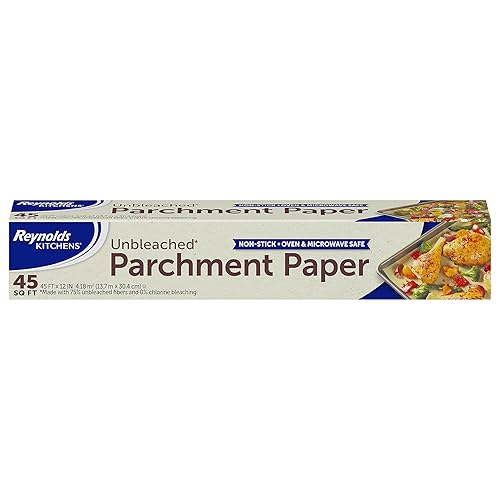
Our pick to bake on instead
Reynolds Kitchens Unbleached Parchment Paper
A 12-inch (30 cm) roll from the same maker whose wax paper rules this page quotes. The listing says oven-safe to 425°F (218°C) and microwave-safe.
See Reynolds parchment on AmazonThe drawback: 425°F (218°C) is a lower limit than the 450°F (232°C) that the Katbite sheets below list for themselves.
Wax paper and parchment paper sit side by side in the baking aisle and look almost the same on the roll. They are not the same thing. One is coated with wax, the other with silicone, and that coating decides what each can do in the oven. If you are halfway through a recipe and out of parchment, skip to what to use instead.
Why wax paper and ovens do not mix
Wax paper is paper coated with paraffin wax. Reynolds calls that coating food-safe and nonstick. Food-safe is about touching food, though. It says nothing about heat.
Plain paraffin melts between about 115°F (46°C) and 154°F (68°C), Hywax says, and the coated paper starts to melt near 200°F (93°C). Either way, that is long before a 350°F (177°C) oven.
Once the wax goes, what is left is thin paper. Food Republic notes that it can ignite, and that the smoke can damage the oven and the pans and spoil the taste. Hywax adds that melted wax can smear onto the food and stop the paper releasing it. Reynolds puts it in one line: wax paper “cannot withstand high temperatures”.
We found no maker figure for the point where wax paper ignites, so we do not give one. The melting point is reason enough.
Is wax paper the same as parchment paper?
No. They are easy to confuse.
| Wax paper | Parchment paper | |
|---|---|---|
| Coating | Paraffin wax; some use beeswax | Silicone |
| Oven | No | Up to 425°F (218°C) for Reynolds; Hywax gives 420°F to 450°F (215°C to 230°C) as the usual range |
| Broiler | No | No, Reynolds says never |
| Microwave cover | Yes | Yes |
| Best at | Wrapping, cold storage, rolling dough | Baking, roasting, lining pans |
| Also called | Waxed paper | Baking paper |
If you live outside the US, check the pack before you trust a name. Greaseproof paper is its own product, and we did not verify its oven limit, so follow the label. Brand-by-brand details on parchment, including PFAS and bleaching, are in our parchment paper guide.
The one exception: the bottom of a cake pan
Reynolds says wax paper may line a pan for cakes, bread or brownies when the batter or dough covers it completely. Food Republic reports the same rule and adds that it is the bottom only, never up the sides, because any exposed edge can burn. Hywax does not mention an exception and points you to parchment for lining cake pans.
Our view: the exception is real but narrow. A parchment circle does the same job with no risk, so we skip it.

Parchment on the bottom of a cake pan. The batter covers it, and parchment will not melt.
Out of parchment? What to use instead
In order of preference:
- Parchment paper. The direct swap for every baking job. The pick at the top of this page is one roll; the sheets below lie flat.
- A silicone baking mat. Reusable, and good for cookies if you bake often.
- Foil. Better for covering a dish or roasting than for cookies: Reynolds says parchment instead of foil helps avoid burnt cookie bottoms. Our foil in the oven guide has the rules.
- A greased pan. No liner at all: grease it well and loosen the edges before you turn anything out.
Cooking in an air fryer? Our air fryer liner guide covers which liners are safe there.

Parchment on the sheet pan: the swap for every baking job.
As an Amazon Associate we earn from qualifying purchases.

Pre-cut sheets
Katbite 200 Pre-Cut Unbleached Parchment Sheets, 12 x 16 in
200 flat 12 x 16 inch (30 x 41 cm) sheets, so nothing curls up from a roll. The listing gives a range of -68°F to 450°F (-56°C to 232°C).
Good for: lining cookie sheets without trimming.
The drawback: At 12 x 16 inches a sheet is smaller than a standard 18 x 13 inch (46 x 33 cm) half sheet pan, so the edges stay bare.
See Katbite sheets on AmazonAs an Amazon Associate we earn from qualifying purchases.

Reusable option
Amazon Basics Silicone Baking Mat, 2-Pack
Two silicone mats, 16.5 x 11.6 inches (42 x 29 cm), rated to 480°F (249°C) by the listing. Use one on a baking tray, not straight on the oven rack.
Good for: cookies and roasted vegetables, week after week.
The drawback: In the Amazon review summaries we read on October 4, an oily film that builds up was the most common complaint.
See the Amazon Basics mats on AmazonWhat wax paper is good for
Keep the roll. It earns its place on every job that stays cool.
- Wrapping a sandwich. Reynolds says the wax keeps air out, so the bread stays soft.
- Separating burger patties or fish fillets for the freezer, as Food Republic suggests. Reynolds says freezer paper or parchment holds up better there, since wax paper tears more easily.

Wax paper between patties. Cold jobs are where it belongs.
- Rolling out dough: wax paper under it and over it keeps the dough off the counter and the rolling pin.
- Catching icing, powdered sugar or nuts while you decorate.
- Covering a bowl or plate in the microwave to stop splatter.
- Cooling melted chocolate. Reynolds says parchment or wax paper both work.

Wax paper above and below the dough keeps it off the counter and the pin.
As an Amazon Associate we earn from qualifying purchases.

For cold jobs
Reynolds Kitchens Cut-Rite Wax Paper Roll, 75 sq ft
A 75 foot by 12 inch (23 m x 30 cm) roll with a built-in cutter. The listing calls it nonstick and microwave-safe for covering food.
Good for: wrapping, rolling dough and freezer layers.
The drawback: It does nothing for baking. If a recipe says to line the pan, this is the wrong roll.
See Reynolds wax paper on AmazonOther heat questions people mix up
- Broiler: Reynolds says never to use parchment or wax paper under one. For broiling, see our foil guide.
- Grill or smoker: Reynolds advises against both papers there.
- Air fryer: we found no maker guidance for wax paper, and the heat is the same problem as in the oven. Parchment liners are covered in our liner guide, and foil in our air fryer foil guide.
- Cookies on wax paper: only if you are chilling the dough or setting dipped cookies. Not on the baking sheet.
Questions people ask
Can you put wax paper in the oven for cookies?
No. The coating melts at oven temperatures, and the paper can smoke or ignite. Line the sheet with parchment or a silicone mat. Wax paper is fine for chilling dough or setting dipped cookies.
What temperature does wax paper melt at?
Hywax says the coating begins to melt around 200°F (93°C), and plain paraffin melts between about 115°F (46°C) and 154°F (68°C). We found no maker figure for when it ignites.
Can you use wax paper instead of parchment paper?
For cold jobs, mostly yes. For anything in the oven, no. The one narrow exception is the bottom of a cake pan that the batter fully covers, which Reynolds allows. Parchment is the safer swap there too.
Can you put wax paper in the microwave?
Yes, as a loose cover to stop splatter. Reynolds calls both wax paper and parchment microwave-safe for that. Hywax adds that you should follow the maker's guidelines on the pack.
Can you put wax paper in the air fryer?
No. We found no maker guidance saying it is safe, and an air fryer runs hot. Parchment liners made for air fryers are the better choice.
I baked on wax paper by mistake. Is it toxic?
We found no maker or agency guidance on eating food baked on wax paper. Reynolds calls the coating food-safe, but that describes normal use, not melted wax. If the paper smoked or scorched onto the food, we would not serve it.
Is wax paper the same as baking paper or greaseproof paper?
Baking paper is another name for parchment, which is the oven-safe one. Greaseproof paper is a different product, and we did not verify its oven limit. Follow the label on the pack.
Can wax paper go in the freezer?
Yes, for short-term layering. Food Republic and Hywax both use it to keep portions from sticking. Reynolds, which makes all three papers, says freezer paper or parchment is better for separating frozen food, and freezer paper gives the best barrier against freezer burn.
How we put this together
On October 29, 2026 we read Reynolds' wax paper versus parchment paper guide (last updated October 9, 2024), Hywax's guide to the same question (October 3, 2025) and Food Republic's article on wax paper and ovens (December 4, 2023). Then we checked the four products on this page in Amazon's US product data and the Amazon Creators API. Reynolds Kitchens Unbleached Parchment Paper is our quick pick because it ranked second in Amazon's Baking Parchment best sellers that day, was sold by Amazon.com and was in stock. All four were available the same day. We did not test any product or measure any oven temperature ourselves, and no brand saw this page before it went up.
Sources (opened October 29, 2026). Product facts come from each Amazon listing on the same date.
- Reynolds: Wax paper vs. parchment paper for cooking and baking
- Hywax: Wax paper versus parchment paper
- Food Republic: Why you should keep wax paper away from hot ovens
Reynolds, Reynolds Kitchens, Katbite and Amazon Basics are trademarks of their owners and are named here only to identify their products. Listings change; check the listing before you buy.


