

Written by Sara Ibrahim, Cupindy Kitchen Team · Last updated September 30, 2026
Most kitchens do not need sixteen kinds of glasses. They need four or five that are the right size, sturdy enough for the dishwasher, and made without lead. Part of the problem is the names: a highball and a Collins look almost the same, a rocks glass is also called an old fashioned or a lowball, and a "crystal" label can mean lead crystal or lead-free glass that only looks like crystal.
This guide walks through every common drinking glass and how much it usually holds, which few are worth owning, how to avoid lead, and why glasses turn cloudy. Sizes come from bartender and retailer guides; product details come from the makers and from Amazon listings we checked in September 2026. We did not test these glasses ourselves.
Quick answer: the 5 glasses most homes actually need
- A tall everyday tumbler (about 14 to 17 oz) for water, iced tea and soda. This is the glass you use most, so buy the most of it.
- A short glass (about 8 to 14 oz, often called a rocks or old fashioned glass) for juice, milk, cocktails and small kids' hands.
- A stemless wine glass (about 15 oz), which also works for water at dinner, cocktails and dessert.
- A glass that can take heat, such as a borosilicate or double-wall glass, for coffee and tea. Ordinary drinking glass is not made for boiling water.
- A shatterproof set (Tritan plastic or tempered glass) for the patio, the pool and young children.
If you are starting from zero: one 16-piece set of 8 tall and 8 short glasses covers the first two for a family of four.
As an Amazon Associate we earn from qualifying purchases. This does not change which products we recommend.
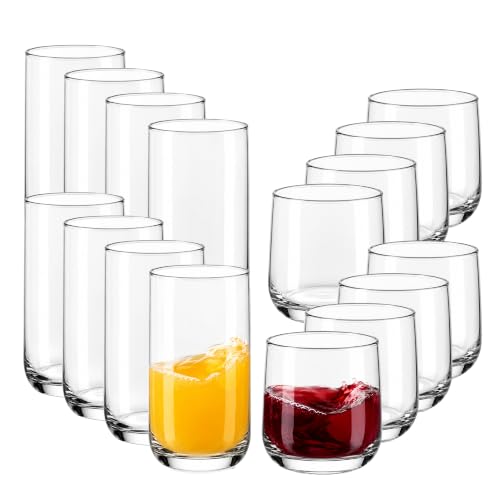
Best starter set
Libbey Ascent, 16 pieces
Eight 16 oz tumblers and eight 13.3 oz rocks glasses in one box: the two glasses you reach for every day. Lead-free, dishwasher-safe, and one of the best-selling glass sets on Amazon when we checked in September 2026.
See the Libbey set on AmazonNeed something more specific?
Crystal look, lead-free: JoyJolt Faye Hard to break: Duralex Picardie Kids and outdoors: BELLAFORTE Tritan16 types of drinking glasses at a glance

Sizes are what each glass usually holds when filled to the brim. Real glasses vary by maker, so treat these as ranges, not rules. The last column says how much you need each one, with our pick where one is worth buying.
| Glass | Usual size | Best for | Need it? / our pick |
|---|---|---|---|
| Water tumbler | 14-16 oz | Water, iced tea, soda | Must have Libbey Ascent |
| Highball | 8-12 oz | Water, juice, mixed drinks over ice | Nice to have JoyJolt Faye |
| Collins | 10-14 oz | Tall iced drinks, sparkling water | Skip if you have highballs |
| Rocks / old fashioned | 6-11 oz (double: 12-16 oz) | Juice, milk, spirits, kids | Must have (in the Libbey set above) |
| Juice glass | 5-8 oz | Breakfast juice, small drinks | Nice to have Libbey 5.5 oz |
| Iced-coffee cup with lid | 16-20 oz | Iced coffee, iced tea, smoothies | Nice to have Glass cups with lids |
| Red wine glass | 8-14 oz and up | Red wine | If you drink wine |
| White wine glass | 6-8 oz and up | White and rosé wine | If you drink wine |
| Stemless wine glass | 15-20 oz | Any wine, water at dinner, cocktails | Must have if you host JoyJolt Spirits |
| Champagne flute | 6-11 oz | Sparkling wine | Occasional |
| Coupe | About 7 oz | Cocktails served up, sparkling wine | Occasional |
| Martini | About 7 oz, some larger | Martinis and other chilled cocktails | Occasional |
| Pint glass | 16 oz (US) | Beer, big glasses of water | If you drink beer |
| Shot glass | 1.5-2 oz | Spirits, measuring | Occasional |
| Glass coffee mug | 10-16 oz | Coffee, tea, hot chocolate | Nice to have |
| Double-wall glass | 5-16 oz | Espresso, tea, lattes; stays cool to hold | Nice to have JoyJolt Savor |
Everyday glasses: the ones you use most
1. Water tumbler
A tumbler is simply a flat-bottomed glass with no stem and no handle. It is the glass most of us reach for all day, and Home Depot's buying guide puts the most useful size at 14 to 16 oz: big enough for ice and a real drink of water, small enough to fit the dishwasher's top rack. If you buy one kind of glass in quantity, buy this one.
2. Highball
A tall, straight glass that usually holds 8 to 12 oz. Bartenders use it for drinks with lots of ice and a mixer, such as a gin and tonic. At home it is a slimmer water or juice glass. Many sets sold as "highball" are really 13 to 16 oz, so check the size, not the name.
3. Collins
Taller and narrower than a highball, usually 10 to 14 oz, named after the Tom Collins cocktail. The difference is small enough that most homes do not need both. If you already own highballs or tall tumblers, skip the Collins.
4. Rocks or old fashioned glass
A short, wide glass with a heavy base, also called a lowball. A single holds about 6 to 11 oz; a double old fashioned holds about 12 to 16 oz. It was made for spirits over ice, but the double size is also the best everyday glass for juice, milk and children, because it is hard to tip over.
5. Juice glass
A small tumbler of about 5 to 8 oz. It keeps breakfast portions small and suits small children. A small rocks glass does the same job, so this one is optional.
6. Iced-coffee cup with lid
A 16 to 20 oz glass that looks like a can, usually sold with a bamboo lid and a glass or steel straw. It has become a popular way to drink iced coffee at home, and it doubles as a smoothie and iced tea glass.
Best everyday set
Libbey Ascent, 16 pieces
Eight 16 oz tall tumblers and eight 13.3 oz rocks glasses. Libbey lists them as lead-free and dishwasher-safe. Buyers praise the weighted bottom and say they feel good in the hand, and the short glass is a good size for cocktails and juice. Sold by Amazon.
Main drawbackDurability gets mixed reviews: some buyers have had no breaks, others say they broke easily. Some find the glass thick, others thin.
See the Libbey set on Amazon
Best crystal look, lead-free
JoyJolt Faye highball, 13 oz
Lead-free crystal, 6 in tall and 2.5 in wide with a 3 mm rolled rim: slim to hold and wide enough for ice. JoyJolt says it is dishwasher-safe. One of the best-selling highball sets on Amazon when we checked. Sold by Amazon.
Main drawbackSome buyers say the glass is very thin and breaks easily, and at 13 oz it holds less than a standard water tumbler.
See the JoyJolt Faye on Amazon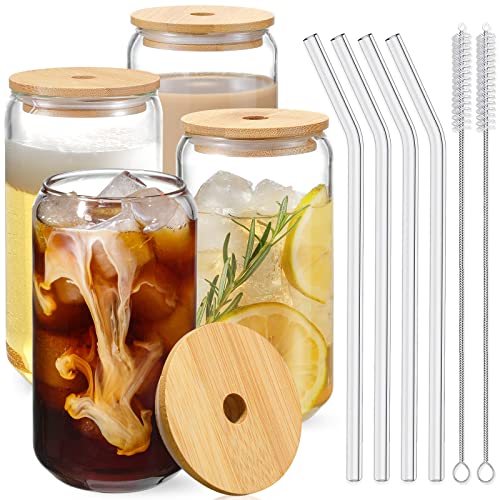
Best for iced coffee
Glass cups with lids and straws, 16 oz
Four 16 oz glass cups with bamboo lids, four glass straws and two cleaning brushes. The seller lists the glass as lead-free and says it handles both hot and cold drinks and the dishwasher. Very popular on Amazon when we checked.
Main drawbackReviews are split on the glass straws, the lid fit and the thickness of the glass. Bamboo lids should be hand-washed and dried, and it is sold by a third-party seller.
See the glass cups on AmazonAs an Amazon Associate we earn from qualifying purchases. Product details checked on Amazon in September 2026.
Wine glasses and stemware
Stems exist so your hand does not warm the wine, and a wider bowl gives red wine more air. That matters to wine lovers. For everyone else, one good set of stemless glasses covers wine, water at dinner and cocktails, and it is far harder to knock over or snap.
- Red wine glass: a large, round bowl, usually 8 to 14 oz and often more in modern sets. You fill it only a third of the way.
- White wine glass: a smaller, narrower bowl, usually 6 to 8 oz and up, so the wine stays cool.
- Stemless wine glass: the same bowl with no stem, usually 15 to 20 oz. It is the most practical glass for a home that hosts.
- Champagne flute: tall and narrow, usually 6 to 11 oz, to keep the bubbles longer.
- Coupe: a shallow, wide bowl on a stem, about 7 oz. Used for cocktails served without ice and for sparkling wine.

Best stemless wine glass
JoyJolt Spirits, 15 oz, set of 4
A wide, heavy base that resists tipping, a bowl that works for red and white wine, and room for cocktails or water. JoyJolt says they are dishwasher-safe. Buyers like the size and the weight. Sold by Amazon.
Main drawbackSome buyers say the rim is too thin and that glasses have broken in the dishwasher. The top rack and a gentle cycle help.
See the JoyJolt Spirits on AmazonAs an Amazon Associate we earn from qualifying purchases. Product details checked on Amazon in September 2026.
Bar and beer glasses
You only need these if you mix drinks or drink beer at home. None of them is a must for a new kitchen.
- Martini glass: a V-shaped bowl on a stem, about 7 oz in cocktail guides, though some decorative ones are much bigger. A coupe does the same job and is harder to spill.
- Pint glass: 16 oz in the US, 20 oz for an imperial pint. It also makes a good big water glass.
- Shot glass: 1.5 to 2 oz. Handy as a measure in the kitchen too.
Glasses for hot drinks: coffee, tea and espresso
Here the type of glass matters more than the shape. Most drinking glasses are soda-lime glass, which can crack when the temperature changes quickly: it handles a difference of only about 100°F (40°C). Borosilicate glass handles about 330°F (166°C), which is why it is used for lab glassware, glass bakeware and double-wall cups. If a glass is not sold as heat-safe, do not pour boiling water into it, especially straight from the fridge.
- Glass coffee mug: a mug-shaped glass with a handle, usually 10 to 16 oz. Home Depot's guide says the average mug holds 12 oz, and 14 to 16 oz is the most useful size. Choose one sold as heat-resistant.
- Double-wall glass: two thin walls of borosilicate glass with air between them. The outside stays cool enough to hold, the drink stays hot a little longer, and a cold drink does not sweat on the table. The trade-off is that the walls are thin and chip more easily than a thick tumbler.
- Irish coffee glass: a stemmed, heat-safe glass of about 8 to 12 oz for coffee drinks with cream.

Best double-wall glass
JoyJolt Savor, 5.4 oz, set of 2
Handmade double-wall borosilicate glass, sized for a double espresso or a small cappuccino. Keeps coffee hot while the outside stays cool, and JoyJolt says it is dishwasher- and microwave-safe and lead-free. One of the most-reviewed double-wall glasses on Amazon. Sold by Amazon.
Main drawbackSmall: 5.4 oz is espresso size, not a mug. Some buyers say they are very fragile, which is common with thin double-wall glass.
See the JoyJolt Savor on AmazonAs an Amazon Associate we earn from qualifying purchases. Product details checked on Amazon in September 2026.
If you make coffee at home, our guide on how to choose a coffee maker covers the machine side, and for tea our non-toxic tea kettle picks cover the kettle. For coffee on the go, a glass is the wrong tool; see the best bottle for coffee and hot drinks.
Glass materials, and which glasses are lead-free

Most everyday clear drinking glasses are plain soda-lime glass. Lead enters the picture in three places: lead crystal, painted or printed decorations, and old glassware. This is what each material means for you.
| Material | What it is | Good to know |
|---|---|---|
| Soda-lime glass | Ordinary glass, used for most tumblers | Cheap and safe to drink from; not made for sudden heat |
| Tempered glass | Soda-lime glass heat-treated to be stronger | About four times stronger, and breaks into small granular pieces instead of sharp shards. A chip on the rim weakens it, and a chipped tempered glass can shatter later |
| Borosilicate glass | Glass made to handle heat | Best for hot drinks and double-wall cups; usually thinner and lighter |
| Lead-free crystal | Clear, bright glass made with other minerals instead of lead oxide | Looks like crystal; check that the listing says "lead-free" |
| Lead crystal | Glass with lead oxide added for sparkle and weight | Fine for an occasional toast; do not store drinks in it, and keep it away from children |
| Painted or printed glass | Clear glass with enamel decoration | Avoid paint on the top of the glass where your lips go |
| Tritan plastic | A clear, shatterproof, BPA-free plastic | Best for kids, patios and pools; use glass for hot drinks |
Lead crystal: the rules that matter
California's Department of Public Health gives two clear rules: do not store food or drinks in leaded crystal decanters or containers, because the longer a drink sits the more lead can leach into it, and children should never eat or drink from leaded crystal. Using a crystal glass now and then for a drink you finish is a much smaller risk. So toast with it, but do not keep port in a crystal decanter or give crystal to children. If a listing does not say "lead-free," assume a glass sold as "crystal" may contain lead.
Painted glasses: look at the rim
A 2018 study in Science of the Total Environment tested 72 decorated drinking glasses and found lead in about 70% of the measurements and cadmium in almost as many. Glasses with paint on the top 20 mm, where your lips touch, were the biggest worry: of 14 put through a lab acid test, 13 released more lead than the limit. Consumer Reports, covering the study, advised keeping painted glassware away from young children, hand-washing it because dishwashers wear the paint down, and not relying on home lead swabs, which cannot reliably detect lead in painted glass. The easy way around it is to choose clear glass, or decoration that stops well below the rim.
Mugs and plates follow similar rules; our guide to non-toxic dinnerware and FDA lead limits explains them. Old and vintage glassware is harder to judge, so keep it for display or occasional use.

Hardest to break (glass)
Duralex Picardie, 16.87 oz, set of 6
Tempered glass made in France, stackable, and listed as microwave- and dishwasher-safe. Buyers love the French café look and describe them as durable, with no cracks or chips. A good pick for busy family kitchens.
Main drawbackSome buyers see small bubbles in the glass. Like all tempered glass, a chipped Duralex should be thrown away. Sold by a third-party seller.
See the Duralex Picardie on Amazon
Best shatterproof
BELLAFORTE Myrtle Tritan, 18 oz, set of 4
Tritan plastic that looks and feels close to glass, will not shatter if dropped, and is listed as dishwasher-safe without clouding. Large enough for dinner and plenty of ice. The pick for children, patios and pools.
Main drawbackIt is plastic, and it is sold for cold drinks; use glass for coffee and tea. Some buyers feel the price is high for plastic, and it is sold by a third-party seller.
See the BELLAFORTE on AmazonAs an Amazon Associate we earn from qualifying purchases. Product details checked on Amazon in September 2026.
The same material questions come up with bottles: see the best BPA-free water bottles and where the lead actually is, and for cold drinks on the move, insulated vs non-insulated bottles.
How many glasses do you need?
There is no official number. This is our rule of thumb: enough everyday glasses to get through a full day of drinks before the dishwasher runs, plus enough for guests on the one occasion a month you host.
| Household | Everyday glasses | Wine / stemless | Hot drinks |
|---|---|---|---|
| 1-2 people | 6-8 tall + 4-6 short | 4, if you drink wine | 2-4 heat-safe mugs or double-wall glasses |
| Family of 4 | 8-12 tall + 8 short | 4-6 | 4-6, plus a Tritan set for the kids |
| You host often | 12-16 tall + 8-12 short | 8-12 stemless | 6-8 |
A family of four is covered for everyday glasses by one 16-piece set of tall and short glasses, like the Libbey Ascent above. Add stemless wine glasses and a few heat-safe cups, and you rarely need anything else.
How to choose drinking glasses: 7 checks before you buy
- Size in ounces, not the name. A "highball" can be 8 oz or 16 oz. For everyday water, look for 14 to 17 oz.
- Weight and base. A heavy, flat base tips less. A very thin glass feels elegant but breaks more easily.
- Rim. A thin rim is nicer to drink from; a thicker or rolled rim chips less.
- Lead-free statement. For anything sold as "crystal," look for "lead-free" in the listing, and avoid paint near the rim.
- Heat. Only borosilicate or glass sold as heat-safe for hot drinks.
- Dishwasher. Check that it is listed as dishwasher-safe, and whether it fits your top rack.
- Stacking and storage. Stackable glasses save cabinet space, but glasses can stick together; tempered tumblers like Duralex are made to stack.
How to care for glassware, and why glasses go cloudy

Cloudy glasses come from two different problems, and only one can be fixed. Whirlpool's test is simple: rub the cloudy spot with a little white vinegar. If the haze comes off, it is a mineral film from hard water, and a vinegar soak or rinse aid will fix it. If it does not come off, the glass is etched: the surface itself has been worn away, and it is permanent.
- Etching is caused by very soft water, too much detergent and long, hot cycles. Use pre-measured detergent packs, a lighter rinse-aid setting, and a normal or quick cycle for glasses.
- Hand-wash fine stemware, painted glasses and anything with a gold rim. A wine expert quoted by America's Test Kitchen suggests washing stemware in a small tub or on a rubber mat to avoid knocks in the sink.
- Store glasses rim-up. The rim is the thinnest part of the glass and is not made to carry its weight. Leave about half an inch between glasses so they do not chip each other.
- Avoid sudden temperature changes. Do not pour boiling water into a cold soda-lime glass, and do not put a hot glass straight into cold water.
- Throw away chipped glasses. A chip is sharp, it can trap dirt, and in tempered glass it can make the glass shatter later.
For what else to keep out of the machine, see things you should never put in your dishwasher, and for cleaners that are safe around food, our non-toxic kitchen cleaning guide.
The verdict
Start with the two glasses you use every day, a tall tumbler and a short one, and buy them as one set: the Libbey Ascent 16-piece does that for most homes. Add stemless wine glasses if you host, a double-wall or other heat-safe glass for coffee and tea, and a Tritan set for kids and the patio. Whatever you buy, choose clear glass that says lead-free, keep lead crystal for occasional toasts, and skip paint near the rim.
As an Amazon Associate we earn from qualifying purchases.
Frequently asked questions
What is a tumbler glass?
A tumbler is a flat-bottomed drinking glass with no stem and no handle. Tall tumblers are used for water and soft drinks, and short tumblers, also called rocks or old fashioned glasses, for juice and spirits.
What is the standard size of a drinking glass?
There is no single standard, but an everyday water tumbler usually holds 14 to 16 oz, a highball 8 to 12 oz, a rocks glass 6 to 11 oz and a juice glass 5 to 8 oz.
What is the difference between a highball and a Collins glass?
A Collins glass is a little taller and narrower than a highball and usually holds more, about 10 to 14 oz against 8 to 12 oz. At home you only need one of the two.
Can you put hot drinks in a glass tumbler?
Only if it is sold as heat-safe. Ordinary soda-lime glass can crack with a sudden change of about 100°F. Borosilicate and double-wall glasses are made for hot coffee and tea.
Is crystal glassware safe to drink from?
Lead-free crystal is. Lead crystal is fine for an occasional drink you finish, but California's health department says not to store drinks in it and not to let children drink from it.
Why are my glasses cloudy after the dishwasher?
Either hard-water film or etching. Rub the glass with a little vinegar: if the cloudiness comes off, it is film and can be removed; if not, the glass is etched, which is permanent.
Related guides
Sources
- TundraFMP, bartender guide to glassware: typical sizes for wine, flute, rocks, highball, Collins, cocktail, pint and shot glasses.
- Difford's Guide, cocktail glassware: coupe, martini, rocks, double old fashioned, highball and Collins capacities.
- The Home Depot, the types of drinking glasses you need in your kitchen: water tumbler, juice glass and mug sizes; tumbler definition.
- California Department of Public Health, Lead in Tableware Q&A: storing drinks in leaded crystal; children and lead crystal.
- Turner, A. (2018), "High levels of migratable lead and cadmium on decorated drinking glassware," Science of the Total Environment; Consumer Reports coverage, December 2017.
- Tempered glass and borosilicate glass: strength, breakage pattern and temperature-difference figures (Wikipedia summaries of the engineering literature).
- Whirlpool product help, etching or cloudy glassware: the vinegar test, causes and prevention.
- Wine Cellar HQ, how to store wine glasses (rim-up, spacing); America's Test Kitchen, tips for cleaning wine glasses.
- Amazon listings for B0767QGBVD, B08BB62QWT, B09QKTQ9TB, B01M11A5KD, B01N07HRYP, B002GUK4NU, B0856Z5DW4 and B00GYFYCK4, including product details, sellers and Amazon's customer review summaries (checked September 30, 2026).


