
Written by Lara Yehia. Lara researches home and kitchen products for Cupindy. · Last updated September 30, 2026
An insulated water bottle keeps ice water cold through a whole workday. A non-insulated bottle is lighter, simpler and usually cheaper, and your water drifts to room temperature within an hour or two. Which one you need depends less on the bottle and more on your day: how long you carry it, whether you drink anything hot, and how much weight you are willing to carry for cold water at 4 pm.
This guide uses real numbers from the makers themselves: hours cold and hot, weights, and what each brand says about how its bottles are sealed. We compared makers' specifications and Amazon listings, checked in September 2026. We did not test these bottles ourselves.
Quick answer
- Get an insulated bottle if you carry water for more than a couple of hours, want it cold all day, drink hot coffee or tea on the go, or hate a wet ring on your desk and a damp bag.
- Get a non-insulated bottle if you mostly drink room-temperature water, refill often at a desk or at home, or want the lightest bottle you can carry.
- The trade-off in one number: Klean Kanteen's own specs put its 27 oz single-wall bottle at 8.4 oz and its 20 oz insulated bottle at 16.3 oz. Insulation roughly doubles the weight, even while holding less water.
What does "insulated" mean on a water bottle? Two steel walls with the air pumped out of the gap between them. With no air in that gap, heat has almost no way to move in or out, so cold drinks stay cold and hot drinks stay hot. A non-insulated bottle has a single wall, so the drink quickly takes on the temperature of the room.
As an Amazon Associate we earn from qualifying purchases. This does not change which products we recommend.
Best insulated bottle
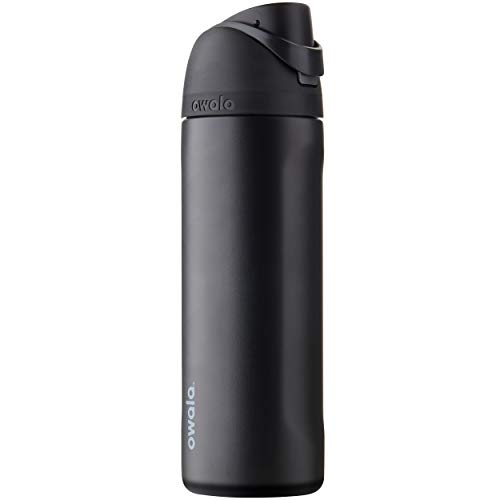
Owala FreeSip, 24 oz
Rated cold for up to 24 hours, sip through the built-in straw or swig from the spout, and Owala says its bottles have always been made without lead. One of the best-selling insulated bottles on Amazon when we checked in September 2026.
See the Owala on Amazon
Best non-insulated bottle
Klean Kanteen Classic single-wall
One wall of 18/8 stainless steel, no vacuum seal and no plastic liner. About half the weight of an insulated bottle, and dishwasher-safe.
See the Klean Kanteen on AmazonNeed something more specific?
For hot coffee or tea: Hydro Flask 21 oz Lightest to carry: Nalgene 32 ozInsulated vs non-insulated water bottle: key differences
Most of the difference comes from one thing: the vacuum between the walls. It is what keeps drinks cold, stops the outside from sweating, and lets you hold a bottle of hot tea. It is also what adds the weight and the cost. Here is how that plays out.
| Insulated (double-wall vacuum) | Non-insulated (single wall) | |
|---|---|---|
| Cold drinks | Makers rate them cold for about 24 hours, some much longer | Warms toward room temperature, usually within an hour or two |
| Hot drinks | Hydro Flask rates its bottles 12 hours hot; check each maker, some say no hot drinks | Not for hot drinks in steel: the outside gets as hot as the drink |
| Weight | Heavier: Klean Kanteen 20 oz insulated = 16.3 oz empty | Lighter: Klean Kanteen 27 oz single-wall = 8.4 oz empty |
| Outside sweating | Stays dry, even with ice | Sweats with cold drinks; leaves rings and damp bags |
| Vacuum seal | Has one, sealed at the base; how it is sealed varies by brand (see below) | None |
| Dents and drops | A hard dent can break the vacuum for good | A dent is only cosmetic |
| Dishwasher | Depends on the brand; some ask you to hand-wash the body | Usually dishwasher-safe |
| Cost | Usually costs more | Usually costs less |
| Best for | Long days, commuting, gym, travel, hot weather, coffee or tea | Desk and home use, frequent refills, room-temperature water, light carry |
Is an insulated water bottle worth it?
For most people who leave the house with a bottle, yes. The extra cost buys one thing you will notice every day: water that is still cold hours after you filled it. Whether that is worth doubling the weight comes down to how you use the bottle.
Worth it if you...
- carry your bottle for more than 2 or 3 hours at a time
- leave it in a car, a gym bag or a hot room
- drink coffee or tea away from home
- put your bottle in a bag with a laptop or papers
- drink more when the water is cold
Skip it if you...
- drink room-temperature water anyway
- sit near a tap or a water cooler and refill often
- count every ounce on a hike or a long walk
- want a bottle you can drop without worrying about it
- need a spare bottle for the car, office or kids' bags
Many households end up with one of each: an insulated bottle for the commute or the gym, and a light single-wall bottle that lives on the desk.
The four bottles worth buying
Every bottle below is well reviewed by thousands of Amazon buyers, and every card names the drawback we would want to know before buying. For the insulated picks, we only chose brands that say publicly how they seal their bottles without lead.
Best insulated, overall
Owala FreeSip, 24 oz
Rated cold for up to 24 hours. The FreeSip spout lets you sip upright through a built-in straw or tip it back and drink from the opening, and the lid locks shut. Owala says its bottles are made with lead-free solder and always have been. One of the most-reviewed insulated bottles on Amazon.
Main drawbackOwala says not to use it for hot, carbonated or perishable drinks. The body should be hand-washed, it is wider than most car cup holders, and some buyers report the carry handle breaking.
See the Owala on Amazon
Best insulated for hot and cold
Hydro Flask, 21 oz
Hydro Flask rates it 24 hours cold and 12 hours hot, so the same bottle works for iced water in summer and tea in winter. Hydro Flask says the cap is leakproof when closed, and the bottle is made to fit most cup holders. Hydro Flask says it has not used lead in its sealing process for over a decade.
Main drawback21 oz runs out early on a long day, and some buyers say it costs too much for what it is.
See the Hydro Flask on Amazon
Best non-insulated, all steel
Klean Kanteen Classic single-wall
One wall of 18/8 stainless steel with an electropolished inside that does not hold on to flavors, a 1.75 in opening that takes ice, and a BPA-free cap. No vacuum means no seal at the base at all. Dishwasher-safe.
Main drawbackSome buyers say water warms quickly or tastes a little metallic. Never freeze it, and when we checked it was sold by a third-party seller, so delivery can take a few days longer.
See the Klean Kanteen on Amazon
Lightest non-insulated
Nalgene Sustain, 32 oz
About 6.25 oz empty for a full 32 oz of water, per Nalgene. Made in the USA from Tritan Renew, which is free of BPA, BPS and phthalates. Wide mouth, leakproof, and top-rack dishwasher-safe. Amazon buyers often mention taking it hiking and traveling.
Main drawbackIt is plastic. It is BPA-free, but if you want no plastic touching your water, choose the Klean Kanteen instead. Like any single-wall bottle, it sweats with ice.
See the Nalgene on AmazonAs an Amazon Associate we earn from qualifying purchases. Product details checked on Amazon and the makers' sites in September 2026.
Which bottle for your routine

Find the line that sounds most like your day. The pick in the middle column is the one we would buy for it.
| Your day | What you need | Our pick |
|---|---|---|
| Gym and sports | Cold water through the whole session, no sweat on your gear, quick one-hand drinking | Owala FreeSip |
| Commute and long workdays | Water still cold at 4 pm, a dry bag next to your laptop, a lid that locks | Owala FreeSip |
| Coffee or tea on the go | A bottle rated for hot drinks that stays cool to hold | Hydro Flask 21 oz |
| School bags and car cup holders | Smaller, leakproof, fits a standard cup holder | Hydro Flask 21 oz |
| Desk or home, frequent refills | Light, simple, all steel, into the dishwasher at night | Klean Kanteen Classic |
| Hiking and travel, every ounce counts | The most water for the least weight, hard to break | Nalgene 32 oz |
Can you put hot drinks in an insulated or non-insulated bottle?
"Insulated" works both ways: the same vacuum that keeps ice water cold keeps coffee hot. But not every insulated bottle is meant for hot drinks, and a single-wall steel bottle is the wrong choice for them.
- Check the maker's rules first. Owala says its FreeSip should not be used for hot drinks, partly because hot liquid comes up through the straw from the bottom of the bottle, where it is hottest. Hydro Flask rates its bottles for 12 hours hot, so for coffee or tea a Hydro Flask is the safer of our two insulated picks.
- Single-wall steel gets hot on the outside. Klean Kanteen says not to put hot drinks in its single-wall bottles because the heat passes straight through to your hand.
- Check before sealing anything fizzy. Owala also rules out carbonated drinks in the FreeSip, so read your bottle's care card before filling it with soda or sparkling water.
If hot drinks are the main reason you are buying, the lid matters as much as the insulation. Our guide to the best bottle for coffee and hot drinks covers sipping lids, leaks and cleaning coffee stains.
How to tell if a water bottle is really insulated

Labels are not always clear, and a thick steel bottle can look insulated without being so. Five quick checks:
- Read the words. "Vacuum insulated" means two walls with a vacuum between them. "Double-wall" alone can mean two walls with air between them, which insulates much less. "Single-wall" or "non-insulated" means no insulation at all.
- Look at the base. Most vacuum bottles have a cap, a dimple or a seam on the bottom where the vacuum was sealed. A single-wall bottle is usually one smooth piece.
- Feel the weight. An insulated bottle is roughly twice as heavy as a single-wall bottle of the same size.
- Do the hot-water test. Fill it with hot tap water and hold it for 30 seconds. An insulated bottle stays room temperature outside. A single-wall bottle warms up almost at once.
- Do the ice test. Fill it with ice water. Within a few minutes a single-wall bottle beads with condensation; an insulated bottle stays dry.
If your insulated bottle suddenly starts sweating or feels warm with a hot drink, the vacuum has failed, usually after a dent or a hard drop. It still holds water, but it now works like a heavy single-wall bottle, and it cannot be fixed at home.
Do insulated water bottles have lead?
This question comes from how vacuum bottles are made. After the air is pumped out from between the walls, a small hole in the base has to be sealed, and for years the industry standard was a pellet of lead-containing solder, covered by a steel cap on the bottom. It is on the outside of the inner wall, not in contact with your drink. Single-wall bottles have no vacuum, so they have no seal at all.
Here is what the makers themselves say:
- Owala: its bottles are lead-free and use lead-free solder, and always have.
- Hydro Flask: it has not used lead in its sealing process for over a decade (company statement, February 2024).
- Klean Kanteen: seals with silica or glass plugs instead of lead.
- YETI: the sealing bead contains lead but is fully covered and inaccessible, and lead is not detected when its drinkware is tested.
- Stanley: said in January 2024 that the material sealing the base of its insulated products includes some lead, that it is covered by a stainless steel layer, and that no lead is on any surface that touches you or your drink.
If you want no lead anywhere in the bottle, choose a brand that seals without it, or a single-wall bottle. If you already own a bottle with a lead seal, the practical rule is simple: if the bottom cap ever comes off or is badly damaged, stop using the bottle and contact the maker. For more on materials, see our guide to BPA-free water bottles and where the lead actually is.
Weight, sweating and cleaning: the everyday trade-offs

Weight. A full 24 oz bottle is about 1.5 lb of water whichever you choose. The bottle adds roughly half a pound more if it is insulated. You notice it in a small bag or on a long walk, and hardly at all in a car.
Sweating. A single-wall bottle with ice water will leave a ring on a wooden desk and dampen whatever sits next to it in a bag. That alone is why many people who do not care about temperature still buy insulated.
Cleaning. Insulation does not make a bottle harder to clean. The lid does. Straw lids and spouts have more parts and gaskets where residue collects, so take them apart once a week. A wide opening makes the body easy to scrub, and a single-wall bottle can usually go in the dishwasher, while some insulated bodies are hand-wash only. Two rules for any bottle: dry it with the lid off, and never put a steel bottle in the freezer. Klean Kanteen warns that expanding ice can deform the bottle and break the weld.

For straw lids and narrow spouts
OXO Good Grips Water Bottle Cleaning Set
A long bottle brush, a straw brush and a small detail brush for lid threads and gaskets, on one ring. Worth knowing: the bristles are nylon, so replace the set when they splay.
See the cleaning set on AmazonAs an Amazon Associate we earn from qualifying purchases.
Weighing steel against plastic or glass rather than insulated against non-insulated? See stainless steel vs plastic water bottles.
6 mistakes to avoid when choosing
- Assuming insulated is always better. For a desk or home bottle, it is extra weight and cost for a benefit you may not use.
- Buying a straw-lid bottle for coffee. Check that the maker allows hot drinks before you pour.
- Carrying ice water in a single-wall bottle next to a laptop. The condensation ends up in your bag.
- Freezing a steel bottle to get colder water. Fill an insulated bottle with ice instead.
- Keeping a dented insulated bottle and wondering why it stopped working. Once the vacuum fails, it will not come back.
- Judging the bottle and ignoring the lid. The lid decides how you drink, how it leaks and how hard it is to clean.
The verdict
If your bottle leaves the house with you, buy insulated: cold water all day and a dry bag are worth the extra half pound, and the Owala FreeSip is the one most people buy for good reason. If it mostly sits on a desk or a kitchen counter and you refill it often, a single-wall Klean Kanteen Classic does the job at half the weight, with no seal and no plastic touching your water.
As an Amazon Associate we earn from qualifying purchases.
Frequently asked questions
Do I really need an insulated water bottle?
Only if temperature matters in your day. If you carry water for hours, drink it cold, or want coffee or tea on the go, insulation makes a clear difference. If you drink room-temperature water and refill often, a non-insulated bottle is lighter and cheaper.
What does non-insulated mean on a water bottle?
It means the bottle has a single wall with nothing around it to slow heat. Your drink moves toward room temperature, cold drinks make the outside sweat, and hot drinks make the outside hot.
Does insulated mean hot or cold?
Both. Insulation slows heat moving in either direction, so the same bottle keeps cold drinks cold and hot drinks hot. Makers usually rate their bottles for fewer hours hot than cold, and some do not allow hot drinks at all, so check before you use one for coffee.
Can you put hot water in a non-insulated stainless steel bottle?
It is not a good idea. The steel passes the heat straight to the outside, so the bottle becomes too hot to hold comfortably. Klean Kanteen advises against hot drinks in its single-wall bottles.
Can you put a water bottle in the freezer?
Not a steel one. Water expands as it freezes and can bulge the bottle or break its weld. For colder water, fill an insulated bottle with ice instead.
Why is my insulated water bottle sweating?
Because its vacuum has failed, most often after a dent or a hard drop. Air has got between the walls, so the bottle now behaves like a single-wall one. It cannot be repaired, but it is still fine to drink from.
Do insulated water bottles have lead?
Some use a lead-containing seal on the outside of the inner wall, covered by a steel cap on the base. Owala, Hydro Flask and Klean Kanteen say they seal without lead; YETI and Stanley say their lead seal is fully covered. Single-wall bottles have no seal.
Related guides
Sources
- Klean Kanteen product pages and FAQ: 27 oz Classic single-wall (8.4 oz), 20 oz Rise Classic insulated (16.3 oz, more than 65 hours cold), silica or glass vacuum plugs, no hot drinks in single-wall bottles, freezer warning, dishwasher care.
- Owala FAQ and FreeSip product page: lead-free solder statement, cold for 24 hours, not for hot, carbonated or perishable drinks, hand-wash the body.
- Hydro Flask product page (24 hours cold, 12 hours hot) and the company's February 2024 statement on lead-free sealing, as reported by Gizmodo.
- YETI Manufacturing FAQ: sealing bead, encapsulation and test results.
- Stanley's January 2024 public statement on the sealing material in its base, as reported at the time.
- Nalgene 32 oz Wide Mouth Sustain product page: 6.25 oz, Tritan Renew, BPA/BPS-free, dishwasher-safe.
- Amazon listings for B085DTZQNZ, B0G99R38ZV, B0093IRG2A, B09LMP8NB2 and B008HMF9LS, including product details, sellers and Amazon's customer review summaries (checked September 29, 2026).


