
Written by Lara Yehia. Lara researches home and kitchen products for Cupindy. · Last updated September 29, 2026
Most people choose a coffee maker by looking at machines. It works better the other way round. Start with how you actually drink coffee, and the right type of machine picks itself. After that, a handful of features decide whether you still like it a year from now. This buying guide covers both, with one pick for each type. The brewing standards come from Consumer Reports and the Specialty Coffee Association, and the product details come from the makers' own listings, checked in September 2026. We did not lab-test these machines ourselves.
Quick answer: how to choose a coffee maker
Answer three questions and you have your type:
- How many cups a day? Three or more, or a whole household: a drip coffee maker. One cup at a time: a pod machine, a single-serve brewer or a French press.
- Do you want lattes and cappuccinos? Yes: an espresso machine with a steam wand, or a pod espresso machine plus a frother. No: drip or a manual brewer is all you need.
- How much hands-on time will you give it? None: a programmable drip or a pod machine. Three minutes: a French press or AeroPress. You enjoy the process: a semi-automatic espresso machine.
Then check three things on any machine: it brews between 195 and 205°F, its "12 cups" is enough for you (a machine cup is only 5 to 6 ounces), and you know what the hot water touches on its way to your mug.
As an Amazon Associate we earn from qualifying purchases. This does not change which products we recommend.

Our pick for most homes
Hamilton Beach 2-Way Brewer
A 12-cup pot on one side and a single-mug brewer on the other, both using your own ground coffee instead of pods. It covers the two most common ways people drink coffee at home in one machine, and it was one of the best-selling coffee makers on Amazon when we checked.
See the Hamilton Beach 2-Way on AmazonDifferent habit? Jump to the right type:
One fast cup: Keurig K-Classic Easy espresso: Nespresso Essenza Mini French press: Utopia KitchenWhich type of coffee maker fits you?
Every type below makes good coffee. What separates them is how many cups they make at once, how much work they ask of you, and what each cup costs to run. Find the row that sounds like your mornings.
| Type | Best for, and the trade-off | Our pick |
|---|---|---|
| Drip coffee maker | Several cups at once, set it the night before. Coffee sitting on a hot plate loses flavor after about half an hour. | Hamilton Beach 2-Way |
| Single-serve pod machine | One fast cup, nothing to measure. The highest cost per cup, plus used pods to throw away. | Keurig K-Classic |
| Pod espresso machine | Espresso shots with no skill needed. Capsules only; milk needs a separate frother. | Nespresso Essenza Mini |
| Semi-automatic espresso | Real espresso and lattes, if you enjoy the process. A learning curve, and the biggest spend on this list. | Breville Barista Express |
| French press | Full-bodied coffee, no paper filters, no power. Some fine sediment, and the coffee oils pass through. | Utopia Kitchen press |
| AeroPress | One smooth cup at home or on the road. One or two cups at a time; the body is plastic. | AeroPress Original |
| Cold brew maker | Smooth, low-bitterness iced coffee. Needs 12 to 24 hours in the fridge. | County Line Kitchen |
| Plastic-free drip, pour-over or Moka pot | If you want the hot water to touch only glass and steel. Fewer choices, and usually more expensive. | Our plastic-free picks |
As an Amazon Associate we earn from qualifying purchases.
9 features that matter when choosing a coffee maker
Once you know the type, these are the features that change what ends up in your cup, or how much you enjoy making it. They matter in roughly this order.
1. Brewing temperature
Coffee extracts properly between 195 and 205°F, the range Consumer Reports calls the sweet spot. Some cheaper machines run cooler than that, and it is one common reason coffee tastes thin or sour. You cannot see temperature on a box, but there is a shortcut for drip machines: the Specialty Coffee Association's "Certified Home Brewer" badge. To earn it, a brewer has to hold the water between 197 and 205°F and finish a full pot in 4 to 8 minutes, among other tests.
2. Real capacity
A "cup" on a drip coffee maker is only 5 to 6 ounces, not a full 8-ounce cup, according to Consumer Reports. So a 12-cup machine makes about 60 to 72 ounces, which is five or six ordinary mugs. If two of you drink two travel mugs each, a 12-cup model is the smallest that works. For a large family or a small office, look at 12 to 14 cups with a thermal carafe, or a pod machine next to a drip machine so nobody waits.
3. Glass or thermal carafe
A glass carafe on a hot plate keeps coffee hot, but the plate keeps cooking it, and the flavor turns flat and bitter the longer it sits. A thermal (insulated steel) carafe keeps coffee hot without a heater, though Consumer Reports notes thermal carafes can dribble when you pour. If you drink the pot within about half an hour, glass is fine. If a pot lasts all morning, go thermal.
4. Timer and auto-off
A programmable timer means coffee is ready when you walk into the kitchen. Auto-off turns the hot plate off after a set time, which saves power and is one less thing to worry about when you leave the house.
5. Strength and small-batch settings
A "bold" or "strong" setting slows the water down so it spends longer with the grounds. A 1-to-4-cup setting does the same for small batches, which otherwise come out weak. If you often brew only a couple of cups, look for one of these.
6. The grinder

Coarse for French press and cold brew, medium for drip, fine for espresso.
Freshly ground beans are the single biggest upgrade most people can make, and the type of grinder matters. A blade grinder chops beans into a mix of dust and chunks, so the dust over-extracts and turns bitter while the chunks stay sour. A burr grinder crushes beans between two burrs to one even size you can set. Some machines have a grinder built in, including "grind and brew" drip makers and espresso machines like the Breville below, which saves space but is harder to clean and cannot be replaced on its own. A separate burr grinder works with any brewer you own now or later.
Our burr grinder pick
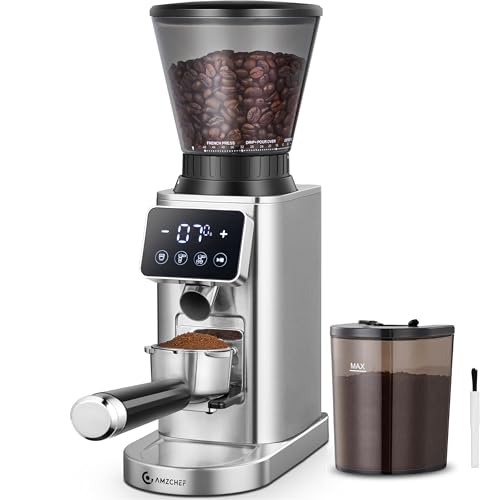
AMZCHEF Conical Burr Coffee Grinder
Stainless steel conical burrs with 48 grind settings, from fine enough for espresso to coarse enough for a French press or cold brew. The listing gives a touchscreen with a timer in half-second steps, a 2 to 12 cup selector, an anti-static stainless grounds container and a 10.6-ounce bean hopper with a UV-blocking tint.
Worth knowing: it is a newer brand with far fewer reviews than long-standing grinder makers, and it is sold by a third-party seller rather than Amazon. The bean hopper is tinted plastic, while the burrs and the grounds container are steel. Like any burr grinder, it needs a quick brush-out every week or two to stay consistent.
See the AMZCHEF grinder on AmazonAs an Amazon Associate we earn from qualifying purchases.
7. The water reservoir
A removable reservoir you can carry to the sink is far easier to fill and clean than a fixed one. Check its size against how much you brew, and whether the machine takes a charcoal water filter. If your water is hard, scale builds up faster inside any machine; filtered water slows that down. Our guide to whole-house water filters covers the bigger fix if hard water is a problem everywhere in your home.
8. Milk
For lattes and cappuccinos you need to heat and foam milk. A steam wand, found on espresso machines, makes the dense, silky foam cafes use, but it takes practice. A built-in or handheld frother is easier and makes lighter foam. Some drip machines offer a "specialty" or concentrate setting for milk drinks; it makes strong coffee, not espresso.
9. What the hot water touches
In most coffee makers, near-boiling water runs through plastic: the reservoir, the tubing, the shower head and the brew basket. For most people that is an acceptable trade-off. If you would rather keep plastic out of the hot water path, the choice narrows to a few glass-and-steel machines, which we compare in our guide to the machines where hot water touches only glass and steel.
3 things not worth paying extra for
- Big "bar" numbers on espresso machines. Espresso brews best at around 9 bars at the coffee. A 15- or 20-bar label is the pump's maximum, not the brewing pressure, and a higher number does not mean better espresso.
- Dozens of drink presets. Most people use two or three. Pay for good temperature control and a good grinder instead.
- App control. A plain timer does the same job, and apps tend to stop being supported long before the machine wears out.
Drip coffee makers: the best fit for most households

If you drink more than two cups a day, or share a pot with someone, a drip coffee maker is the simplest answer. You add water and ground coffee, press a button or set a timer, and walk away. Look for a brewing temperature in the 195 to 205°F range (the SCA badge is the easy check), a pause-and-serve feature so you can pour mid-brew, and the carafe type that matches how long your coffee sits.
Our pick for most homes
Hamilton Beach 2-Way Brewer (49980A)
Two brewers in one body. One side brews up to 12 cups into a glass carafe; the other brews a single cup, up to 14 ounces, straight into a mug or travel mug. Both use ordinary ground coffee, and the single side uses an included mesh scoop, so there are no pods to buy. The listing gives a 24-hour timer, a bold or regular strength setting, a pour-mid-brew pause and auto shut-off. It is sold and shipped by Amazon, and it was one of the best-selling coffee makers on Amazon when we checked in September 2026.
Worth knowing: the carafe is glass on a hot plate, so drink the pot within about half an hour or pour it into an insulated carafe. The single-serve side does not take K-Cup pods. It takes up a fair bit of counter space. The listing does not say what the reservoir and brew path are made of, so expect plastic inside, as with most machines at this level, and it does not mention SCA certification.
See the Hamilton Beach 2-Way on AmazonAs an Amazon Associate we earn from qualifying purchases.

If you want milk drinks from a drip machine
Ninja CM401 Specialty Coffee Maker
A 10-cup drip maker with four brew styles (classic, rich, over ice and a concentrated "specialty" brew) and six sizes, from a single cup to a full carafe, all from ground coffee. A fold-away frother turns hot or cold milk into foam for latte-style drinks. The listing says the 40-ounce reservoir is removable and the carafe, filter, reservoir and frother whisk are top-rack dishwasher safe. Sold and shipped by Amazon.
Worth knowing: the specialty brew is a strong concentrate rather than true espresso, and the frother makes lighter foam than a steam wand. It costs noticeably more than a basic drip machine. The carafe is glass on a warming plate. Like most drip machines, it has plastic parts where the hot water runs.
See the Ninja CM401 on AmazonAs an Amazon Associate we earn from qualifying purchases.
Single-serve pod machines: fastest cup, highest running cost
A pod machine is about speed. Drop in a pod, pick a size, and you have coffee in about a minute with nothing to measure or rinse. The catch is the running cost. Consumer Reports notes that pod machines are more expensive to run than other types, because pods cost more than ground coffee or whole beans, and that used plastic pods can end up in landfills even though the big brands say theirs are recyclable. A reusable filter pod lets you brew your own ground coffee in most Keurig machines and cuts both problems.

Our pod machine pick
Keurig K-Classic (K50)
The simplest Keurig: three brew sizes (6, 8 and 10 ounces), a 48-ounce removable reservoir that makes six or more cups before you refill, and an auto-off that shuts it down after two hours idle. It comes with a water filter handle and two filters. It is sold and shipped by Amazon, and it was one of the best-selling pod machines on Amazon when we checked in September 2026.
Worth knowing: the smallest size makes the strongest cup; the 10-ounce setting can taste weak. The machine is plastic, and hot water runs through a plastic pod on every brew. Keurig recommends descaling every 3 to 6 months. There is no strength or temperature control; the K-Elite adds those.
See the Keurig K-Classic on AmazonAs an Amazon Associate we earn from qualifying purchases.
Espresso machines: what the types really mean

Espresso is made by forcing hot water through finely ground, tightly packed coffee under pressure. The machine names describe how much of that the machine does for you:
- Manual (lever): you create the pressure yourself with a lever. Beautiful, but a hobby.
- Semi-automatic: a pump makes the pressure; you grind, dose and tamp the coffee, and start and stop the shot. The most common type for home lattes.
- Automatic: like semi-automatic, but the machine stops the shot at a set volume.
- Super-automatic (bean to cup): grinds, tamps, brews and often froths milk at the press of a button. The most convenient, and usually the most expensive.
- Pod espresso: capsules instead of ground coffee. No skill needed, less control over taste.
Two practical points before you buy. Espresso needs a very fine, even grind, so a semi-automatic machine needs a burr grinder, either built in or separate, like the one above. And ignore the bar number on the box: good espresso brews at around 9 bars at the coffee, whatever the pump is rated for.

Easiest espresso
Nespresso Essenza Mini by De'Longhi (EN85)
A small, simple pod espresso machine for Nespresso's Original-line capsules. It makes two sizes, an espresso and a longer lungo, heats up in well under a minute, and takes up very little counter space. It is sold and shipped by Amazon, and it was one of the most popular small espresso machines on Amazon when we checked in September 2026.
Worth knowing: it only takes capsules, and it has no milk frother, so for lattes you need a separate frother or the bundle that includes one. The water tank is small, so you refill it often, and it is built for espresso-sized drinks rather than big mugs. Capsules cost more per cup than beans.
See the Essenza Mini on AmazonAs an Amazon Associate we earn from qualifying purchases.
For real espresso and lattes
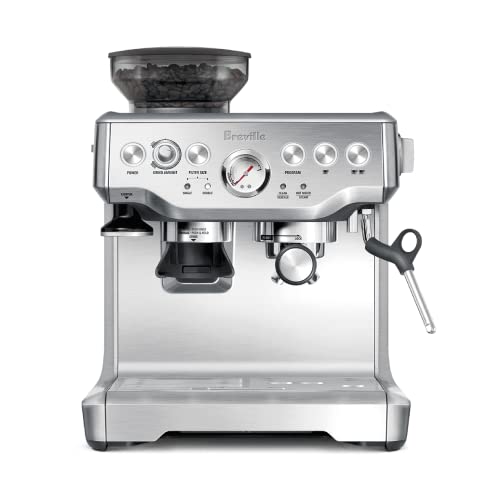
Breville Barista Express (BES870XL)
A semi-automatic espresso machine with a conical burr grinder built in, so it grinds straight into the portafilter. The listing gives digital (PID) temperature control, low-pressure pre-infusion at the start of each shot, a grind size dial and a steam wand for textured milk. It is sold and shipped by Amazon, and it was the best-selling espresso machine on Amazon when we checked in September 2026.
Worth knowing: this machine rewards practice. Expect a few weeks of adjusting grind, dose and tamp before your shots are consistent. It is heavy (about 22 pounds), takes a lot of counter space, and it is the most expensive pick in this guide.
See the Barista Express on AmazonAs an Amazon Associate we earn from qualifying purchases.
Manual brewers: French press, AeroPress, pour-over and Moka pot

Manual brewers are the cheapest way to excellent coffee, and there is little to break. They ask for a kettle and two to four minutes of your attention. If you are choosing a kettle too, our kettle guide looks at what the inside is made of.
- French press: coarse grounds steep in hot water for about four minutes, then a metal mesh presses them down. Full-bodied and rich, with some fine sediment in the last sip.
- AeroPress: a short steep, then you press the coffee through a paper micro-filter. Smooth and clean, one or two cups at a time, and tough enough to pack in a bag.
- Pour-over: you pour water slowly over grounds in a paper filter. The cleanest, brightest cup, and the most hands-on.
- Moka pot: a stovetop pot that pushes water up through the grounds. Strong, espresso-like coffee without a machine. Classic Moka pots are aluminum; stainless steel versions exist, and we cover one in our guide to plastic-free coffee makers.
One health point worth knowing: coffee contains natural oils called cafestol and kahweol, and research has linked them to higher LDL ("bad") cholesterol. Paper filters hold most of them back; metal filters, like a French press mesh, let them through. If you are watching your cholesterol, it is worth knowing that paper-filter methods such as drip, pour-over and AeroPress keep most of these oils out of the cup.
Our French press pick
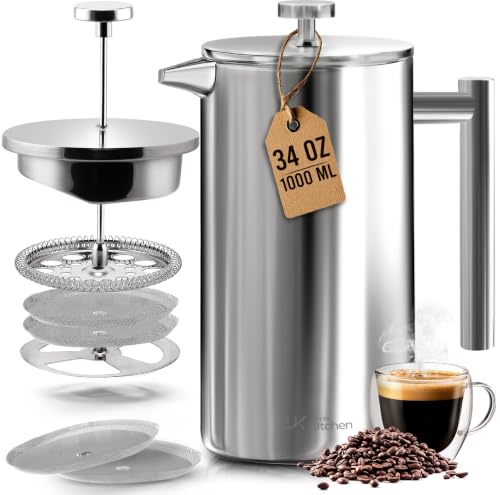
Utopia Kitchen Stainless Steel French Press, 34 oz
A double-wall French press made of 304 stainless steel, so there is no glass beaker to crack and the coffee stays hot longer. The listing gives a 4-layer filter to hold back fine grounds, and it comes apart fully for cleaning. It makes about four mugs, and it was one of the best-selling French presses on Amazon when we checked in September 2026.
Worth knowing: because it is steel, you cannot see how full it is or how the coffee looks while it steeps. Like every French press it lets through some fine sediment and the coffee oils described above. It is sold by the brand rather than Amazon.
See the Utopia Kitchen press on AmazonAs an Amazon Associate we earn from qualifying purchases.

For one great cup, anywhere
AeroPress Original
The original AeroPress: add coffee and water, wait about 30 seconds, then press through a paper micro-filter. It makes a smooth, low-bitterness cup in around two minutes and rinses clean almost instantly. It weighs a few ounces, is hard to break, and is sold by AeroPress itself with a one-year warranty.
Worth knowing: it makes one or two cups at a time, so it is not a household brewer. The chamber and plunger are plastic, so hot water does touch plastic here. You also need a kettle and a way to grind or buy ground coffee.
See the AeroPress on AmazonAs an Amazon Associate we earn from qualifying purchases.
Cold brew makers: smooth iced coffee without a machine
Cold brew is coarse coffee steeped in cold water for 12 to 24 hours, then filtered. The result is smooth and low in bitterness, and a batch keeps in the fridge for several days, so iced coffee is ready whenever you want it. You do not need an appliance, just a jar and a fine filter.

Our cold brew pick
County Line Kitchen Cold Brew Maker, 64 oz
A wide-mouth glass mason jar with a fine stainless steel mesh filter and a leak-proof flip-spout lid. Add coarse grounds and cold water, leave it in the fridge, then lift the filter out and pour. The listing says the parts are dishwasher safe, and the glass jar and steel filter keep plastic away from the coffee. It was one of the best-selling cold brew makers on Amazon when we checked in September 2026.
Worth knowing: the maker says not to add warm or boiling water, so it is for cold brewing only. A full 64-ounce glass jar is heavy and needs a tall spot in the fridge. The lid has plastic parts, which the listing describes as BPA-free, and it is sold by a third-party seller.
See the County Line cold brew maker on AmazonAs an Amazon Associate we earn from qualifying purchases.
How much should you spend? Entry-level vs high-end coffee makers
You do not have to spend much for good coffee, but each step up buys something specific. Rather than chase a price, decide which of these you will actually use.
| Type | Entry level gets you | Paying more gets you |
|---|---|---|
| Drip coffee maker | Hot, simple coffee, a timer and a glass carafe | A thermal carafe, SCA-certified temperature, better build |
| Pod machine | Three cup sizes and a removable tank | Strength and temperature control, iced settings, a bigger tank |
| Espresso machine | Pod espresso, or a basic pump machine with a steam wand | Temperature control (PID), a built-in burr grinder, faster steam |
| Manual brewer | A French press or AeroPress; the coffee can be excellent | Double-wall steel, better filters, nicer materials |
Two costs are easy to forget. Pods and capsules cost more per cup than ground coffee for as long as you own the machine. And an espresso machine is only as good as its grinder, so budget for one if the machine does not have it built in.
If you are not in a rush, timing helps too. Coffee makers are often discounted during big sale events such as Amazon's Prime Day and Black Friday, so it is worth checking the one you want around those dates.
Make your coffee maker last

Most coffee makers do not wear out; they scale up. Minerals from tap water coat the heater and tubing, the water stops getting hot enough, and brewing slows to a trickle. A few habits prevent most of it:
- Descale on schedule. Keurig, for example, recommends descaling every 3 to 6 months, or when the descale light comes on. Hard water means the shorter end of that range.
- Use the descaler your manual names. Some makers allow a vinegar solution and some tell you not to use it. The manual for your machine is the rule, not a general tip.
- Use filtered or softened water if your water is hard. It slows scale and usually improves the taste. Our water softener guide explains when softening the whole house makes sense.
- Do the daily bits. Empty the grounds, rinse the carafe or brew basket, leave the reservoir lid open to dry, and wipe a steam wand straight after every use so milk does not bake on.
How long a coffee maker lasts depends a lot on this care. Tasting Table puts the average life of a standard Mr. Coffee drip machine at two to five years; a machine that is descaled and kept clean sits at the better end of that. For step-by-step cleaning, including espresso machines, see our guide to cleaning a coffee or espresso machine, and for a quick routine that covers the blender and air fryer too, our small appliance cleaning guide.

Our descaler pick
Durgol Universal Descaler, 16.9 oz
A Swiss-made descaler for coffee makers, espresso machines and kettles. It removes limescale and calcium buildup, and one bottle also handles a kettle or a shower head. The label tells you to follow your appliance's own descaling instructions, which is the right way round.
Worth knowing: it is a universal descaler, so if your machine's maker requires its own branded descaler to keep the warranty, use that instead. It is sold by a third-party seller, not Amazon. Afterwards, run clean water through the machine as your manual describes.
See Durgol descaler on AmazonAs an Amazon Associate we earn from qualifying purchases.
All the picks, compared
| Pick and what it is for | Main drawback | Check it |
|---|---|---|
|
Hamilton Beach 2-Way Brewer Drip pot plus a single mug, for most homes |
Glass carafe on a hot plate | Hamilton Beach on Amazon |
|
Ninja CM401 Drip coffee plus frothed-milk drinks |
Specialty brew is not true espresso | Ninja on Amazon |
|
Keurig K-Classic One fast cup, no measuring |
Highest cost per cup; plastic pods | Keurig on Amazon |
|
Nespresso Essenza Mini Espresso with no skill |
Capsules only; no frother | Nespresso on Amazon |
|
Breville Barista Express Real espresso and lattes at home |
Learning curve; the biggest spend | Breville on Amazon |
|
Utopia Kitchen French Press Rich coffee, no power, no glass to break |
Some sediment; oils pass through | Utopia press on Amazon |
|
AeroPress Original One smooth cup, travel |
One or two cups; plastic body | AeroPress on Amazon |
|
County Line Kitchen Cold Brew Smooth iced coffee by the jar |
12 to 24 hour wait; heavy jar | County Line on Amazon |
|
AMZCHEF Burr Grinder Even, fresh grounds for any brewer |
Newer brand; third-party seller | AMZCHEF on Amazon |
|
Durgol Universal Descaler Removing scale so the machine lasts |
Check your manual first | Durgol on Amazon |
As an Amazon Associate we earn from qualifying purchases.
Set up your coffee station
A good coffee maker is easier to use in a spot that has everything within reach: beans, grinder, mugs and a place for the kettle. For layout ideas, see our coffee bar and cabinet ideas. If your coffee usually leaves the house with you, our guide to bottles that keep coffee hot without leaks covers the other half of the routine.
The short version
For most homes, a drip coffee maker is still the easiest way to good coffee, and the Hamilton Beach 2-Way adds a single-mug side for the mornings you only want one cup. If one fast cup is all you ever want, a Keurig K-Classic is the simple choice. For espresso with no learning curve, start with the Nespresso Essenza Mini; if you want to learn the craft and make real lattes, the Breville Barista Express is the one to grow into. And whatever you choose, a burr grinder is the upgrade you will taste most.
As an Amazon Associate we earn from qualifying purchases.
Frequently asked questions
What should I consider when selecting a coffee maker?
Start with how many cups you drink a day, whether you want milk drinks, and how much hands-on time you will give it; those three answers decide the type. Then check brewing temperature (195 to 205°F), real capacity (a machine "cup" is 5 to 6 ounces), glass or thermal carafe, a timer, and what the hot water touches.
Which coffee maker is easiest to clean?
A French press or AeroPress: a rinse and they are done. Among machines, look for a removable reservoir and dishwasher-safe carafe, lid and filter basket. Pod machines have little to clean day to day but still need regular descaling, and espresso machines need the most care, especially the steam wand.
How long do coffee makers last?
Tasting Table puts a standard Mr. Coffee drip machine at two to five years on average. Regular descaling, filtered water in hard-water areas and daily rinsing push a machine toward the longer end. Simpler machines, with fewer electronics and no built-in grinder, generally have less to go wrong. Manual brewers like a steel French press can last for many years.
Is a coffee maker or an espresso machine better?
Neither is better; they make different drinks. A drip coffee maker makes several cups of regular coffee with almost no effort. An espresso machine makes small, strong shots and, with a steam wand, lattes and cappuccinos, but asks for more time, skill and a good grinder.
What type of coffee maker is best for beginners?
A programmable drip coffee maker if you drink several cups, or a pod machine if you want one cup with no measuring. For espresso without a learning curve, a pod espresso machine like the Nespresso Essenza Mini is the easiest start.
Are pod coffee makers worth it?
If speed and zero cleanup matter most, yes. Just know the trade-off: Consumer Reports notes pods cost more per cup than ground coffee and used pods can end up in landfills. A reusable filter pod lets you use your own coffee and cuts both.
Related guides
Sources
- Consumer Reports, "Coffee Maker Buying Guide": the 195 to 205°F brewing range, a machine "cup" of 5 to 6 ounces, glass versus thermal carafes, the running cost and waste of pod machines.
- Specialty Coffee Association, Certified Home Brewer program, as summarised by Moccamaster: 197 to 205°F water, 4 to 8 minutes for a full batch.
- Clive Coffee, "Brew Pressure vs. Pump Pressure": about 9 bars at the coffee; 15 and 20 bar ratings describe pump maximums.
- Keurig, "Descaling": descale every 3 to 6 months, or when the descale light comes on.
- Research on coffee diterpenes (cafestol and kahweol) and blood cholesterol, including trials comparing filtered and unfiltered coffee.
- Tasting Table, on the average lifespan of a Mr. Coffee drip machine.
- Manufacturer listings on Amazon for Hamilton Beach 49980A B00EI7DPPI, Ninja CM401 B07PFLM2LK, Keurig K-Classic B018UQ5AMS, Nespresso Essenza Mini B06ZYSM2GR, Breville BES870XL B00CH9QWOU, Utopia Kitchen B01G2CCWGY, AeroPress B0047BIWSK, County Line Kitchen B07VJJJ764, AMZCHEF CG209 B0FH35Y5K4 and Durgol Universal B000NGQR4E (checked September 29, 2026).


