
Written by Lara Yehia. Lara researches home and kitchen products for Cupindy. · Last updated September 29, 2026
Most leftovers go wrong in one of two ways: they come out dry and rubbery, or they come out hot on the edges and cold in the middle. The first ruins dinner. The second is how leftovers make people sick. This guide fixes both. It gives the best method for 12 common foods, the one temperature every leftover has to reach, and the containers that are safest to reheat in. The safety rules come from the USDA and state food-safety guidance; the product details come from the makers' own listings, checked in September 2026. We did not lab-test these products ourselves.
Quick answer: how to reheat food safely without drying it out
- Heat it to 165°F in the thickest part, and check with a food thermometer. That is the USDA's number for all leftovers.
- Add a little moisture and cover it. A spoon of water, broth or sauce plus a lid keeps rice, pasta and meat from drying out.
- Use medium heat, not high. High heat dries the outside before the middle is hot.
- Match the method to the food. Crisp foods (pizza, fries) go in a skillet, oven or air fryer. Soft, wet foods (rice, soup, stew) do well in the microwave or on the stove.
- Reheat in glass or ceramic, not in takeout tubs or thin plastic.
As an Amazon Associate we earn from qualifying purchases. This does not change which products we recommend.

The one tool this guide relies on
Alpha Grillers Instant Read Thermometer
Reads in about 1 to 2 seconds, so checking for 165°F takes no longer than stirring. Backlit screen, waterproof (IP67), and one of the most-reviewed kitchen thermometers on Amazon when we checked.
See the thermometer on AmazonReheating chart: the best method for 12 foods
Find your food, use the method in the second column, and treat the times as a starting point for a single portion. Bigger portions take longer. Whatever the chart says, the food is ready when the thickest part reads 165°F, not when the timer ends. An instant-read thermometer answers that in two seconds.
| Food | How to reheat it | Avoid |
|---|---|---|
| Pizza | Skillet with a lid. Medium-low, 2 to 3 min uncovered to crisp the base, then a few drops of water in the pan and the lid on for 1 min to melt the cheese. | Microwave alone: soft, chewy crust |
| Rice | Microwave, covered. 1 to 2 tbsp water per cup, lid on, 1 to 2 min, stir halfway. The water turns to steam and softens the grains. | Heating it dry; reheating it a second time |
| Chicken | Oven, covered. 350°F with a splash of broth and foil on, about 10 to 20 min. For crisp skin, air fry at 350°F for 4 to 6 min instead. | Microwave on high, uncovered |
| Steak | Low oven, then a quick sear. 250°F on a rack until hot through, then about 1 min per side in a hot pan. Or slice thin and warm in simmering broth. | Microwave on high: grey and tough |
| Pasta | Plain: 30 to 60 sec in boiling water. Sauced: covered dish at 350°F for 15 to 20 min, or microwave covered and stirred, with a spoon of water or extra sauce. | High heat with no liquid: gummy |
| Soup, stew, sauce, gravy | Stovetop. Bring to a rolling boil, stirring. That is the USDA rule for these, not just "warm". | Reheating in a slow cooker or on a warming tray |
| Fries and fried food | Air fryer or oven. Air fryer 375°F for 3 to 5 min, or oven 400°F on a rack for 5 to 10 min. Moving air crisps the coating again. | Microwave: soggy |
| Roasted vegetables | Hot oven or skillet. 400°F for 5 to 10 min, spread in one layer so they roast instead of steam. | Crowding them in a covered bowl |
| Fish and seafood | Low oven, covered. 275°F with foil on, about 10 to 15 min. Low heat keeps it from drying out. | High heat of any kind |
| Casseroles and lasagna | Oven, covered. 350°F with foil on, 20 to 30 min, foil off for the last 5. Single portions heat through much faster. | Serving before the centre is hot |
| Bread and rolls | Oven or toaster oven. 350°F for 5 to 10 min. Wrap soft rolls in foil; mist a crusty loaf with water first. | More than a few seconds in the microwave: tough once it cools |
| Frozen leftovers | Straight from frozen, covered. Microwave on defrost, then heat and stir; or oven covered for about twice the time. The USDA says thawing first is not needed. | Thawing on the counter |
A note on steak: the 165°F rule covers every leftover, steak included, so a reheated steak will not stay rare. The low-oven-then-sear method gets it there with the least drying. If you like steak pink, cook only what you will eat and keep leftovers for sliced, well-heated dishes. For toaster oven times and which one reheats better, see our toaster vs toaster oven guide.
What temperature should you reheat food to?

165°F (74°C), measured in the thickest part of the food. That is the USDA's reheating temperature for all leftovers, and restaurant rules, such as the Texas health department's reheating guidance, use the same number, held for 15 seconds. Check in two or three spots, because microwaves and ovens leave cold pockets. A dish can bubble at the edge and still be lukewarm in the middle.
Touch and sight are not reliable here. Steam coming off the top tells you the surface is hot, not the centre. The only way to know is a thermometer, and an instant-read one makes it a two-second habit instead of a chore.
What happens if food is heated very slowly?
It spends too long in the "danger zone" of 40 to 140°F, where bacteria multiply. That is why restaurant food-safety guidance, such as Texas's, says the whole reheat should happen within 2 hours, and why slow cookers, steam tables and chafing dishes are not recommended for reheating. They are fine for keeping food hot once it has already reached 165°F.
Our thermometer pick
Alpha Grillers Instant Read Food Thermometer
The listing gives a 1 to 2 second response, a backlit screen, IP67 water resistance so you can rinse it under the tap, and a recalibration feature. It comes calibrated and runs on one CR2032 battery. When we checked in September 2026 it had more than 90,000 ratings at 4.8 stars, one of the most-reviewed food thermometers on Amazon.
Worth knowing: the listing gives an upper range of 300°F, so it is not built for checking frying oil, even though the product text mentions deep frying. The body is plastic, it is hand wash only, and it is an instant-read probe, not one you leave in the oven. It is sold by a third-party seller rather than Amazon. Check it in a glass of ice water now and then: it should read 32°F.
See the Alpha Grillers on AmazonAs an Amazon Associate we earn from qualifying purchases.
How to reheat food in the microwave without drying it out

The microwave gets blamed for dry, rubbery leftovers, but most of the damage comes from how it is used. Microwaves heat the water in food. Leave the plate uncovered on high and that water leaves as steam, taking the texture with it. The USDA's advice (cover, vent, stir or turn, let it stand, then check) fixes most of the problem. Step by step:
- Spread the food out in an even layer, thicker pieces toward the edge of the plate, and leave a small gap in the middle.
- Add a spoon of water or broth to rice, pasta, grains and meat.
- Cover it, with a vented lid or cover that lets a little steam escape. A damp paper towel works for bread and rice.
- Use medium power for dense food, and stop halfway to stir or turn it.
- Let it stand for 2 minutes before you check it. The heat keeps spreading after the microwave stops.
- Check 165°F in a few spots, and heat a little longer if any spot is short.
For rice, one trick works well: set an ice cube on top of the rice before covering it. It melts slowly and steams the grains instead of drying them. Reheating in a glass dish? Check which glass is safe in the microwave first.

Our microwave cover pick
GLOU-GLOU GOOSE Glass Microwave Cover, 11.8 in
A tempered glass top with two steam vents and a collapsible silicone rim and handle, so the part over your food is glass rather than plastic. The listing says it is dishwasher safe and also works as a lid on pots and pans. It had about 4,700 ratings at 4.5 stars when we checked in September 2026.
Worth knowing: at 11.8 in across, measure the inside of a small microwave before you buy; it needs room to turn on the turntable. Glass is heavier than a plastic cover, the rim and handle are silicone, and it is sold by a third-party seller. Its rating sits right at our minimum. If you would rather have a lighter, cheaper cover, plastic-and-silicone collapsible covers such as Tovolo's are more widely reviewed; the trade-off is a plastic top over hot food.
See the glass cover on AmazonAs an Amazon Associate we earn from qualifying purchases.
The healthiest way to reheat food
Three things decide how healthy a reheated meal is: what it sits in, how long it heats, and how much water you use.
- Glass or ceramic, not plastic. Heat is the hardest test for any food container, and plain glass keeps plastic away from hot food. Ceramic is a good choice too, as long as it is marked microwave-safe; old, handmade or decorative glazed pieces are better kept for serving. Move leftovers out of takeout tubs, deli containers and margarine-style tubs before heating, because those are designed for storage, not heat.
- Shorter heating keeps more nutrients. Some vitamins, like vitamin C and several B vitamins, break down with heat and leach into water. Heating only what you will eat, only until it reaches 165°F, with a small splash of water rather than a pot full, keeps more of them in the food.
- Reheat once. Every round of cooling and reheating costs texture and flavour, and gives bacteria another chance. Take out one portion and leave the rest in the fridge.
Container labels can be confusing. Some lids say "microwave safe" and others say "for reheating only", and they do not mean the same thing. Our guide to what those container labels actually mean explains each one. For the glass-or-plastic question in more depth, see glass vs plastic food storage, and if you reheat on plates or bowls, check whether porcelain is microwave safe.
Our reheat-and-store container pick
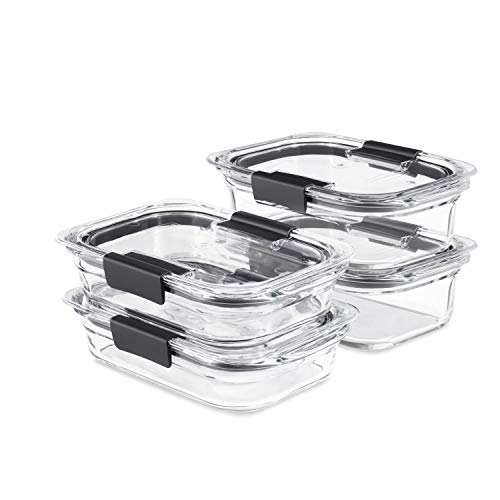
Rubbermaid Brilliance Glass Food Storage, 4 containers
Two 2-cup and two 3.2-cup glass containers with vented, latching lids. The listing says the glass bases are oven-safe up to 450°F, the set is freezer and dishwasher safe, and the lids are BPA-free. So leftovers go from fridge to microwave or oven in the same dish, with no plastic tub in between. It is sold and shipped by Amazon, and was among the best-selling food container sets when we checked in September 2026.
Worth knowing: the lids are plastic. Rubbermaid says they are microwave-safe for reheating only with the latches open, and they never go in the oven. Lids go on the top rack of the dishwasher. The largest container holds 3.2 cups, fine for one or two portions but not a family casserole. Glass is heavy, and like any glass dish it should not go straight from the freezer into a hot oven.
See the Rubbermaid set on AmazonAs an Amazon Associate we earn from qualifying purchases.
Oven, stovetop, microwave or air fryer: which to use
| Method | Best for | Watch out for |
|---|---|---|
| Microwave | Rice, soups, stews, sauced dishes, steamed vegetables | Cold spots; crisp food turns soft. Cover, stir and let it stand |
| Stovetop | Soups, sauces, gravies, stir-fries, pizza in a skillet | Sticking and scorching. Add a splash of liquid and stir |
| Oven or toaster oven | Casseroles, roasted meat, bread, bigger portions | Drying out. Cover with foil and add a little liquid |
| Air fryer | Fries, fried chicken, wings, pizza slices, roasted vegetables | Small capacity; wet or saucy food splatters. One layer only |
No microwave? Almost everything reheats well without one. Use the stovetop for anything wet, the oven for anything dry or crisp, and a covered skillet with a splash of water for single portions of rice or pasta. If you are choosing an appliance that toasts, reheats and air fries in one box, our guide to air fryer toaster ovens chosen on materials looks at what the inside walls and baskets are made of.
Leftover safety rules worth knowing
- Fridge within 2 hours. The USDA says leftovers should be refrigerated within 2 hours of cooking, or within 1 hour if it is above 90°F. Divide big batches into shallow containers so they cool quickly.
- Eat within 3 to 4 days. After that, freeze or throw out. Frozen leftovers stay safe longer but lose quality after about 3 to 4 months.
- Soups, sauces and gravies: bring them to a rolling boil when reheating.
- Frozen leftovers can go straight to reheating without thawing, as long as they reach 165°F.
- How many times can you reheat food? US guidance focuses on temperature: food should reach 165°F each time. The UK's Food Standards Agency is stricter for two foods: rice, and meat that was cooked and then frozen, should be reheated only once. The practical answer for everything: reheat only the portion you will eat.
- Rice needs extra care. Spores of a bacterium called Bacillus cereus can survive cooking. The UK's Food Standards Agency advises chilling leftover rice quickly, ideally within an hour, keeping it in the fridge for no more than a day, and reheating it only once, until it is steaming hot all the way through.
- Do not reheat in a slow cooker. It is too slow to get leftovers through the danger zone. Reheat on the stove or in the microwave first, then keep warm in the slow cooker if you need to.
The three tools in this guide, compared
Alpha Grillers instant-read thermometer
FixesKnowing the food really reached 165°F
Main drawbackPlastic body; reads only up to 300°F
See the thermometer on Amazon
GLOU-GLOU GOOSE glass microwave cover
FixesDry, splattered microwave leftovers
Main drawback11.8 in may be too wide for a small microwave
See the glass cover on Amazon
Rubbermaid Brilliance glass containers
FixesStoring and reheating in the same glass dish
Main drawbackPlastic lids: latches open in the microwave, never in the oven
See the containers on AmazonAs an Amazon Associate we earn from qualifying purchases.
7 reheating mistakes to avoid
- Microwaving everything on high. Medium power and a stir halfway heat more evenly and dry food out less.
- Leaving food uncovered. The moisture escapes, and so does the texture.
- Judging by the edges. Bubbling edges do not mean a hot centre. Check the thickest part.
- Reheating in takeout tubs or thin plastic. Move food to glass or ceramic first.
- Putting crisp food in the microwave. Pizza, fries and fried chicken belong in a skillet, oven or air fryer.
- Heating dairy sauces too fast. Cream and cheese sauces split on high heat. Warm them gently and stir.
- Reheating the whole batch. Heat one portion; every extra round of cooling and reheating costs quality and adds risk.
Store leftovers so they reheat better
Good reheating starts when you put the food away. Cool it fast in shallow containers, seal it airtight so it does not dry out in the fridge, and label it with the date. Keep sauces and crisp toppings separate where you can, so the base does not go soggy. Portion-sized containers mean you only ever reheat what you will eat. For container ideas, see our meal prep containers guide and food storage containers without the plastic worries. Bread has its own rules: how to keep bread fresh.
The short version
Reheat one portion at a time, with a little moisture, under a cover, on medium heat, in glass or ceramic, and stop when the thickest part reads 165°F. If you only add one thing to your kitchen after reading this, make it an instant-read thermometer: it is the difference between guessing and knowing. If you reheat in the microwave most days, a glass cover and glass containers are the next two.
As an Amazon Associate we earn from qualifying purchases.
Frequently asked questions
What temperature should reheated food reach?
165°F (74°C) in the thickest part, according to the USDA. Check with a food thermometer in two or three spots. Soups, sauces and gravies should come to a rolling boil.
What is the best way to reheat food?
Match the method to the food: microwave or stovetop for soft, wet food like rice, soup and stew; skillet, oven or air fryer for crisp food like pizza and fries. Add a little moisture, cover it, use medium heat and check for 165°F.
What is the healthiest way to reheat food?
Reheat one portion, once, in glass or ceramic rather than plastic, for the shortest time that gets it to 165°F, with only a small splash of water. That limits nutrient loss and keeps plastic away from hot food.
What happens if food is reheated too slowly?
It sits too long between 40 and 140°F, where bacteria multiply. Restaurant food-safety guidance says reheating should be done within 2 hours, and that slow cookers and warming trays should not be used to reheat food.
Is it safe to reheat food in plastic containers?
Only in containers labelled microwave-safe, and even then glass or ceramic is the cleaner choice. Takeout tubs, deli containers and old margarine-style tubs are designed for storage, not heat, so move the food before you reheat it.
How many times can you reheat food?
US guidance says food must reach 165°F each time. The UK's Food Standards Agency says rice, and meat that was cooked and then frozen, should be reheated only once. The safest habit is to reheat just the portion you are about to eat.
Related guides
Sources
- USDA Food Safety and Inspection Service, "Leftovers and Food Safety": 165°F, microwave steps, rolling boil for sauces and soups, 2-hour rule, 3 to 4 days in the fridge, reheating from frozen, the 40 to 140°F danger zone.
- Texas Department of State Health Services, "Reheating and Hot Holding" guidance for food establishments: 165°F for 15 seconds, reheating within 2 hours, 2-minute standing time in the microwave, why slow cookers and steam tables are not for reheating.
- UK Food Standards Agency, "Home food fact checker": rice and Bacillus cereus, chilling within an hour, one day in the fridge, reheating rice and previously cooked frozen meat only once.
- Manufacturer listings on Amazon for Alpha Grillers B00S93EQUK, Rubbermaid Brilliance B08B7MYPKS and GLOU-GLOU GOOSE GGG-30 B09R1GW22N (checked September 29, 2026).


