
Enameled cast iron cookware gives you the heat retention of traditional cast iron with a smooth enamel coating that does not need seasoning. It is popular for Dutch ovens, skillets, pans, pots, braisers, and cookware sets, especially for soups, stews, sauces, braising, and oven-to-table cooking. But it is not perfect for every kitchen. It is heavy, usually more expensive than bare cast iron, and the enamel surface can chip or crack if it is overheated, dropped, scraped aggressively, or exposed to sudden temperature changes.
Short answers: let the pot cool, wash it with warm soapy water and a soft sponge or nylon brush, and dry it, rim included. For stuck-on food, soak it or simmer water with baking soda. Le Creuset, Staub and Lodge all say their enameled cast iron can go in the dishwasher, and all three prefer hand washing. On lead and cadmium, the three brands publish different things: see what each one says.
As an Amazon Associate we earn from qualifying purchases.
Quick pick for stains and metal marks

Le Creuset Enameled Cast Iron Cookware Cleaner
Check price on AmazonLe Creuset says its cleaner "is ideal for removing metal marks caused by metal tools," and the listing says it works on both sand and matte black interiors. Drawback: a small 8.45 oz bottle, and the listing gives no ingredient list.
How we evaluated this guide: We compared enameled cast iron with regular cast iron by cooking surface, seasoning needs, acidic-food use, heat retention, cleaning effort, chipping risk, everyday practicality, and long-term care. The cleaning rules and the lead and cadmium section quote what Le Creuset, Staub and Lodge publish, read on 14 October 2026. We did not test any pot or cleaner, and this guide is not medical advice.
Quick Answer: Is Enameled Cast Iron Cookware Worth It?
Yes, enameled cast iron cookware is worth it if you want cast iron heat retention without seasoning, easier cleaning, and better performance with acidic foods such as tomato sauce, wine-based braises, stews, and soups.
It is not the best choice if you want lightweight cookware, the lowest price, rough campfire cooking, aggressive metal utensil use, or a pan mainly for very high-heat steak searing.
Best Choice By Situation
| Situation | Best Choice | Why |
|---|---|---|
| First enameled cast iron piece | Dutch oven | Most versatile for soups, stews, braises, bread, and slow cooking. |
| Everyday stovetop cooking | Skillet or pan | Useful for sautéing, shallow frying, and oven finishing. |
| One-pan oven-to-table meals | Braiser | Wide surface with a lid for chicken, vegetables, sauces, and slow-cooked dishes. |
| High-heat searing or outdoor cooking | Regular cast iron | More tolerant of rough use, very high heat, and campfire-style cooking. |
What Is Enameled Cast Iron Cookware?
Enameled cast iron cookware is made with a cast iron body covered by a hard enamel coating. The cast iron core gives the cookware strong heat retention, while the enamel surface creates a smoother, non-reactive cooking surface that does not need seasoning.
This type of cookware is common in Dutch ovens, skillets, braisers, saucepans, roasting pans, pots, and full cookware sets. It is especially useful when you want steady heat for slow cooking, simmering, braising, baking bread, or cooking sauce-based meals.
Enameled Cast Iron Pros And Cons
The biggest advantage of enameled cast iron is convenience. You get much of the heat retention of cast iron without seasoning maintenance. The biggest disadvantages are weight, price, and the possibility of enamel damage.
At a glance: Enameled cast iron is easier to maintain than regular cast iron and better for acidic foods, but it is heavier, usually more expensive, and less tolerant of chips or rough use.
| Pros | Cons |
|---|---|
| No seasoning needed before use. | Usually heavy, especially in larger Dutch ovens and cookware sets. |
| Good heat retention for soups, stews, braises, and slow cooking. | Usually more expensive than bare cast iron. |
| Better choice for acidic foods than regular cast iron. | The enamel can chip, crack, or dull if misused. |
| Easier to clean than bare cast iron because it does not need oil seasoning. | Not ideal for aggressive metal utensil scraping. |
| Attractive enough for oven-to-table serving. | Can be damaged by thermal shock from sudden temperature changes. |
| Works well for long simmering and moist cooking methods. | Not always the best choice for eggs, delicate fish, or very high-heat dry searing. |
Is Enameled Cast Iron Safe?
Enameled cast iron is generally considered safe for normal home cooking when the enamel coating is intact and the cookware is used according to the manufacturer’s instructions. The enamel surface helps separate food from the bare iron underneath, which makes it useful for acidic foods such as tomato sauce, vinegar-based dishes, and wine-based braises.
The main safety concern is not normal use. The main concern is damaged enamel, especially chips, cracks, or flaking on the cooking surface. If the interior enamel is damaged, Le Creuset and Staub both say to stop using it (their exact words are in the cleaning section below).

Is There An Enamel Cast Iron Health Risk?
For most home cooks, the main health-related concern with enameled cast iron is not the intact enamel surface. The bigger concern is damaged enamel, such as chips, cracks, or flaking on the cooking surface. Enameled cast iron also should not be used as a way to increase dietary iron, because the enamel coating separates food from the bare iron underneath.
This is a cookware safety guide for everyday home use, not medical advice. If you have health concerns about metals, anemia, or food-contact materials, ask a qualified healthcare professional.
Also avoid overheating an empty enameled cast iron pan on high heat. Gradual heating is safer for the enamel and gives better cooking control. Sudden temperature changes, such as adding cold water to a very hot pot, can also stress the coating.
Is Le Creuset Non-Toxic? What Le Creuset, Staub And Lodge Publish About Lead And Cadmium
We give no verdict here: we do not test pots, so this section reports what each brand publishes. Le Creuset's California disclosure database lists no lead for the two Dutch ovens we opened, and lists cadmium pigments for the red Cerise pot in its full list but not in its food-contact list. Staub states that it is lead- and cadmium-free. Lodge lists cadmium compounds for red and orange items only.
The disclosures come from California's AB 1200 cookware law. In Le Creuset's words, the law requires "cookware manufacturers to disclose the presence of specific chemicals in handles and food-contact surfaces."
| Brand | Where it publishes | What we read (14 Oct 2026) |
|---|---|---|
| Le Creuset | A per-product AB 1200 database linked from its "Chemical Disclosures for Cookware" page | Traditional Round Dutch Oven, 2 qt, Cerise (red): "Pigment Cd Sulphoselenide Red" and "Pigment Cd Sulphoselenide Orange" are in the "All" list, not in the "Food Contact" list. The same pot in Caribbean (blue): no cadmium pigment in either list. Lead is not listed for either pot. |
| Staub | Its "Safety, Testing & Materials" page | "Staub is Cadmium Free, Lead-Free, PFOA Free, PTFE Free, and PFAS Free." We did not find a per-product AB 1200 list on staub.com. |
| Lodge | An AB 1200 disclosure on its own website | Enameled cast iron, "All colors and all sizes": no lead listed. Under "Red and Orange items only": cadmium compounds and sulfate. |
Neither Le Creuset's nor Lodge's list names lead, and Staub's statement says "Lead-Free." For Le Creuset and Lodge, the cadmium entries are tied to red and orange colors; the lists do not say which part of the pot they are in. We explain Lodge's list, and the independent XRF readings of older pots you may find online, in our enameled Dutch oven guide.
What about Proposition 65 warnings?
Some Amazon listings carry California's Proposition 65 warning. On 14 October 2026, the listings for the red Lodge Essential Enamel 6-quart Dutch oven and the red Staub 7-quart Dutch oven showed "WARNING: Cancer and Reproductive Harm - www.P65Warnings.ca.gov". The warning text does not name a chemical or a part of the pot, and the listings do not say why it appears. The other listings we opened (a blue Lodge, a green Staub and two Le Creuset pots, one of them red Cerise) showed no warning. We draw no conclusion from a listing's warning about any brand's statements above.
For PFAS and coatings across all cookware types, see our non-toxic cookware guide.
Enameled Cast Iron Vs Regular Cast Iron
The main difference is the cooking surface. Enameled cast iron has a coated surface that does not need seasoning, while regular cast iron has a bare iron surface protected by seasoning. That one difference changes how each pan handles acidic foods, cleaning, rust, utensils, and long-term maintenance.

At a glance: Enameled cast iron is better for acidic foods, easier cleaning, and no seasoning. Regular cast iron is better for high-heat searing, outdoor cooking, lower cost, and rougher use.
| Feature | Enameled Cast Iron | Regular Cast Iron |
|---|---|---|
| Cooking surface | Enamel-coated surface. | Bare iron with seasoning layer. |
| Seasoning needed | No. | Yes, seasoning is part of normal care. |
| Acidic foods | Better choice for tomato sauce, wine, vinegar, and long simmering. | Short acidic cooking may be fine, but long simmering can affect seasoning and flavor. |
| Rust risk | Lower if the enamel is intact, though exposed rims may still need drying. | Can rust if left wet or poorly maintained. |
| High-heat searing | Good with careful heating, but avoid overheating empty enamel cookware. | Excellent for high-heat searing. |
| Metal utensils | Best to use wood, silicone, or nylon to protect enamel. | More tolerant, although rough scraping can still affect seasoning. |
| Cleaning | Warm soapy water and gentle tools. | Requires drying and seasoning care. |
| Durability | Durable, but enamel can chip or crack. | Very durable and restorable if maintained. |
| Best for | Stews, soups, braises, sauces, baking bread, oven-to-table serving. | Searing, frying, outdoor cooking, budget-friendly long-term use. |
If you want a broader comparison of cookware materials, see our guide to the best frying pan material. If you want to understand bare cast iron more deeply, read our regular cast iron cookware guide.
Best Uses For Enameled Cast Iron Cookware
Enameled cast iron works best when steady heat and moisture matter more than fast temperature changes. It is especially strong for slow cooking, oven cooking, and meals served directly from the pot.

Enameled Cast Iron Dutch Ovens
Dutch ovens are the classic use case. They are excellent for soups, stews, chili, braising, pot roast, bread baking, and low-and-slow oven cooking.
Shopping for one? We compared what the budget brands publish on oven temperature, dishwasher care and enamel materials in our best enameled Dutch oven picks.
Enameled Cast Iron Skillets And Pans
Skillets and pans work well for sautéed vegetables, chicken thighs, shallow frying, oven-finishing, and one-pan meals. For frequent very high-heat steak searing, bare cast iron may still be better.
What Cannot Be Cooked In Enameled Cast Iron?
Most everyday foods can be cooked in enameled cast iron. The better question is not “what is impossible to cook,” but “what cooking habits can damage the enamel or give poor results?”
Be careful with very high-heat dry searing, sticky delicate foods such as eggs without enough fat, aggressive metal scraping, and any cooking method that requires banging utensils against the surface. Also avoid using cookware with damaged interior enamel for direct food contact.
At a glance: Tomato sauces, soups, and braises are good uses for enameled cast iron. The main things to avoid are damaged interior enamel, sudden temperature shock, rough scraping, and careless high-heat preheating.
Common Mistakes That Damage Enameled Cast Iron
Enameled cast iron can last for years, but the coating needs reasonable care. Most damage comes from heat shock, rough handling, abrasive cleaning, or utensil misuse.
| Mistake | Why It Matters | Better Habit |
|---|---|---|
| Heating empty cookware on high heat. | Can stress the enamel and create uneven heat shock. | Preheat gradually on low to medium heat. |
| Stacking pans without protection. | Can scratch rims and interiors. | Use pan protectors or soft cloth between pieces. |
| Dropping or banging the cookware. | Enamel can chip at edges or on the cooking surface. | Handle carefully, especially when washing or storing. |
How To Clean Enameled Cast Iron: Le Creuset, Staub And Lodge Rules Side By Side

Let enameled cast iron cool, wash it with warm soapy water and a soft sponge or nylon brush, then rinse and dry it, including the rim. Soak or simmer stuck-on food with baking soda instead of scraping. Le Creuset rules out metal pads; Staub and Lodge name soft sponges, nylon brushes and scrapers.
- Let the cookware cool to room temperature. Le Creuset: "DO NOT plunge it into or fill it with cold water when hot".
- Wash with warm water and mild dish soap.
- Use a soft sponge, nylon brush, or non-abrasive scrub cloth.
- Soak stuck food before scrubbing.
- For burnt-on food, simmer water with baking soda, let it cool, then wipe or scrape gently.
- Rinse well and dry completely, rim included.
- Use pan protectors if stacking cookware.
The three makers mostly agree, but not on every detail. This is what each one publishes:
| Rule | Le Creuset | Staub | Lodge |
|---|---|---|---|
| Everyday wash | "warm soapy water and a soft, non- abrasive sponge or brush" | "warm water, mild soap, and a soft sponge" | Warm soapy water; "a sponge, everyday scrub cloth, or scrub brush" |
| Stuck-on or burnt food | Soak in warm soapy water, or simmer water with "a tablespoon or two of baking soda" for about 8-10 minutes | Soak, then heat gently on the stovetop; "baking soda is an enamel-safe, natural abrasive" | "boil 2 cups of water and 4 tablespoons of baking soda", then a pan scraper |
| Stains | An enameled cast iron cookware cleaner | Bar Keepers Friend ("We highly recommend") | Its own enameled cast iron cleaner; for persistent stains, a 2-3 hour bleach soak (3 tablespoons per quart of water) |
| Bar Keepers Friend | Two pages differ: care page says never "harsh, abrasive cleaning agents"; its Dutch oven blog says it "comes in handy" | Yes, with a soft, non-abrasive sponge or cloth | Not mentioned on its care page |
| Dishwasher | Dishwasher safe; "we recommend hand washing" | Dishwasher safe; "we recommend hand-washing" | "Technically, enameled cast iron is dishwasher safe, but we prefer hand washing" |
| Metal | "NEVER use any metal cleaning pads" | Do not strike metal utensils on the rim | "metal can scratch the enamel finish" |
Stains and burnt-on food
Light staining is normal. Lodge says "a small amount of staining is to be expected with enameled cookware and does not affect performance." Staub says a dull, cloudy or rainbow look can come from "mineral deposits, food residue, detergent residue or oils left on the enamel" and does not mean damage.
For burnt-on food, all three use water and baking soda, in different amounts: Le Creuset simmers a tablespoon or two in a potful of water for about 8-10 minutes; Lodge boils 4 tablespoons in 2 cups of water for a few minutes, then uses a pan scraper. Lodge also gives a bleach soak for persistent stains on its own pots (3 tablespoons of household bleach per quart of water, 2-3 hours). That is Lodge's rule for Lodge cookware; we did not see it on the Le Creuset or Staub pages we read.
As an Amazon Associate we earn from qualifying purchases.

Le Creuset Nylon Brush, 3.25 in
All three makers name a soft sponge or brush for everyday cleaning. The listing says it is dishwasher safe and fits between grill-pan ridges.
Drawback: the 3.25-inch head is small for the floor of a large Dutch oven.
Check price on AmazonCan you use Bar Keepers Friend on enameled cast iron?
Staub says yes: "We highly recommend Bar Keepers Friend for cleaning STAUB enameled cast iron", used with "a soft, non-abrasive sponge or cloth". Le Creuset's two pages differ. Its care page says "NEVER use any metal cleaning pads or harsh, abrasive cleaning agents on any surfaces." Its Dutch oven cleaning blog says "Bar Keeper's Friend, or a paste of baking soda and water, also comes in handy for cleaning tough stains". Lodge's enameled care page names its own cleaner instead. If you own Le Creuset, its care page suggests an enameled cast iron cookware cleaner for stubborn stains, and its blog names its own.
As an Amazon Associate we earn from qualifying purchases.
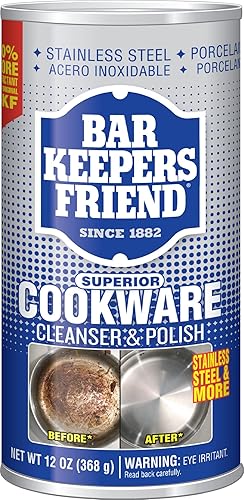
Bar Keepers Friend Superior Cookware Cleanser & Polish, 12 oz
The cleaner Staub names for stubborn stains, discoloration and cooked-on residue.
Drawback: it is a powder cleanser; Le Creuset's care page says never use "harsh, abrasive cleaning agents," though its blog mentions Bar Keepers Friend. The listing names oxalic acid as its key ingredient and says to "always rinse thoroughly within one minute of application."
Check price on AmazonCan enameled cast iron go in the dishwasher?
Yes for all three brands, with the same advice: hand washing is better. Le Creuset says "Dulling of the enamel finish may be caused by constant dishwashing" and lists exceptions, such as products with wooden handles, enamel-on-steel lids, colored stainless steel knobs and decals. Lodge adds that dishwasher cleaning can leave rust deposits on the rim.
Outside, bottom and rim rust
The rim can rust if it stays wet. Le Creuset says to "rinse thoroughly and dry completely to prevent the appearance of rust on the rim." Lodge's fix for a rusty rim is a nylon sponge, dish detergent and thorough drying, then "rubbing a small amount of cooking oil around the rim to create a seal". On the outside, Lodge warns: "Avoid citrus-based cleaners", because they can dull the exterior gloss.
As an Amazon Associate we earn from qualifying purchases.

Lodge Enameled Cast Iron and Ceramic Stoneware Care Kit, 5 piece
Lodge names its own enameled cleaner for stains and a pan scraper for stuck-on food; the kit has both, plus a scrub brush and pot protectors.
Drawback: if you only need the cleaner, the kit adds a scraper, brush and pot protectors you may not use.
Check price on AmazonWhen to stop using a chipped pot
Le Creuset: "NEVER use a product when the interior enamel has chipped. It is no longer safe to use and you should immediately CEASE USING the product." Staub: "If cookware becomes chipped or damaged, discontinue use of the affected area and contact Customer Service for guidance." Neither brand page we read describes a home repair for chipped interior enamel.
Picks by problem
As an Amazon Associate we earn from qualifying purchases.
| Your problem | Pick | Amazon |
|---|---|---|
| Stains and metal marks | Le Creuset Enameled Cast Iron Cookware Cleaner | See it |
| Staub owners, stubborn stains | Bar Keepers Friend Cookware Cleanser | See it |
| Lodge owners, stuck-on food | Lodge Enameled Cast Iron Care Kit | See it |
| Gentle scrubbing | Le Creuset Nylon Brush | See it |
If you also use bare cast iron, see our guide on how to clean a cast iron pan without ruining the seasoning.
Who Should Avoid Enameled Cast Iron?
Enameled cast iron is not the best choice for every cook. In some kitchens, regular cast iron, stainless steel, carbon steel, or nonstick may be more practical.
- You want very lightweight cookware.
- You are on a tight cookware budget.
- You often use metal utensils aggressively.
- You cook outdoors, over grills, or near campfires.
- You mainly want a pan for very high-heat steak searing.
- You want a truly nonstick surface for eggs and delicate foods.
- You want cookware that can handle rough treatment without worrying about chips.
For other material options, compare non-toxic cookware options, cookware safety considerations, and carbon steel vs cast iron.
Which Enameled Cast Iron Piece Should You Buy First?
If you are buying only one piece of enameled cast iron cookware, a Dutch oven is usually the most versatile choice for soups, stews, braises, chili, bread, and oven-to-table meals. A skillet is better for everyday stovetop cooking, while a braiser is useful for wider, shallow cooking with sauces.
Enameled Cast Iron Buying Checklist
You do not need to chase the most expensive brand to choose well. Instead, match the piece to how you cook.
Check the oven-safe temperature: Enameled cast iron bodies are often oven-friendly, but knobs, lids, and handles can have different heat limits. Always check the manufacturer’s instructions before using high oven temperatures or broiler heat.
Compare light vs dark interior enamel: Light interiors make it easier to see browning, fond, and burning, while darker interiors may hide stains better. Neither is automatically better; choose based on how you cook and clean.
Check stovetop compatibility: Many enameled cast iron pieces work on gas, electric, ceramic glass, and induction, but exact compatibility depends on the manufacturer. On glass cooktops, lift the cookware instead of sliding it.
Final Verdict: Is Enameled Cast Iron Better Than Regular Cast Iron?
Enameled cast iron is better for low-maintenance cooking, acidic foods, soups, stews, braises, sauces, and oven-to-table meals. Regular cast iron is better for high-heat searing, rough use, outdoor cooking, lower cost, and cooks who like maintaining a seasoned surface.
The better choice depends on how you cook. If you want one beautiful, practical piece for slow cooking and everyday family meals, an enameled cast iron Dutch oven or pan can be a strong investment. If you want a tough, budget-friendly pan for searing and outdoor cooking, regular cast iron may still be the better choice.
FAQs About Enameled Cast Iron Cookware
Is an enameled cast iron Dutch oven worth it?
Yes, an enameled cast iron Dutch oven is often the best first piece because it works well for soups, stews, braises, chili, bread, sauces, and oven-to-table meals. It is less ideal if you mainly want lightweight cookware or very high-heat searing.
Is enamel cast iron cookware safe?
Enamel cast iron cookware is generally safe for normal cooking when the enamel surface is intact and the cookware is used according to the manufacturer’s instructions. Avoid using cookware with chipped, cracked, or flaking enamel on the cooking surface.
Does enameled cast iron need seasoning?
No. Enameled cast iron does not need seasoning because the cooking surface is coated with enamel. This is one of its main advantages compared with regular cast iron.
Can enameled cast iron chip?
Yes. Enameled cast iron can chip if it is dropped, banged, scraped aggressively with metal tools, overheated, or exposed to sudden temperature changes. Careful handling and gentle cleaning help protect the enamel.
Is chipped enameled cast iron safe to use?
If a chip is on the exterior, check the manufacturer’s guidance. If the chip, crack, or flaking is on the cooking surface, it is safer to stop using the cookware for direct food contact and check the manufacturer’s guidance.
How do you clean enameled cast iron cookware?
Let it cool, then wash with warm water, mild dish soap, and a soft sponge or nylon brush. Soak stuck food before scrubbing, or simmer water with baking soda for burnt-on food. Rinse well and dry, rim included. Le Creuset, Staub and Lodge rules are compared above.
Can you use enameled cast iron on a glass top stove?
Many enameled cast iron pieces can be used on glass or ceramic cooktops if the manufacturer allows it. Lift the cookware instead of sliding it, because heavy cast iron can scratch or damage the stovetop surface. We compare what the stove makers allow in our guide to cookware for glass-top stoves.
Does enameled cast iron add iron to food?
No, enameled cast iron should not be relied on to add meaningful iron to food because the enamel coating separates food from the bare iron surface. If you are concerned about anemia or iron intake, speak with a qualified healthcare professional.
Is Le Creuset non-toxic?
Le Creuset's California AB 1200 database lists no lead for the two Dutch ovens we checked. Its red Cerise pot lists cadmium pigments, but not in the food-contact list. We report what the brand publishes; we did not test the pots.
Is Le Creuset or Staub easier to clean?
Both say warm soapy water, a soft sponge and hand washing. The difference is the cleaner: Staub recommends Bar Keepers Friend, while Le Creuset points to an enameled cast iron cleaner (its own, on its blog) and its care page rules out harsh, abrasive cleaning agents.
Can you fix chipped enamel on a Le Creuset or Staub pot?
Neither brand page we read describes a home repair. Le Creuset says to stop using a pot when the interior enamel has chipped, and Staub says to stop using the affected area and contact its customer service.
Sources And Notes
This guide uses manufacturer care guidance and public safety references to support cautious wording around cleaning, thermal shock, seasoning, dishwasher use, and damaged enamel. Maker pages and the Amazon listings named on this page were read on 14 October 2026. Brand disclosures are reported as published; we did not lab-test any product.
- Lodge Cast Iron: Cleaning & Care for Enameled Cast Iron
- Le Creuset: Care and Use
- Le Creuset: How to Clean Your Dutch Oven
- Le Creuset: Chemical Disclosures for Cookware (links to its AB 1200 product database)
- Staub: How to Care for Your Enameled Cast Iron
- Staub: Safety, Testing & Materials
- Lodge Cast Iron: California AB 1200 Disclosure
- U.S. Consumer Product Safety Commission: Enamel Cast Iron Recall Example


